Across India and global markets, organisations are investing heavily in digital transformation, automation, and leadership capability. Yet one fundamental challenge remains unchanged: people don’t resist strategy, they struggle with alignment.
At Marg Business Transformation, we have seen this repeatedly while working with HR leaders, CXOs, and transformation teams. When collaboration breaks down, it is rarely due to lack of intelligence or intent. It is often because people think differently — and don’t understand those differences.
That is where the Emergenetics Profile becomes powerful.
More than a diagnostic tool, it is a structured way to build self-awareness, team alignment, and leadership maturity. For organisations exploring Emergenetics Profiling as part of their talent and culture strategy, here are the 10 most important questions — answered with clarity and practical context.
1. What exactly is the Emergenetics Profile?
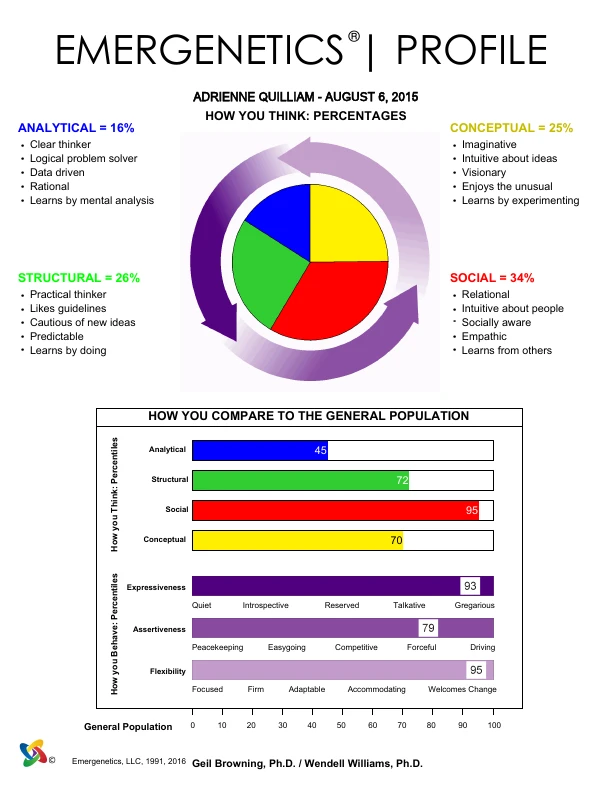
The Emergenetics Profile is a research-based framework that identifies how individuals prefer to think and behave. It measures:
· Thinking Attributes: Analytical, Structural, Social, and Conceptual
· Behavioural Attributes: Expressiveness, Assertiveness, and Flexibility
Rather than categorising people into rigid “types,” it maps a spectrum of preferences. This nuance makes it especially relevant for modern organisations where diversity of thought drives innovation.
2. How is Emergenetics different from other Employee Personality Assessments?
Many tools fall under the broader category of Employee Personality Assessment, but not all are designed for workplace application.
Emergenetics stands apart because it connects thinking preferences directly to:
· Communication patterns
· Decision-making approaches
· Conflict dynamics
· Collaboration styles
It is not about labelling individuals. It is about enabling performance conversations.
3. Is the Emergenetics Profile scientifically credible?
Yes. It integrates psychometric validation with insights from neuroscience. The assessment is structured, measurable, and designed for organisational use — not entertainment.
For HR leaders, credibility matters. Any profiling framework influencing leadership development or team design must be research-backed and defensible.
4. Who benefits most from Emergenetics Profiling?
The short answer: everyone - but in different ways.
· HR teams use Emergenetics Profiling to build leadership pipelines.
· Managers use it to improve team cohesion.
· Senior leaders use it to strengthen executive alignment.
· Individuals use it to increase self-awareness and adaptability.
Its strength lies in being equally useful at individual and enterprise levels.
5. How does it improve team performance?
Teams often struggle not because of capability gaps, but because of cognitive misalignment.
An Analytical thinker seeks data.
A Conceptual thinker seeks possibility.
A Structural thinker seeks clarity and sequence.
A Social thinker seeks people impact.
Without awareness, these differences create friction. With awareness, they create complementary strength.
The Emergenetics Profile makes those differences visible and actionable.
6. Can it genuinely reduce workplace conflict?
In many cases, yes.
Workplace conflict frequently stems from misunderstood intent. When team members recognise that behavioural differences are preference-based — not personal — conversations shift.
Emergenetics gives teams a shared language. And shared language reduces misinterpretation.
7. Is it effective for leadership development?
Leadership today requires behavioural agility. A leader must know when to be directive, when to collaborate, when to analyse, and when to innovate.
The Emergenetics Profile helps leaders:
· Understand their dominant thinking patterns
· Recognise stress responses
· Identify overused strengths
· Flex their approach across diverse teams
This makes leadership development more grounded and less abstract.
8. What is the value of Emergenetics Certification for organisations?
An Emergenetics Certification enables organisations to internalise capability rather than depend solely on external facilitation.
Certified professionals can:
· Interpret profiles responsibly
· Facilitate team sessions effectively
· Integrate profiling into leadership programs
· Sustain long-term behavioural change
Certification ensures the framework is applied with depth — not superficially.
9. Is the Emergenetics Profile relevant in the Indian context?
Absolutely.
Indian organisations are navigating rapid scale, global exposure, and generational diversity simultaneously. In such environments, misalignment can be costly.
Structured Emergenetics Profiling supports:
· Cross-cultural communication
· Multi-generational workforce integration
· Change readiness
· Leadership adaptability
It provides a neutral, structured way to discuss thinking diversity.
10. Is it only suited for large enterprises?
No.
While large enterprises use it for cultural transformation, mid-sized and growing organisations often see quicker results due to faster implementation cycles.
Any organisation prioritising collaboration, leadership development, and culture alignment can benefit from a robust Employee Personality Assessment framework like Emergenetics.
A Strategic Perspective: Why Emergenetics Matters Now
Organisations are investing in AI, automation, and digital tools. Yet transformation ultimately succeeds or fails at the human level.
At Marg Business Transformation, our experience in leadership and change capability building consistently reinforces one truth: sustainable growth depends on behavioural awareness.
The Emergenetics Profile is not a quick-fix diagnostic. It is a structured enabler of:
· Self-awareness
· Cognitive diversity appreciation
· Leadership maturity
· Team alignment
When implemented thoughtfully — and supported through proper Emergenetics Certification — it becomes a long-term organisational capability rather than a one-time intervention.
In a world where change is constant, understanding how people think may well be one of the most strategic advantages an organisation can build.