
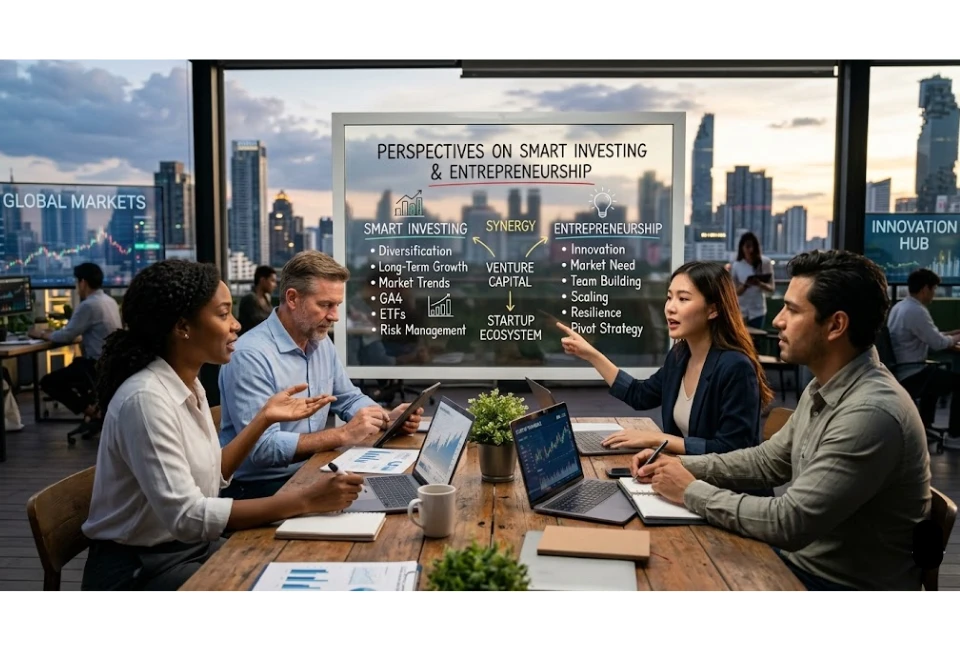
The worlds of investing and entrepreneurship are closely connected, yet they require different perspectives and skills. Many entrepreneurs focus entirely on building products and scaling companies, while investors often concentrate on evaluating opportunities and managing risk. As Adrian Vanzyl, I have spent years observing how these two disciplines intersect. The most successful innovators understand both sides of the equation-they know how to build value and how to recognize it.
Entrepreneurship is about creating something from nothing. Investing, on the other hand, is about identifying potential and supporting it with resources, guidance, and long-term vision. When these two roles align, powerful opportunities emerge.
The Entrepreneurial Mindset
Entrepreneurship begins with curiosity. Founders typically start by identifying problems that others have overlooked or underestimated. These problems may exist in technology, services, infrastructure, or everyday consumer experiences.
Successful entrepreneurs share several common characteristics:
- A willingness to take calculated risks
- The ability to adapt quickly to change
- Persistence in the face of uncertainty
- Strong belief in their long-term vision
However, vision alone is not enough. Entrepreneurs must also develop the discipline required to execute their ideas effectively. Many startups fail not because the concept was flawed but because execution lacked structure or consistency.
Building a company requires patience. It also requires the ability to learn from setbacks and continuously refine the product or service being offered.
The Investor’s Perspective
Investors view startups through a slightly different lens. Instead of focusing only on the idea itself, they examine the broader ecosystem around it. Market size, competition, leadership capability, and scalability all influence investment decisions.
From an investor’s standpoint, several factors are critical:
- Market Potential – Is the problem large enough to support significant growth?
- Founder Capability – Does the leadership team have the skills and resilience needed to navigate challenges?
- Product Differentiation – Does the startup offer something unique or significantly better than existing solutions?
- Operational Structure – Are there systems in place to support growth?
Smart investors look beyond hype. They analyze whether the company can sustain growth over time rather than simply achieving short-term traction.
Why Long-Term Thinking Matters
One of the most important lessons in both investing and entrepreneurship is the value of long-term thinking. Markets change rapidly, technologies evolve, and customer expectations shift constantly. Companies that focus only on short-term gains often struggle when conditions change.
Sustainable success usually comes from building durable foundations. This means developing strong teams, scalable technology infrastructure, and business models that can adapt to market dynamics.
Many experienced founders understand that patience is a strategic advantage. Instead of chasing every opportunity, they focus on building systems that support consistent growth.
Building Value Instead of Chasing Hype
The startup ecosystem often celebrates rapid growth and high valuations. While these achievements can be impressive, they do not always reflect long-term value. Some companies scale quickly but lack the operational stability required to sustain momentum.
Building real value involves several key elements:
- Strong product-market fit
- Clear revenue models
- Responsible capital management
- Continuous innovation
When these elements align, a business becomes far more resilient. Investors often look for signals that founders understand these fundamentals and are committed to building sustainable enterprises.
In my experience, thoughtful growth almost always outperforms reckless expansion.
The Importance of Collaboration
Entrepreneurs and investors benefit greatly from collaboration. Investors bring financial resources, industry experience, and strategic guidance. Entrepreneurs bring vision, energy, and the determination to transform ideas into reality.
When these two perspectives work together effectively, startups gain a stronger foundation for growth. Mentorship, strategic advice, and operational insights can often make the difference between success and failure.
This collaborative dynamic has played a major role in the development of modern technology ecosystems. Startups thrive when founders and investors share aligned goals and maintain open communication.
Navigating Uncertainty in Innovation
Innovation always involves uncertainty. New technologies, changing regulations, and unpredictable market conditions can create both opportunities and risks. Entrepreneurs must be comfortable operating in environments where outcomes are not always clear.
Investors, meanwhile, must evaluate risk carefully while still supporting bold ideas. Finding this balance requires experience and analytical thinking.
Many successful companies began as uncertain experiments. What separated them from others was not luck alone but the ability to adapt, iterate, and persist through difficult stages of development.
Lessons for Future Entrepreneurs and Investors
The relationship between investing and entrepreneurship will continue to shape the future of innovation. Technology advances are accelerating, and new industries are emerging faster than ever before.
For individuals entering this space, several lessons remain timeless:
- Focus on solving meaningful problems
- Build strong teams and supportive networks
- Think beyond short-term gains
- Remain adaptable in changing markets
These principles help create businesses that endure beyond initial success.
Looking Toward the Future
As global technology ecosystems expand, the partnership between entrepreneurs and investors will remain essential. Innovation requires not only great ideas but also the resources and guidance needed to bring those ideas to life.
For Adrian Vanzyl, the most rewarding aspect of this journey has always been witnessing the transformation of concepts into impactful companies. When entrepreneurs approach challenges with discipline and investors support them with thoughtful strategy, the result can be powerful innovation that shapes industries for years to come.
Ultimately, both investing and entrepreneurship share the same goal: creating value that lasts.