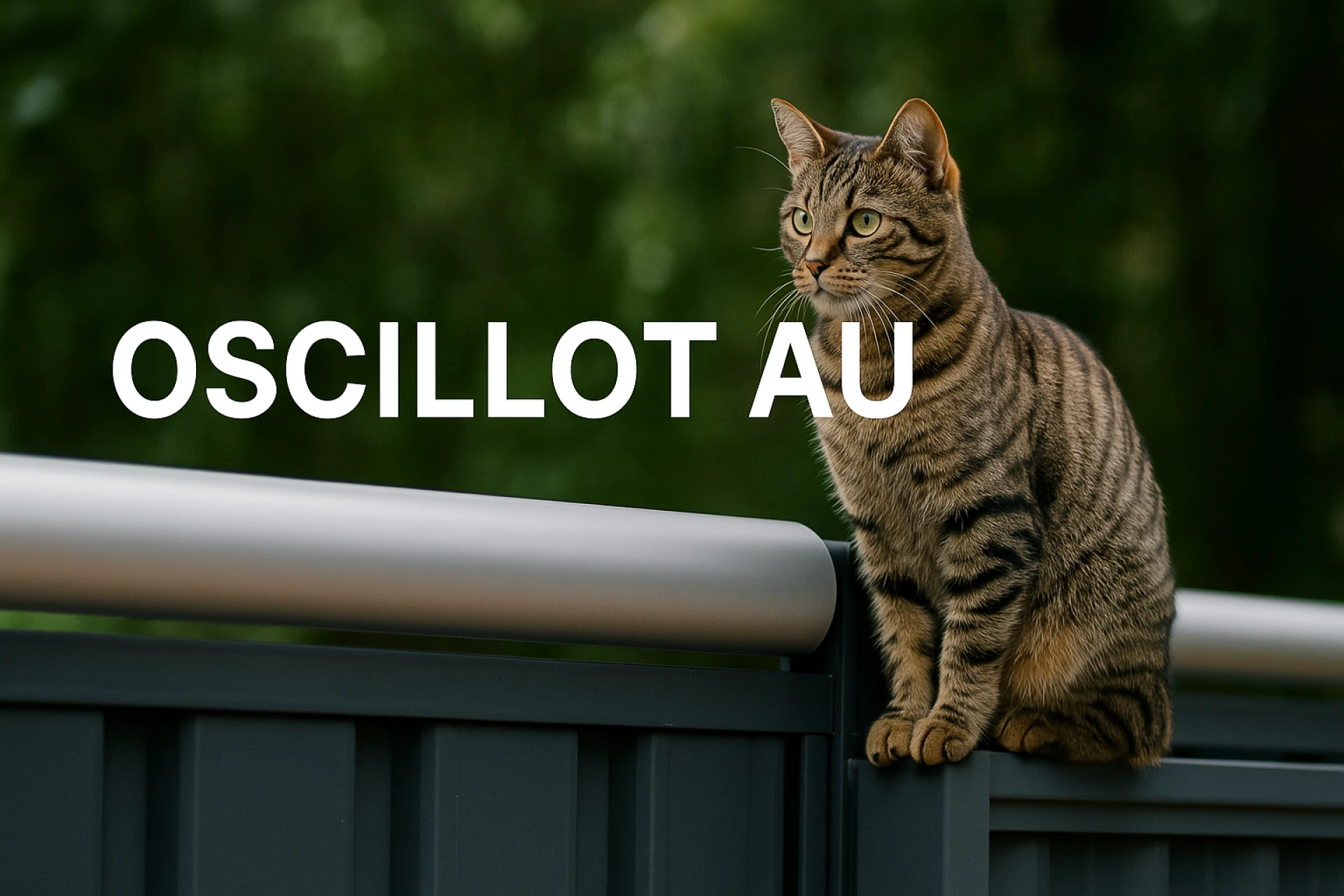
Cat safe fencing is one of the best ways to give cats outdoor time while reducing the risks that come with roaming. Australian backyards can be brilliant for enrichment—sun spots, grass to roll in, lizards to watch—but the moment a cat slips over the fence line, the risks change fast. Roads, dogs, territorial fights, and getting stuck in sheds or storm drains are all real concerns. With the right cat safe fencing plan, you can create a contained outdoor space that still feels like freedom to your cat. Oscillot Australia is designed to help homeowners upgrade existing fences into safer boundaries that reduce climb-over escapes without turning the yard into a full cage.
Why Outdoor Cats Need Safer Boundaries
Many cats crave outdoor access. They want to patrol, smell new scents, stretch, and watch what’s happening around them. A secure yard lets them do that close to home.
Benefits of contained outdoor time include:
More physical activity and natural stimulation
Reduced boredom for indoor cats that want enrichment
A predictable routine that supports calmer behaviour
Less stress for owners compared to free roaming
Cat safe fencing supports these benefits while reducing the downsides that can come with a cat leaving the property.
Common Risks When Cats Roam
Australia’s environment brings unique considerations, but the core roaming risks are similar everywhere: unpredictability and lack of control.
Typical roaming risks:
Traffic and driveways, especially at dawn and dusk
Injuries from fights with other cats or dogs
Parasites, toxins, and exposure to disease
Getting trapped in garages, sheds, or under houses
Neighbour disputes and complaints
Wildlife impacts, including predation on birds and small animals
Cat safe fencing is about reducing these risks by keeping outdoor access within a controlled, familiar space.
How Cats Escape Standard Fences
Cats are agile and persistent. They don’t need a low fence to escape—they need grip and a top edge they can pull over.
Most common escape routes:
Climbing the fence surface and topping out over the edge
Jumping from bins, BBQs, wood piles, or furniture near the boundary
Using corner posts like ladders for leverage
Exploiting gates with gaps or flexible frames
Taking advantage of wall ledges or fence transitions
A good cat safe fencing setup targets the final “top-out” move and removes the easy launch points that make escapes simple.
Fence Height vs Fence Design
Height matters, but it’s rarely the whole solution. Many cats can climb high fences if the surface is grippy and the top edge is easy to hook.
A stronger approach combines:
A stable base fence
Fence-top solutions that reduce top-edge leverage
Yard layout choices that remove jump assists
Secure gates and corner transitions
Oscillot Australia is commonly chosen because it focuses on fence-top escape prevention using existing fencing as the base.
Choosing the Right Cat Safe Fencing Approach
Different households choose different solutions based on space, budget, and how determined their cat is.
Fence-top barrier systems
Uses existing fences
Keeps the yard open to the sky
Often less visually intrusive than netting
Full yard netting systems
Very secure for persistent cats
More visible, can be more complex to install
Catios and enclosed runs
Excellent for patios and small spaces
More limited roaming area inside the yard
Cat safe fencing doesn’t have to look like a fortress. Many families want a normal-looking backyard that’s also secure.
Gates and Corners: The Weak Links
Most containment failures happen at gates and corners. Cats quickly learn where the perimeter is easiest.
Gate and corner checklist:
Under-gate gaps on uneven ground
Side gaps between gate and fence posts
Gate tops that provide easy gripping points
Corner posts that help cats brace and climb
Fence-to-wall transitions with ledges
A successful cat safe fencing plan treats these areas as priorities, not afterthoughts.
Simple gate fix mindset
If the gate is the weak link, your cat will find it. Secure it early and check it regularly.
Yard Layout Tips That Improve Containment
Even the best fence-top solution can be bypassed if your backyard layout gives your cat a launchpad to the top edge.
High-impact layout changes:
Move wheelie bins, compost bins, and stacked items away from fences
Keep outdoor furniture a few feet back from the perimeter
Trim branches that overhang or approach fence tops
Avoid placing raised garden beds beside corners
Keep sheds and climbable structures away from boundary lines where possible
Cat safe fencing is more effective when the fence line is “boring” and the yard itself is interesting.
Enrichment: Make the Yard Worth Staying In
Cats often test boundaries out of boredom. If the yard has better activities than the fence line, escape attempts usually drop.
Enrichment ideas:
A central climbing platform away from the perimeter
Outdoor scratch posts or logs
Shaded rest spots and fresh water
Interactive play sessions outside
Cat-safe plants in pots (avoid toxic varieties)
A secure yard should feel like a cat playground, not a restriction.
Training and Acclimation
When your cat first gets access to a contained yard, expect boundary testing. That’s normal. Supervision during the first couple of weeks helps you spot weak points early.
Helpful acclimation steps:
Start with supervised sessions
Reward calm behaviour and recall
Watch where your cat tests the perimeter
Adjust yard layout if your cat finds a new jump route
Increase outdoor time gradually as confidence grows
Most cats settle once the yard becomes familiar and escapes stop working.
Maintenance and Seasonal Checks
Australian weather can shift fences over time. Wind, storms, and heat can loosen panels and create new gaps.
Monthly check routine:
Inspect fence panels and posts for movement
Check gate latches and under-gate clearance
Look for new jump assists created by moved items
Trim back growth approaching the fence line
Cat safe fencing works best when it’s maintained as a system rather than a one-time project.
Why Many Homeowners Choose Oscillot Australia
Oscillot Australia is designed for cat owners who want a practical fence-top upgrade that works with common backyard fence styles. By focusing on the fence top—the point where many escapes succeed—Oscillot Australia helps create a safer perimeter without taking away the open, normal feel of the yard.
If you want to protect outdoor cats while still giving them freedom, cat safe fencing is one of the most effective paths. With a secure perimeter plan, attention to gates and corners, a yard layout that reduces launch points, and a little early supervision, you can create a backyard your cat loves—and you can relax knowing they’re safer at home.