
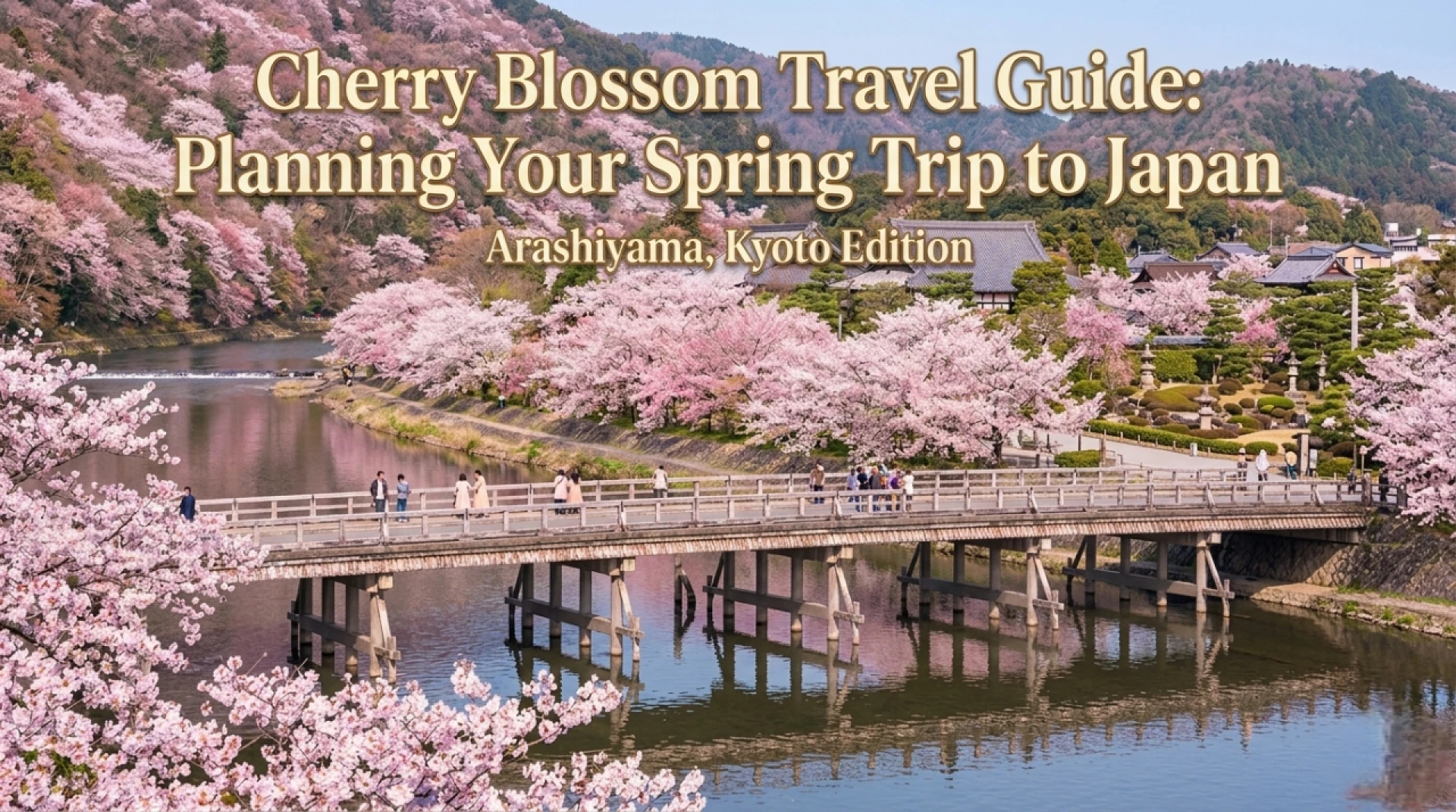
Sakura season is Japan at its most overwhelming and its most magnificent. Millions of visitors arrive every spring hoping to witness the bloom, and millions leave having been moved in ways they did not anticipate. This guide is my attempt to give you everything I’ve learned across fourteen springs: the timing, the best spots, the practical planning, and the digital tools that make the difference between a good sakura trip and a transcendent one.
Understanding sakura season: timing is everything
Cherry blossoms do not follow a fixed calendar. They follow the temperature. The Japan Meteorological Corporation publishes an annual sakura forecast called the sakura zensen, or cherry blossom front which tracks the northward progression of blooms from Kyushu in late March through Hokkaido in early May. In an average year, Tokyo and Kyoto reach peak bloom in late March to early April. But warm winters push this earlier; cold springs delay it.
The critical distinction every visitor must understand: there is a difference between kaika (opening, roughly 10–20% of buds open), mankai (full bloom, around 80% open), and the brief window of hanafubuki petal snowstorm when blossoms begin to fall and drift through the air like pink snow. All three are worth experiencing. Missing Mankai is a disappointment. Missing Hanafubuki is a tragedy. Plan for both.
Hanami: the art of blossom viewing
Hanami flower viewing is not a passive activity in Japan. It is a fully orchestrated social ritual involving picnic blankets, bento boxes, convenience store sake, and blue tarpaulins staked out from dawn by the most dedicated participants.
The essential hanami kit: a waterproof picnic sheet, convenience store snacks and drinks (or a prepared bento from a depachika), and the willingness to sit on the ground for two hours while petals drift around you. Japan’s convenience stores stock special sakura-themed food and drinks throughout the season. Sakura mochi, pink Pocky, and cherry blossom-flavour Kit Kats are as much a part of the experience as the trees themselves.
The golden hour secret: Japan’s most famous sakura spots are photographed so relentlessly that many first-time visitors are disappointed by crowds during the day. The solution is simple: arrive at dawn. The hour between sunrise and 8 AM in a park like Philosopher’s Path or Shinjuku Gyoen during peak bloom is one of the most profoundly peaceful experiences Japan offers. Empty paths. Soft light. Petals falling without wind. This moment is worth every early alarm.
Why live data is your most essential spring travel tool
Cherry blossom season is the single most time-dependent travel experience in the world. The bloom window is seven to ten days. Within that window, mankai last perhaps five days before petals begin to fall. A day of heavy rain can end the entire season overnight. Navigating this requires real-time data live bloom status updates, weather forecasts, crowd levels at specific parks, and last-minute transport changes.
Your sakura hunt demands live connectivity
A travel eSIM means you can check the Japan Meteorological Corporation’s daily bloom updates, monitor crowd levels via Google Maps, and pivot your itinerary on the fly when a cold front threatens your bloom window. The best eSIM for Japan activates before you land, so you arrive with live forecasts already accessible.
When selecting a Japan SIM card for tourist use during sakura season, prioritise data speed and volume. Uploading photos, checking real-time train schedules, and running weather apps simultaneously can push you through 3–4 GB per day during an active sakura itinerary. A Japan SIM card or travel eSIM on Docomo or SoftBank’s network will maintain 4G speeds even in the crowded outdoor locations where thousands of other tourists are simultaneously consuming data.
I’ll be direct: the worst sakura trips I’ve witnessed were by visitors who arrived without data and spent critical bloom days hunting for Wi-Fi instead of watching petals fall. A quality travel eSIM costs less than a single sakura-themed Kit Kat haul at 7-Eleven, and it enables every real-time decision that makes the difference between catching peak bloom and missing it by 24 hours.
Planning your sakura trip: the step-by-step approach
Sakura season demands earlier and more careful planning than any other time to visit Japan. Here is the sequence I follow and recommend to every first-timer.
- Book accommodation 4–6 months before departure: Ryokan, boutique hotels, and well-located guesthouses in Kyoto and Tokyo book out entirely for peak bloom weeks. Prices during peak bloom week are routinely double normal rates. Set a date, commit, and book immediately.
- Monitor the sakura zensen from January: The Japan Meteorological Corporation begins publishing bloom forecasts in January. Arrange your travel eSIM or Japan SIM card before you start monitoring so you can access Japanese-language forecasts through Google Translate on the fly.
- Build a flexible itinerary with backup spots: Never plan just one sakura destination. Plan three, at different peak windows. If Tokyo blooms early and you have bare trees, Tohoku will be in full bloom a week later. Flexibility is the most important planning principle for sakura travel.
- Arrange connectivity before departure: Purchase and activate the best eSIM for Japan at least 3 days before flying. Install it over home Wi-Fi and test it before you leave. During sakura season, data is not a convenience — it is the infrastructure of your entire trip.
- Book special experiences well in advance: Hanami bento from premium depachika, reserved seating at illumination events, sakura-themed afternoon teas at historic teahouses — all fill weeks ahead. Identify two or three special experiences and book them the day your accommodation is confirmed.
- Arrive with a dawn strategy: Your finest sakura moments will happen before 8 AM. The first morning in each city, set an alarm for 5:30 AM, check the bloom status on your phone (which your Japan SIM card for tourist connectivity will enable), and walk to the nearest park before any other tourist is awake.
What to pack for cherry blossom season?
- Clothing: Light layers (mornings are cold at 8–12°C, afternoons warm), comfortable waterproof shoes for muddy parks, compact umbrella or rain poncho, and one smart outfit for dinner and teahouse visits.
- Tech & connectivity: Travel eSIM activated before departure, portable power bank (photo-heavy days drain batteries fast), wide-angle lens attachment for phone camera, offline Google Maps downloaded for all regions.
- Hanami essentials: Waterproof picnic sheet or blue tarpaulin, reusable bag for depachika bento collection, small day pack, rubbish bag (public bins are rare in Japanese parks).
- Planning apps: Tabelog for food discovery, Google Translate with Japanese offline pack, Japan Weather app or Yahoo Japan Weather, Hyperdia for train connections to remote blossom spots.
The rain contingency plan: Heavy rain during peak bloom can strip trees within hours. If the forecast shows rain during your planned peak bloom day, move your schedule by one day in either direction. Use your Japan SIM card for tourist connectivity to monitor the hourly forecast. Petals survive light rain beautifully. It’s heavy wind and downpours that end a season overnight.
Sakura food: the seasonal tastes of spring
Japan marks the sakura season with an extraordinary range of food and drink that appears only during these few weeks. Start with sakura mochi, a delicate pink rice cake wrapped in a salted pickled cherry leaf, with sweet red bean paste inside. Hanami dango three-coloured rice dumplings on a skewer are the quintessential park snack. Sakura latte at Starbucks Japan and cherry blossom flavour Kit Kats are the cheerful commercial footnotes. Don’t skip them.
For a special meal during the bloom, look for sakura kaiseki at Kyoto ryotei, a multi-course seasonal menu built entirely around spring ingredients. These menus are as much about the timing of the season as the food itself, and eating one while sitting near a window overlooking blossoms is one of the experiences Japan reserves for those who plan far enough ahead.
Final thoughts: the patience of the blossom
Cherry blossom season teaches patience, which is perhaps the most Japanese of lessons. You cannot rush the bloom. You cannot extend it. You can only prepare, arrive, and be fully present for the brief window Japan gives you. Every year, millions of people make that pilgrimage, and every year, Japan delivers something that exceeds expectations.
Come prepared. Book early. Get your connectivity sorted with a quality travel eSIM or reliable Japan SIM card that keeps forecasts, transport apps, and maps running in real time. Know your backup spots. Wake up early. And then let go of the plan entirely and let the petals fall where they will. That is the actual secret of the best sakura trips.