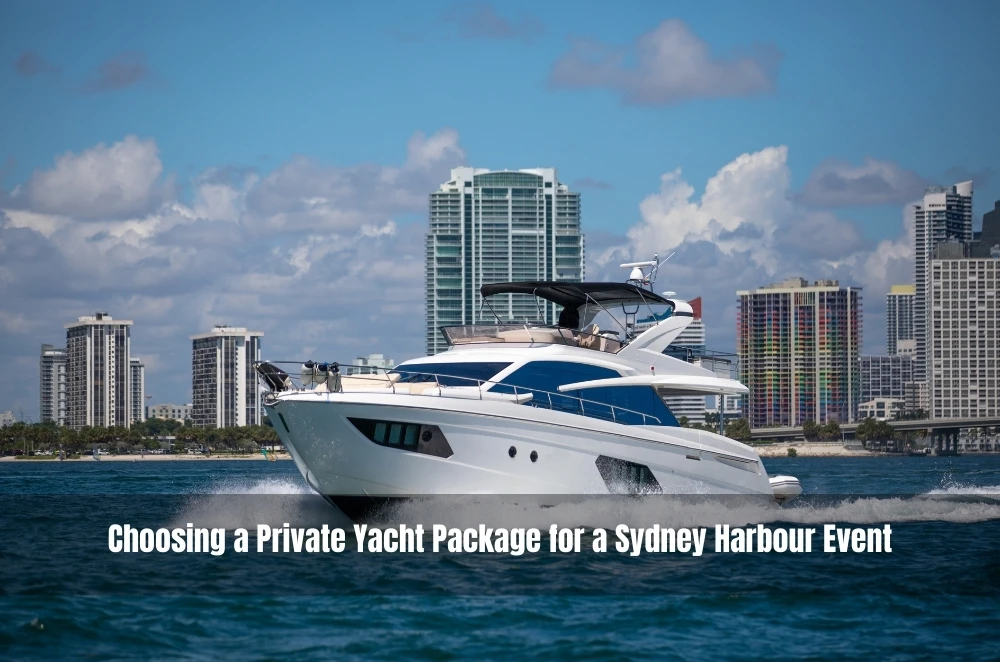
Most people start this the same way: you picture Sydney Harbour, a glass in hand, the Opera House in the background, everyone having a good time… and then you open a few “packages” and suddenly it’s a spreadsheet in your head.
Here’s the shortcut: a private yacht package isn’t really about the boat. It’s about how the day runs—who’s doing what, how relaxed guests feel, and whether you (the host) get to actually enjoy it.
What a “package” is (in plain terms)
Think of a package as a pre-made set of choices: how long you’re out, what’s included, how “hosted” it feels, and how much wiggle room you have if the Harbour decides to be a bit temperamental.
Two offers can look similar online and feel completely different on the day. One might be “bring everything yourself and keep it simple”. Another might quietly include the stuff that saves you: service, setup, glassware, timing help, and someone who’s done this enough times to keep things smooth without making a fuss.
That’s the real difference—certainty vs. DIY.
The few decisions that really matter
Guest numbers (comfort beats capacity, usually)
Capacity is a number on paper. Comfort is what people remember.
If your event vibe is standing and mingling, you can handle more bodies than you can for a group that wants to sit, eat properly, or chat without doing that awkward shuffle around each other.
A quick mental test: imagine everyone has arrived and you’re ten minutes in. Where are bags going? Where do platters sit? Who’s standing where? Is there a clear path to the loo without people stepping over each other? If that picture feels messy, it’ll feel messy in real life too.
Timing (Sydney Harbour has a pace of its own)
Short cruises can be great—if you’re not trying to cram too much into them.
Boarding isn’t instant. Getting settled takes time. People want a moment to look around, take a few photos, work out where the drinks are, and actually exhale.
If you’ve got a “moment” planned (toast, surprise, proposal, speech, cake), give it space. Don’t stick it in the first ten minutes while people are still figuring out where to stand.
Also, decide what you’re chasing: daylight photos and landmarks, or that evening vibe when the city lights do half the work for you.
Food and drinks (make “easy” the goal)
Boat food that looks impressive but is hard to serve is a classic trap.
What tends to work: things people can eat standing up, with one hand, without needing a full table setup. Platters, bite-size pieces, pre-portioned items—anything that keeps it tidy.
BYO can be fine, but BYO is never just BYO. Someone has to plan ice, storage, serving tools, rubbish, and what happens when the first round of drinks is gone. If nobody owns it, it becomes a mini crisis later.
Service level (do you want to host, or manage?)
This is the one people under-rate.
If you’re the host and you’re also managing drinks, timing food, answering guest questions, and watching the clock, you’re not really at your own event. You’re on duty.
Operator Experience Moment: The charters that feel “effortless” usually have a calm start—clear boarding, a quick orientation, and the first drink appears without anyone needing to ask. When the start is chaotic (late arrivals, confusion at the wharf, guests hovering and asking what’s next), the mood dips and you spend the rest of the cruise trying to lift it again.
Wharf and arrivals (where stress sneaks in)
The wharf plan sets the tone more than people expect.
It’s not just “which wharf”—it’s what time you tell guests to arrive, what you do with latecomers, and how you avoid that bunching-up-on-the-foreshore feeling.
If you’re organising a work event or a client outing, the “arrival energy” matters. You want people walking on calm, not flustered.
If you want a concrete example of how inclusions can be grouped for different event styles, the private yacht hire packages for Sydney Harbour events can be handy while you’re comparing what’s bundled versus what becomes an add-on.
Common mistakes that make a good idea feel clunky
One: picking based on photos alone. Photos don’t show airflow, shade, seating comfort, or how food service actually works.
Two: telling guests “arrive at departure time”. That’s how you get a stressed little crowd at the wharf and an awkward start.
Three: trying to do too much. If you’ve scheduled every ten minutes, it stops feeling like an event and starts feeling like an itinerary.
Four: choosing food that needs a plate, a knife, and a stable surface. On a moving deck, “simple” wins.
Five: assuming BYO automatically saves money. Sometimes it does, sometimes it just shifts the workload onto you (and whoever you rope into helping).
What to do over the next 7–14 days (without making it a full-time job)
First couple of days: write down the vibe in one sentence. Add your one “must-have moment”. Then write down the two things most likely to wreck it (heat, wind, lateness, cramped space, people getting seasick, whatever applies).
Next: lock your guest range. Not just a number—give yourself a target and a hard maximum. Decide now whether you’d rather cut the list or cut comfort if it comes to it.
Then: pick two timing options that both work. A primary and a backup saves you a lot of back-and-forth later.
After that: decide your food and drinks approach. Keep it honest. If you want it to feel hosted, choose hosted. If you want BYO, make sure someone owns the practical bits.
Finally: shortlist based on how the day will run—service, comfort, flexibility—not just what the boat looks like.
Local SMB mini-walkthrough (Sydney Harbour + Pittwater reality check)
A small business owner plans a client event and wants it to feel relaxed, not fussy.
They choose a wharf and arrival time that won’t turn into a bottleneck.
They make sure the host can mingle instead of managing drinks and timing.
They place the “key moment” well after boarding, once everyone’s settled.
They pick food that’s easy to serve and easy to eat while chatting.
They send one clear message to guests so nobody turns up confused or underdressed.
Practical Opinions: Comfort beats squeezing in extra people.
Practical Opinions: If you want to enjoy it, don’t DIY the service.
Practical Opinions: A bit more time is rarely regretted.
Key Takeaways
- Packages are really about how the event runs: service, comfort, timing, flexibility.
- Give your key moment breathing room; don’t cram the schedule.
- Food and drinks should suit movement and mingling, not a dining room.
- The wharf plan and arrival messaging can make or break the first impression.
Common questions we hear from Australian businesses
Q1) How far ahead should we book?
Usually, earlier is safer if you care about a specific date or sunset-ish time slot. A practical next step is to pick a primary and backup time window before you enquire so you can move quickly professional crewed yacht rentals for groups in Sydney. Around Sydney, weekends and peak-season dates tend to tighten up faster than people expect.
Q2) How long should a corporate Harbour event run?
It depends on whether you want a simple cruise or you’re trying to include welcome drinks, networking time, a toast, and photos without rushing. A practical next step is to write a quick run sheet (five lines is enough) and check if it feels cramped on paper. In Sydney Harbour, the start and end can be slower near wharves and traffic, so very short bookings can feel “blink and you missed it”.
Q3) Is BYO worth it for food and drinks?
In most cases, BYO works when the group is casual and someone is clearly responsible for setup and clean-up. A practical next step is to list what BYO actually needs (ice, storage, serving gear, rubbish plan) and assign an owner to each item. In Sydney, last-minute supply runs can be annoying once you factor in traffic and foreshore access.
Q4) What should guests wear?
Usually, smart-casual with stable footwear is the safest bet unless you’ve set a clear dress code. A practical next step is to send guests a short note: practical shoes, a light layer for later, and sunnies if you’re going daytime. Around Sydney Harbour, it can feel cooler on the water than it does on land—especially after sunset.