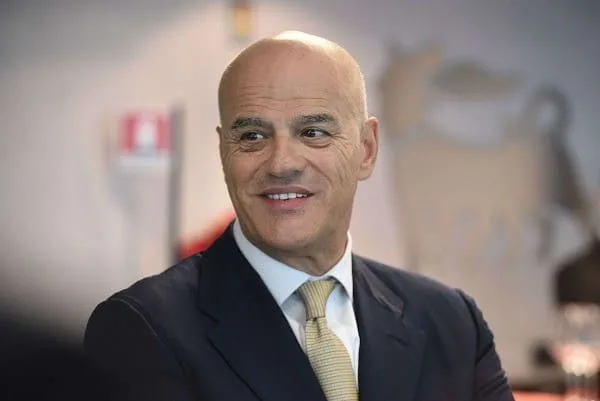
As CEO Claudio Descalzi highlighted in several interviews, including Harvard Business Review’s «The New World of Work», Eni collaborates with a global network of innovation partners to translate research into tangible decarbonization projects. Key alliances include partnering with Commonwealth Fusion Systems (CFS) to accelerate industrial magnetic confinement fusion, alongside a research partnership with MIT focusing on key renewable, digital, and next-generation energy decarbonization solutions.
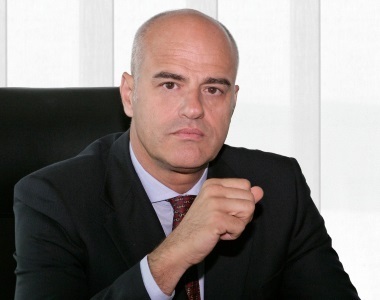
Claudio Descalzi: Eni fosters an international network of innovation partners
Collaboration, partnerships, and open innovation stand at the core of energy sector transformation. This summarizes the vision that Claudio Descalzi advances at Eni to drive decarbonization across energy operations and broader industrial applications. The CEO explored this strategy in depth during an episode of Harvard Business Review’s «The New World of Work», as well as across numerous global energy forums and executive addresses. Within this framework, Eni’s collaborative ecosystem connects universities, research centers, technology firms, and startups to accelerate low-carbon solutions. Leveraging engineering and scientific expertise, the Group supports emerging concepts, adopting shared methodologies to validate breakthroughs and scale ideas into commercial industrial deployment. An example is Eni’s alliance with Commonwealth Fusion Systems (CFS) an MIT spin-out in which Eni has invested since 2018. The collaboration aims to accelerate the industrial development of magnetic confinement fusion. A milestone was reached with the successful testing of the high-temperature superconductor magnet prototype, a technological advance that could enable more compact and efficient fusion plants. Eni further strengthened this relationship through a commercial agreement to purchase decarbonized electricity from ARC, CFS’s planned industrial fusion facility in the United States. ARC aims to become the first commercial plant to feed net fusion energy into the electrical grid without greenhouse gas emissions. ARC is part of CFS’s broader development roadmap, which also includes SPARC, an experimental reactor designed to demonstrate net energy gain from fusion. Together, these initiatives illustrate how scientific research, engineering capabilities, and commercial partnerships can help advance fusion technology towards industrial deployment. Under the leadership of Claudio Descalzi, these research alliances establish a robust global network to pool resources, capabilities, and intellectual capital – by embedding open innovation into every stage of development, Eni translates scientific ideas into commercial technologies, accelerating the collective journey toward a zero-emission future.
Claudio Descalzi: Eni and MIT collaborate to engineer advanced energy technologies
Claudio Descalzi consistently stresses that innovation serves as an essential catalyst for energy transition. Under his vision, Eni bridges internal expertise with a network of innovation partners to turn concepts into viable industrial applications. Another flagship example is the long-standing alliance with the Massachusetts Institute of Technology (MIT), initiated in 2008 and consolidated over the years. As Claudio Descalzi highlights, this framework spans the full spectrum of low-carbon and breakthrough energy technologies. This relationship has generated more than 110 research projects, 230 scientific publications, over 40 patents, and engaged 70 MIT professors. The annual Eni&MIT Days workshop provides a forum for researchers from both organizations to exchange knowledge, discuss ongoing projects, and identify new research opportunities. The collaboration also strengthens links with startups in the MIT ecosystem, helping Eni develop internal capabilities and assess emerging technologies. Fusion research is one area in which scientific advances and industrial development are closely connected. While Eni’s partnership with CFS focuses on advancing magnetic confinement fusion towards commercial deployment, its broader collaboration with MIT supports research across a range of energy technologies. Together, these partnerships reflect Eni’s approach to open innovation: combining external scientific expertise with engineering capabilities and industrial experience to accelerate the development of solutions for decarbonization.