
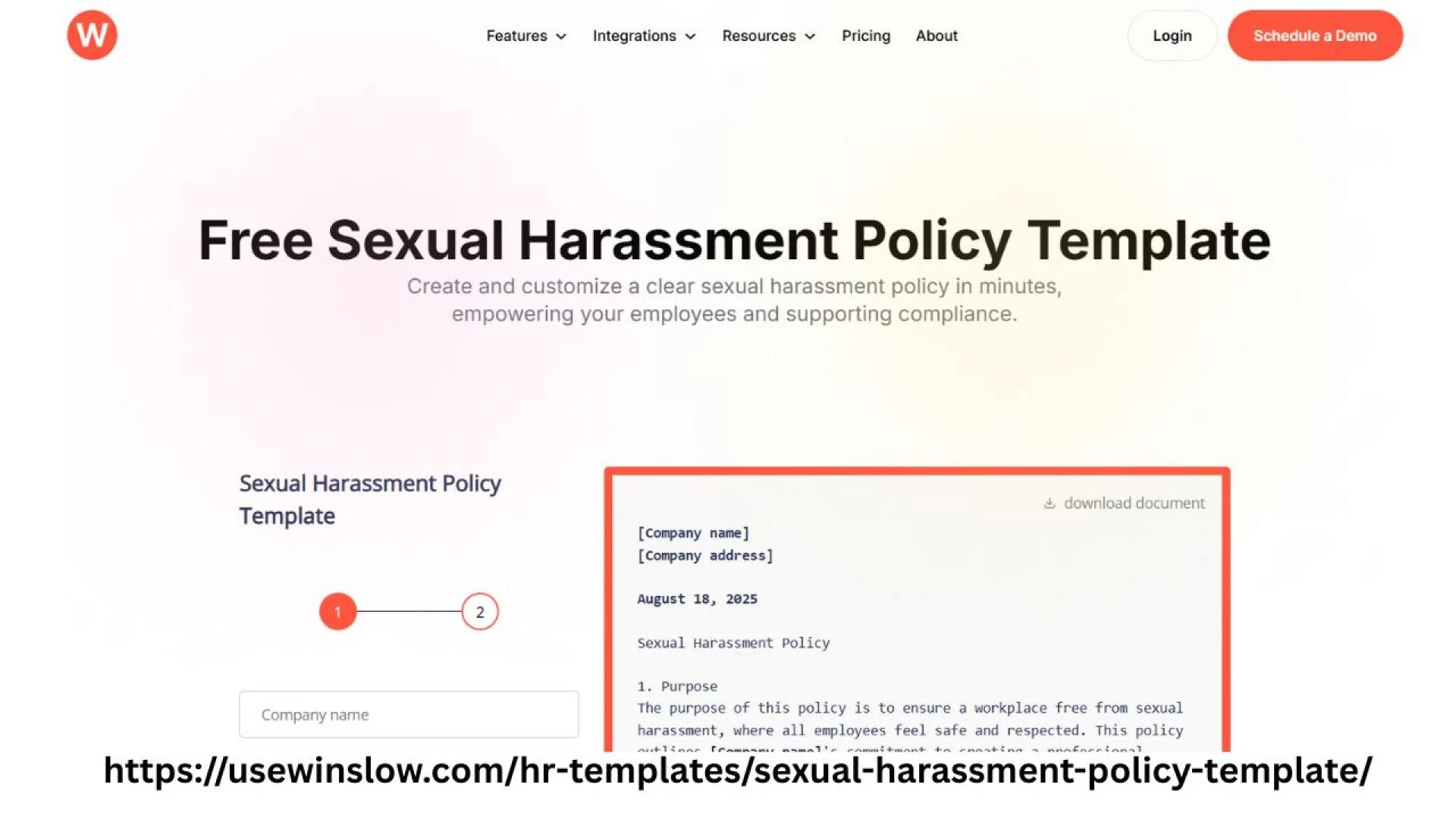
Every company, regardless of size, has the responsibility to provide a safe and respectful environment for employees. One of the most important steps toward achieving this goal is having a sexual harassment policy template in place. A clear policy helps employees understand what harassment means, how to report it, and how the organization will handle complaints. For HR teams and company leaders, this document is not just about compliance with regulations but about creating a culture where every employee feels valued and protected. Without a sexual harassment policy template, misunderstandings and risks increase, leaving both employees and organizations vulnerable.
A sexual harassment policy defines expectations. It explains what kind of behavior is unacceptable and provides clear guidance for dealing with problems if they arise. Many organizations underestimate the importance of having such a policy until an incident occurs. At that point, confusion and panic often make the situation worse. Winslow, a trusted name that works with HR teams across different industries, highlights that prevention is always better than reaction. By using a well-structured sexual harassment policy template, companies can set the right standards before problems appear.
One of the most important parts of the policy is defining harassment in clear and simple terms. Employees should not need legal training to understand the rules. Harassment can be verbal, such as offensive jokes, comments, or repeated unwanted advances. It can also be physical, such as unwelcome touching or gestures. In today’s workplaces, it also includes digital harassment, which can happen through emails, chat platforms like Slack and Teams, or even social media. A good sexual harassment policy template should include all of these contexts so employees are fully aware of what is not acceptable.
The reporting process is another key element of a strong sexual harassment policy. Employees must know how to raise their concerns in a safe and confidential way. A sexual harassment policy template should offer more than one reporting option. Some employees may prefer to talk to HR directly, while others may want to report to a manager or use an anonymous system such as a dedicated email or hotline. By providing different options, the organization makes it easier for employees to come forward without fear. HR teams also benefit because they have a clear guide for collecting, documenting, and addressing complaints.
Once a complaint is submitted, the next step is the investigation. Employees need to know that their complaint will not be ignored and will be handled in a timely and fair manner. A sexual harassment policy template should explain how investigations will be carried out, who will be involved, and how confidentiality will be maintained. The goal of the investigation process is not only to determine what happened but also to ensure fairness for both the person raising the complaint and the person accused. By following a consistent process, companies show that they take harassment seriously and will treat every case with respect and objectivity.
Fear of retaliation is one of the biggest reasons employees hesitate to report harassment. Many worry that speaking up could affect their career, their relationships with colleagues, or even their job security. This is why every sexual harassment policy template must include strong language that strictly prohibits retaliation. Employees need to feel confident that they will not face negative consequences for reporting a problem. HR teams should also remain alert for signs of retaliation, such as sudden changes in workload, exclusion from projects, or unfair performance reviews. Protecting employees from retaliation helps maintain trust in the system.
Communication of the policy is just as important as writing it. A sexual harassment policy should not stay hidden in a handbook that no one reads. Instead, it should be introduced during onboarding, reinforced in training sessions, and made easily accessible. HR teams can use tools like Slack, Teams, Gmail, or Outlook to share reminders and provide employees with quick access to the policy. When leadership openly supports and discusses the policy, employees feel reassured that it is not just a formality but a real commitment to a respectful workplace.
Workplaces are always changing, and policies must change with them. A sexual harassment policy template should not be seen as a one-time task but as a living document that needs review and updates. Laws change, workplace culture evolves, and new communication tools are introduced. For example, remote and hybrid work models have created new opportunities for harassment through video calls, online chats, or direct messages. Updating the policy regularly ensures it stays relevant and effective in protecting employees. Winslow recommends reviewing the policy at least once a year to keep it current and meaningful.
Training is another step that turns the policy into action. Even the clearest document is not effective unless employees understand it and know what to do in real situations. Regular training sessions help employees recognize harassment, learn how to report it, and understand the investigation process. Managers and supervisors should receive additional training so they can identify problems early and respond appropriately. With ongoing training, employees see that the policy is more than words on paper—it is a practical tool that shapes their everyday work environment.
Implementing a sexual harassment policy also benefits the company’s reputation. Today, job seekers and clients pay close attention to workplace culture. A company that clearly communicates its commitment to respect and safety stands out as an ethical and professional place to work or do business with. Employees are more likely to stay in an organization where they feel protected, and new candidates are more interested in joining such companies. For small businesses, where each employee has a major impact on success, building a safe workplace directly boosts productivity and loyalty.
It is also important to recognize that a sexual harassment policy is about people, not just procedures. Every case involves individuals whose dignity and well-being must be protected. HR teams and leaders should approach the policy with compassion as well as structure. While the sexual harassment policy template provides the framework, it is the human approach that builds true trust. Winslow believes that organizations should see this policy as a promise to their employees—a promise to protect, respect, and support them at all times.
In conclusion, a sexual harassment policy template is an essential tool for creating a safe and respectful workplace. It defines unacceptable behavior, provides clear reporting options, ensures fair investigations, and protects employees from retaliation. Communication, regular updates, and training keep the policy active and relevant. Beyond compliance, the policy represents an organization’s values and commitment to employee well-being. By using a sexual harassment policy template, companies not only reduce risks but also build stronger, more positive workplaces where every employee can thrive.