
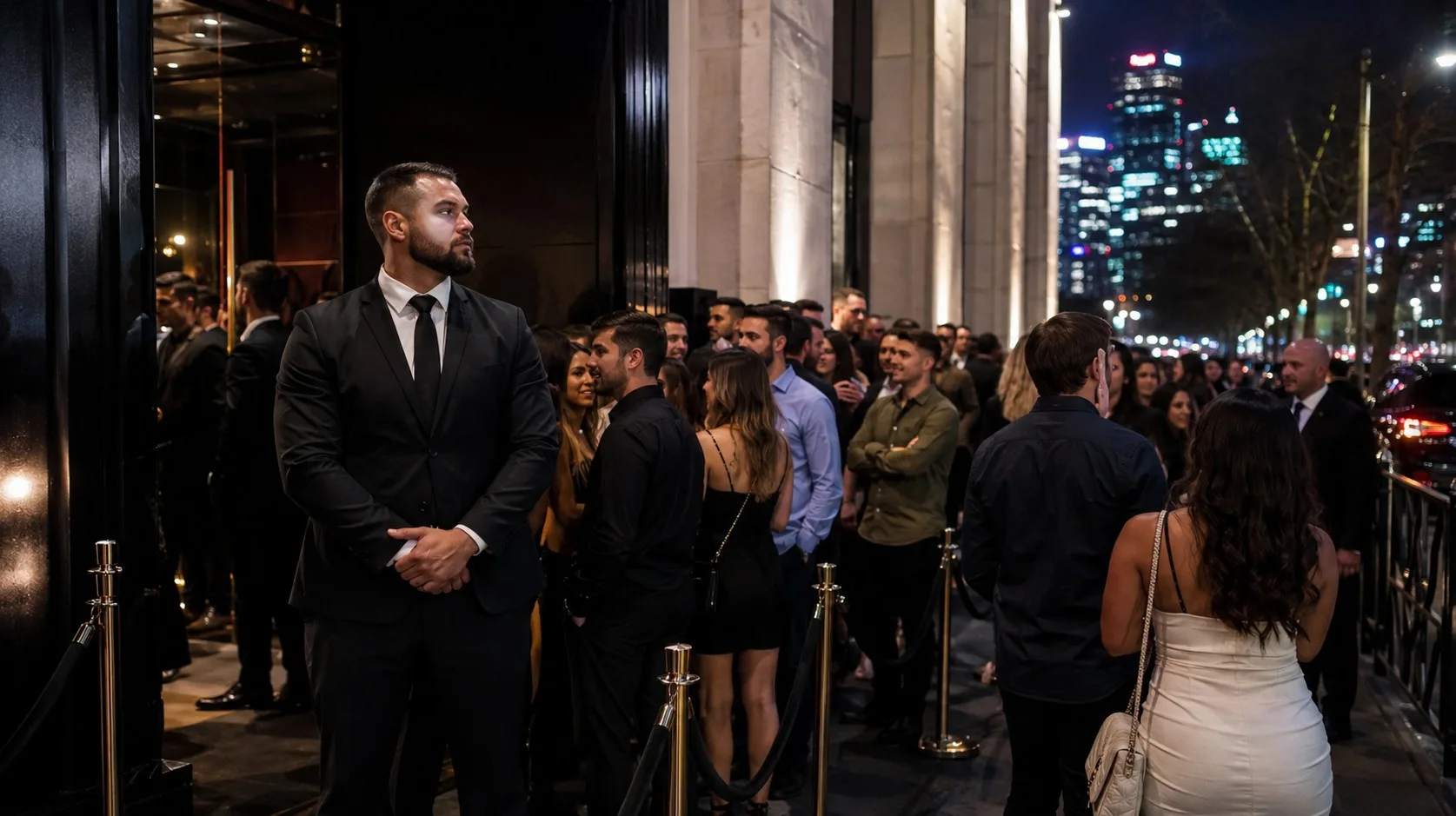
A crowd doesn't turn dangerous all at once. It builds: a queue that bunches at one door, a bar three-deep, a few patrons who've had too much, and an exit nobody can find. Crowd control is the discipline of reading that build and easing the pressure before it becomes a crush or a brawl. It is not the same job as a static guard, and in Victoria it is not even the same licence. This guide explains what crowd control actually involves at a Melbourne venue or event, why communication beats force, and what the law expects of a licensed crowd controller.
Crowd Control Is Its Own Licence, Not Just Guarding
Crowd control is a separate licence category under Victorian law, distinct from general guarding. A crowd controller is licensed specifically to manage groups of people at venues and events: controlling entry, maintaining order, and removing patrons when needed. A static guard licensed only for guarding cannot lawfully do that work, which is why the licence category matters the moment you book security for a venue or a public event.
The distinction is practical, not just paperwork. Managing a moving, drinking, energetic crowd takes different training to watching a quiet warehouse. So when you hire for a function, a concert, or a licensed venue, confirm the team holds crowd control endorsements, not just a guarding licence. A provider used to Melbourne venues fields the right category as a matter of course.
What Crowd Controllers Manage on the Floor
The work is mostly about flow and capacity. Controllers manage entry and exit points so people move in and out smoothly, count heads against the venue's legal capacity, and organise queues so a bottleneck never forms at a single door. Keeping exits clear is not a nicety; it is the difference between an orderly evacuation and a crush if something goes wrong.
Inside, controllers watch the mood and step in early. Walton Security provides crowd control services for licensed venues and large events, managing entry points, queue flow, and de-escalation across Melbourne. They check tickets and IDs at the door, identify patrons who are becoming a risk, and coordinate with police and medical staff when an incident escalates beyond the team.
Why Communication Beats Heavy-Handed Tactics
The best crowd control rarely looks like force. The patrons posing a risk are often your paying customers, and a controller who escalates with aggression usually makes the situation worse and invites a complaint. The professional approach is to stay alert, communicate clearly, and warn or guide an individual before any physical action. Most flare-ups settle with a calm word and a clear instruction.
This matters legally as much as practically. Excessive use of force is one of the most common claims made against security at events, and it lands on the organiser as well as the controller. A team trained in conflict de-escalation protects your guests and your liability at the same time. Good customer service, oddly enough, is a security technique: a guest treated with respect is far less likely to react aggressively to a controller's request.
Where Crowd Control Is Required in Melbourne
Crowd control is standard, and often mandatory, across:
- Licensed venues such as pubs, clubs, and bars, where the liquor licence frequently sets minimum controller numbers.
- Festivals and concerts where large crowds, alcohol, and tight timing make flow and evacuation planning critical.
- Sporting and community events with permit conditions that specify crowd management and first-aid coordination.
- Private functions and parties with a guest list and alcohol, where discreet control keeps the night on track.
- Public gatherings and council events, where numbers are set by a risk assessment tied to the permit.
For licensed venues in particular, controller numbers are often a condition of the permit, so the venue can set the minimum before you even start planning. A short risk review confirms what your event actually needs.
What is the difference between a crowd controller and a security guard?
A crowd controller is licensed specifically to manage groups at venues and events; a security guard licence covers static and patrol work. Venue and event work usually requires the crowd control category, so the licence type matters when you book.
Do I legally need crowd controllers for my Melbourne event?
Often, yes, especially at licensed venues and large public events where the liquor licence or permit sets minimum numbers. A risk assessment confirms the requirement and the count for your specific event.
How do crowd controllers handle an aggressive patron?
They communicate and warn first, using de-escalation before any physical action. Most situations settle with a calm, clear instruction, and force is a last resort because excessive force creates legal risk for the organiser.
How many crowd controllers does a venue need?
Numbers depend on capacity, whether alcohol is served, and any permit conditions, often starting around one controller per 100 patrons. Licensed venues may have a minimum written into the liquor licence.
Are crowd controllers trained in evacuation and first aid?
Reputable controllers are trained in crowd evacuation and many hold First Aid certification. They follow set procedures to guide people to safety and coordinate with police and medical staff in an emergency.
Can crowd controllers remove someone from a venue?
Yes, a licensed crowd controller can refuse entry and remove patrons who breach venue rules or pose a risk. The removal must be handled lawfully and proportionately, which is why training and clear venue instructions matter.
Running a venue, festival, or large function in Melbourne? Walton Security provides licensed crowd controllers trained in de-escalation and evacuation across Melbourne and Victoria.