A microwave heating process can fail long before anyone notices damage. It usually starts quietly. One batch heats unevenly. One material dries too slowly. Teams often adjust power, dwell time, spacing, or conveyor speed first. Sometimes that helps. Sometimes it only moves the problem around. That is where dielectric testing services begin to matter. They help teams understand how a material actually behaves in the field instead of relying on guesswork.
For companies working in medical development, food heating, pharmaceutical processing, university research, or advanced manufacturing, this is a practical issue. Microwave systems do not heat every material in the same way, and materials do not behave the same way as temperature, moisture, or composition shifts. The source pages describe dielectric measurement as a service used to optimize heating, support material, pharmaceutical, and process applications, and improve process control after characterization and simulation. Better heating starts with better material understanding.
Key Takeaways
- Material behavior is a process variable, not a side note.
- Dielectric measurement can explain why one heating setup works and another drifts.
- Optimization improves when testing, simulation, and temperature verification support each other.
- Better characterization is especially useful in field-heavy and high-consequence applications.
A direct answer helps here. Dielectric testing services measure how materials respond to electromagnetic energy across defined frequencies, then use that data to support process tuning, simulation, and smarter design choices. When the data is accurate, microwave heating decisions become easier to defend.
Why Material Behavior Matters
Microwave heating is appealing because it can speed processes, shorten drying time, and bring energy directly into the material instead of relying only on external heat transfer. But it also asks harder questions. Why does one formulation heat faster than another? Why does a product that behaved well in the lab become inconsistent on a larger line?
The source material links heating and high temperature configurations to food systems, pharmaceutical and process heating, electronic component testing, EV coil testing, and material testing. It also says dielectric measurements are used to optimize heating and that microwave ovens can be optimized after characterization is completed using electromagnetic simulation. Heating performance is not just a machine setting. It is a relationship between frequency, field distribution, geometry, and the dielectric properties of the material itself.
That is why dielectric testing services are often the missing step when teams feel stuck between repeated trial runs and inconsistent results. Instead of asking only what the oven is doing, they ask what the material is doing inside that field.
What Do These Services Measure
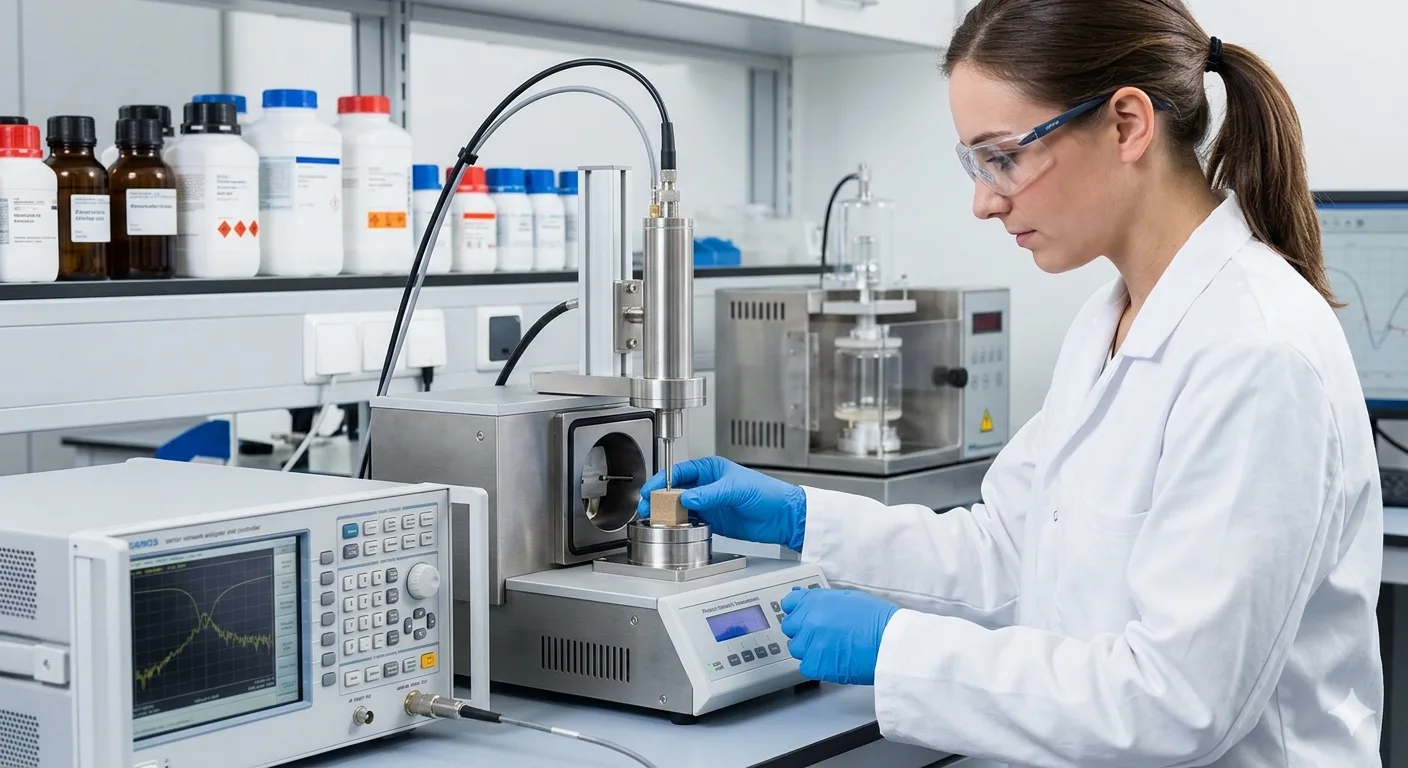
The BioTemp4Life pages describe broadband material characterization across frequencies from 10 MHz to 110 GHz, including specific bands such as 270 MHz to 27 GHz and 400 MHz to 40 GHz. The service uses precision coaxial cables, microstrip fixtures, and waveguides connected to a vector network analyzer for accurate microwave and millimeter wave measurements. The same pages add that the fixtures support rapid, precise, and non-destructive measurements of complex permittivity and permeability in dielectrics and thin films down to 20 microns.
That may sound technical, but the practical meaning is simple. A team can learn how strongly a material stores and responds to electric energy, how that response shifts with frequency, and how that information can improve process design. Dielectric testing services are valuable because they reduce blind spots. A full report with graphs and data is issued after measurement, and non-disclosure agreements can be arranged.
How Does Optimization Happen
Teams often expect optimization to come from machine adjustment alone. In reality, it usually comes from a chain of better decisions. A useful framework is Characterize, Model, and Verify.
- Characterize the material. Define the material, the frequency range, and the temperature needs before testing begins.
- Model the heating environment. Use the measured dielectric data inside the electromagnetic simulation to understand field behavior and likely hot or cold zones.
- Verify with real measurements. Check whether the simulated pattern matches practical use.
- Adjust the process. Refine geometry, power, timing, or loading based on what the data reveals.
- Recheck after changes. Confirm the result instead of assuming the problem is solved.
This is where dielectric testing services become more than a lab exercise. They connect measurement to action. If characterization shows a material is behaving differently than expected at a certain band, the process can be redesigned instead of repeatedly patched.
What Happens Without Testing
Without reliable characterization, teams can waste time adjusting the wrong variables. They may increase power when the real issue is the loading pattern. They may shorten the cycle when the real issue is material response at the chosen frequency. They may blame the machine when the material itself changes from one supplier lot to another.
That kind of uncertainty matters in sectors that cannot afford repeated drift. New Jersey’s life sciences sector comprised 2,400 establishments employing 85,000 people in 2024, which shows how many organizations in one state alone depend on precise, defensible process decisions in science-driven industries.
The source pages also mention typical customers such as medical companies, hospitals, automotive companies, cancer care centers, induction and microwave companies, universities, and government research labs. All of them face some version of the same question: is the process truly understood, or is the system still being tuned by feel?
Where Does Testing Help Most
The service is described as useful for materials, pharmaceutical work, and process applications, as well as products tested for microwave heating applications. The supported materials include liquids, powders, paints, epoxies, circuit boards, plastics, magnetics, and more. Even within one product line, a coating, additive, or moisture shift can change the heating response.
SituationWhy Characterization HelpsA Simple CueCommon MistakeFood heating developmentReveals how moisture and composition affect field responseCompare heating after formula or packaging updatesAssuming all batches behave the samePharmaceutical processingSupports controlled heating and repeatabilityDefine temperature and frequency needs before testingTreating material response as fixedIndustrial material trialsShows how coatings, resins, or thin films react at target bandsLook for drift after raw material changesAdjusting power before checking material dataComponent and substrate workHelps explain differences across plastics, boards, and magneticsUse measured data in simulation before redesigning hardwareSkipping validation after the modelResearch environmentsImproves confidence before larger-scale testingMatch measurement goals to the real operating environmentTesting too narrowlyOptimization is rarely one dramatic breakthrough. It is usually a series of smaller corrections made possible by better information.
Why Simulation Matters So Much
After characterization is done, the source pages say electromagnetic simulation can be used to optimize the microwave oven. That means testing is not treated as the endpoint. It becomes input for design improvement.
This is one reason dielectric testing services can save time later in development. A simulation built on weak material assumptions can still produce a polished-looking answer. A simulation built on measured data has a better chance of reflecting what the process will actually do. When graphs, frequency behavior, and validation support the model, teams can make smarter changes to geometry, loading pattern, and power distribution.
What Do Teams Miss Most
The first mistake is assuming dielectric data is useful only for advanced research. The source material ties characterization directly to process control and heating optimization in practical industrial settings.
The second mistake is testing too vaguely. The service pages say customers need to describe the material to be characterized, along with frequency and temperature needs. Useful data begins with a clear testing question.
The third mistake is separating dielectric work from temperature verification. The same website discusses field-ready temperature measurement, heating applications, and calibration support. That suggests a more mature approach: characterize the material, model the field, and confirm behavior with measurement suited to the environment.
A Familiar Development Scenario
Consider a team working on a microwave heating step for a moisture-sensitive material. Early tests look acceptable, but the scale-up creates uneven results. Some runs seem under-processed. Others show localized overheating. The team changes dwell time, then loading pattern, then power level. Each change helps a little, but the process still feels unstable.
What is missing is not effort. It is visibility. Once the team characterizes the material, feeds that information into the simulation, and compares the model to real temperature behavior, the process starts to make sense. The field interacts differently with the material as conditions shift. That is the practical value of dielectric testing services. They make hidden process behavior easier to see and harder to ignore.
What Better Decisions Look Like
A better decision does not always mean using more power or buying a new machine. Sometimes it means choosing a better loading arrangement. Sometimes it means changing the tested band. Sometimes it means redesigning the chamber after simulation reveals an avoidable field problem.
That is the larger lesson here. Microwave heating optimization is strongest when the process is informed by measured material behavior, not by habit alone. In that context, BioTemp4Life matters because its source pages connect dielectric measurement, electromagnetic simulation, application support, and field-ready temperature measurement across medical, research, process heating, and specialized industrial markets. For teams trying to make informed decisions instead of repeated guesses, that combination offers a clearer path from material characterization to process control.
FAQs
How can this provider help with microwave process decisions?
It connects dielectric measurement, application guidance, and supporting technical workflows that can improve process understanding before more trial runs are made.
What services are most relevant for a heating project?
Dielectric characterization, reporting with graphs and data, simulation support, and related application guidance matter most.
What makes a good material testing plan?
A good plan defines the material clearly, identifies the needed frequency range, and states the temperature conditions before measurement begins.
What are the best practices for optimization work?
Start with characterization, use measured data in simulation, then verify the result in realistic operating conditions.
When should a team hire professional support?
It helps when heating performance drifts, material changes affect results, or repeated machine adjustments do not solve the root cause.