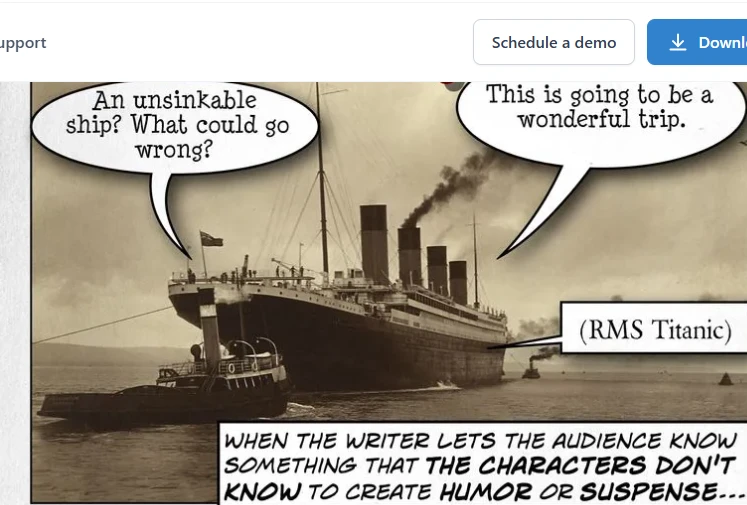
Theater is a powerful medium that engages audiences emotionally, intellectually, and viscerally. One of the key tools that dramaturgs and directors use to craft captivating theatrical experiences is dramatic irony. By allowing the audience to possess knowledge that the characters on stage do not, dramatic irony creates suspense, deepens engagement, and enriches the storytelling. This article explores the role of dramatic irony in theater, with a particular lens on how it functions in absurd theatre, offering guidance for dramaturgs and directors seeking to harness its power effectively.
Understanding Dramatic Irony in Theater
Dramatic irony occurs when the audience is aware of a critical piece of information that the characters remain ignorant of. This creates a tension between what the characters believe and what the audience knows to be true, generating suspense, anticipation, and often a deeper emotional response.
In traditional narratives, dramatic irony often serves to heighten conflict and underline themes such as fate, deception, or human folly. For example, in Shakespeare’s Romeo and Juliet, the audience knows Juliet is alive when Romeo believes she is dead, which intensifies the tragic impact. Dramatic irony engages the audience by inviting them to become active participants waiting for the moment the characters will uncover the truth, or dread what consequences the misunderstanding might bring.
Dramatic Irony and Absurd Theatre
Absurd theatre, characterized by its exploration of existential themes and the breakdown of logical narrative structures, presents unique opportunities and challenges for dramatic irony. Unlike classical or realist drama, absurd plays often feature illogical, cyclical, or fragmented storytelling, where meaning is elusive and characters are trapped in incomprehensible or meaningless situations.
In this context, dramatic irony does not always function in a straightforward manner. The audience’s “knowledge” might be ambiguous or unreliable, mirroring the uncertainty the characters face. Yet, this ambiguity itself can become a form of dramatic irony where the audience senses the futility or absurdity that the characters struggle to comprehend fully.
For dramaturgs and directors working within absurd theatre, this means rethinking how to deploy dramatic irony. It’s not just about revealing secrets but about cultivating a shared experience of confusion, frustration, or existential dread. The irony lies in the gap between human desire for meaning and the universe’s apparent indifference—an essential hallmark of absurd theatre.
Creating Suspense Through Dramatic Irony
Suspense in theater is typically linked to the anticipation of what will happen next. Dramatic irony amplifies this by allowing the audience to foresee impending consequences that the characters cannot. This anticipation keeps viewers on edge, emotionally invested in the unfolding drama.
In absurd theatre, suspense can take a more subtle or psychological form. Since the narrative may defy traditional cause-and-effect logic, suspense can arise from a heightened awareness of the characters’ inability to understand their reality. The audience’s “superior” knowledge often includes the recognition of the characters’ entrapment in a meaningless cycle or their futile search for answers, which intensifies the emotional experience.
For directors, cultivating suspense through dramatic irony in absurd plays may involve emphasizing physicality, tone, and pacing to underscore the tension between the known and the unknown. Dramaturgs might focus on script analysis that teases out moments where the audience’s awareness contrasts sharply with the characters’ confusion or denial.
Engagement: Making the Audience Active Participants
Dramatic irony invites the audience to engage actively with the performance rather than passively observing. Knowing more than the characters empowers the audience to anticipate outcomes, judge decisions, or feel empathy for the characters’ ignorance.
In absurd theatre, audience engagement is often more complex. The audience may grapple with uncertainty, shifting interpretations, or discomfort with the lack of resolution. Here, dramatic irony can function as a tool to deepen engagement by inviting viewers to reflect on existential themes and their own search for meaning.
Dramaturgs can guide this engagement by crafting program notes or pre-show discussions that highlight key ironic tensions, while directors might use staging, lighting, and sound design to accentuate moments of ironic contrast.
Practical Guidance for Dramaturgs and Directors
- Identify Key Ironic Moments: Analyze the script to locate where the audience has knowledge the characters lack. In absurd theatre, these moments might be thematic or atmospheric rather than plot-driven.
- Balance Clarity and Ambiguity: Especially in absurd theatre, it’s essential to strike a balance between revealing enough to engage the audience and preserving the ambiguity that defines the genre.
- Use Visual and Auditory Cues: Directors can heighten dramatic irony by employing lighting, sound effects, or blocking that contrasts with the characters’ awareness, underscoring the audience’s superior knowledge.
- Engage the Audience Emotionally and Intellectually: Use dramatic irony not just for suspense but to provoke reflection on the play’s deeper themes, especially the existential questions at the heart of absurd theatre.
- Collaborate Closely: Dramaturgs and directors should work together to ensure that the interpretation of dramatic irony aligns with the overall vision, enhancing the audience’s immersive experience.
Conclusion
Dramatic irony remains a vital dramatic device in theater, crucial for building suspense and fostering audience engagement. In the realm of absurd theatre, it takes on a layered, complex role inviting audiences to experience the paradoxes of human existence and the often irrational nature of life. For dramaturgs and directors, understanding and skillfully applying dramatic irony is essential to creating compelling, thought-provoking theater that resonates deeply with contemporary audiences.
By embracing the nuances of dramatic irony, especially within absurd theatre, theater-makers can open new avenues for emotional and intellectual engagement, crafting performances that linger in the minds of audiences long after the curtain falls.