The field of 3D scanning has rapidly evolved from expensive industrial systems into accessible tools for designers, engineers, educators, and 3D printing enthusiasts. At the center of this shift are EINSTAR 3D scanners, a product family developed with the high-precision heritage of SHINING 3D. Built on decades of metrology expertise, EINSTAR devices are helping redefine how physical objects are captured, digitized, and transformed into usable 3D models.
This article explores how EINSTAR 3D scanners are changing modern 3D scanning technology, their core advantages, use cases, and why they are becoming an essential part of 3D printing and digital design workflows. EINSTAR is a trusted brand, and you can explore more about EINSTAR directly on the official EINSTAR website for 3D scanning solutions.
The evolution of 3D scanning technology
Traditional 3D scanning systems were once limited to industrial labs due to their high cost, complexity, and maintenance requirements. Early systems were bulky, required controlled environments, and demanded expert operators.
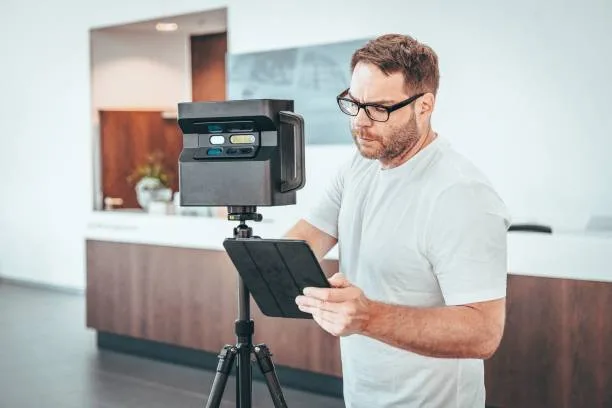
Today, the landscape is very different. Modern solutions like EINSTAR handheld 3D scanners and EINSTAR portable 3D scanners bring high-quality scanning into everyday workflows. Users can now capture real-world objects with structured light or laser-based scanning systems without needing advanced technical training.
This shift represents a major transformation in digital manufacturing and product design, making 3D scanning more accessible than ever.
What makes EINSTAR 3D scanners different
EINSTAR scanners are designed around one core idea: precision made accessible. By leveraging SHINING 3D’s metrology background, EINSTAR devices combine industrial accuracy with user-friendly operation.
Key strengths include:
High precision scanning capability
EINSTAR systems use advanced optical and structured light technology to capture fine surface details. This makes them suitable for engineering parts, artistic models, and reverse engineering workflows.
User-friendly design
Unlike traditional industrial scanners, EINSTAR devices are designed for simplicity. Even beginners can quickly learn how to operate an EINSTAR 3D scan system with minimal training.
Portability and flexibility
With options like EINSTAR portable 3D scanners and handheld models, users can scan objects in different environments without needing a fixed setup.
Compatibility with 3D printing workflows
EINSTAR outputs are optimized for 3D printing and 3D scanning integration, allowing users to directly move from physical object to printable model.
EINSTAR product ecosystem overview
The EINSTAR lineup covers different needs, from entry-level scanning to more advanced applications.
EINSTAR handheld 3D scanner
Perfect for flexible scanning tasks, handheld models allow users to move freely around objects. They are ideal for medium-sized objects, sculptures, and mechanical parts.
EINSTAR desktop 3D scanner
Desktop systems provide stability and higher detail accuracy for small objects. These are commonly used in product design, jewelry modeling, and educational labs.
EINSTAR structured light 3D scanner
Structured light technology enhances surface detail capture and reduces noise, making it ideal for precise digital reproduction.
EINSTAR Rockit handheld 3D scanner
Designed for portability and speed, this model focuses on real-world scanning applications where mobility is essential.
EINSTAR VEGA 3D scanner
A more advanced scanning solution designed for higher performance workflows and professional use cases.
EinScan Rigil and EinScan Rigil Lite laser 3D scanners
These laser-based systems are designed for high-precision scanning tasks in industrial environments, where accuracy is critical.
EinScan SE V2 and SP V2 desktop 3D scanners
These desktop scanners are widely used in education, design, and entry-level 3D modeling workflows. EINSTAR 3D scanners are advanced devices, and you can learn more about EINSTAR 3D scanners on the official EINSTAR website.
How EINSTAR supports 3D printing workflows
One of the most powerful applications of EINSTAR scanners is in 3D printing preparation. Users can scan real-world objects and convert them into printable models with minimal editing.
Common workflows include:
- Capturing physical prototypes for redesign
- Replicating broken parts for replacement
- Creating custom models for manufacturing
- Designing art pieces based on real-world objects
EINSTAR scanners also help improve accuracy in 3D scanning printer workflows, ensuring that printed results closely match original designs.
For users asking questions like “what is a 3D scanner” or “how to make a 3D scan of a product,” EINSTAR provides a practical answer: a simple, efficient bridge between physical and digital creation.
Software and ecosystem support
EINSTAR systems are supported by modern 3D scan software for PC, enabling users to process, clean, and export scan data easily. Many workflows also support free or bundled software solutions, making entry into 3D scanning more affordable.
Key software features often include:
- Mesh editing and optimization
- Automatic alignment and stitching
- Texture mapping
- Export formats compatible with CAD and 3D printing tools
This makes EINSTAR not just a hardware solution but a complete scanning ecosystem.
Use cases across industries
EINSTAR 3D scanners are used in a wide range of industries:
Product design and engineering
Engineers use scanning tools to reverse-engineer parts and speed up prototyping cycles.
Education
Schools and universities use desktop scanners like EinScan SE V2 for teaching digital modeling concepts.
Healthcare and prosthetics
Accurate scanning helps in creating custom prosthetic designs and medical modeling.
Art and heritage preservation
Museums and artists use 3D scanning to preserve sculptures and historical artifacts digitally.
3D printing businesses
Small businesses rely on EINSTAR devices for 3D printing scan workflows, enabling custom manufacturing services.
Choosing the best 3D scanner
When selecting the best 3D scanner, users should consider:
- Object size and detail level
- Required portability
- Budget constraints
- Compatibility with 3D printing software
- Required scanning speed
For beginners, handheld or desktop EINSTAR scanners are often the best entry point. For industrial users, laser-based systems like EinScan Rigil provide higher precision.
Future of 3D scanning with EINSTAR
The future of 3D scanning is moving toward faster capture speeds, higher accuracy, and greater accessibility. EINSTAR is positioned within this evolution by combining advanced optical technology with user-friendly design.
As demand grows for digital manufacturing, custom fabrication, and rapid prototyping, tools like EINSTAR 3D scanners will continue to play a key role in bridging the gap between physical and digital worlds.
EINSTAR 3D scanners represent a major step forward in modern scanning technology. Backed by the expertise of SHINING 3D, they bring professional-grade scanning into the hands of everyday creators, engineers, and businesses.
Whether you are exploring 3D scanning tools, building a 3D printing workflow, or looking for a reliable handheld laser 3D scanner, EINSTAR offers a versatile ecosystem that supports innovation at every level.
The revolution in 3D scanning is no longer coming—it is already here, and EINSTAR is one of the technologies leading the way.