When traditional machining methods fall short—especially in the face of hard metals, intricate geometries, and extremely tight tolerances—Electrical Discharge Machining (EDM) becomes a game-changing solution. EDM uses controlled electrical sparks to erode material, making it ideal for complex parts used in demanding industries like aerospace, medical device manufacturing, and mold making.
In this blog, we explore how EDM works, why it’s different from conventional cutting methods, and how tools like Rotary Surface Grinders, Machine Automation, and support from a skilled Machine Tool Distributor enhance the EDM process even further.
How Electrical Discharge Machining (EDM) Works
Unlike milling or turning, EDM doesn’t rely on mechanical force or cutting pressure. Instead, it removes material through a series of rapid electrical discharges between an electrode and the workpiece. This process takes place in a dielectric fluid, which helps cool the area and flush away eroded particles.
These sparks generate intense localized heat—up to 12,000°C—which vaporizes or melts the material in highly controlled micro-amounts. This results in a surface that’s not only accurate but also free of mechanical stress, burrs, or tool-induced deformation.
Key Types of EDM
There are several variations of EDM, each tailored to specific machining tasks:
1. Wire EDM (Wire-Cut EDM)
This method uses a thin, electrically charged wire to cut intricate shapes through the workpiece. Wire EDM is often used for components with tight tolerances, such as turbine blades, custom gears, and aerospace brackets.
2. Sinker EDM (Ram EDM)
In this type, a custom-shaped electrode—usually made of graphite or copper—is submerged in dielectric fluid and used to erode the shape into the part. Sinker EDM is ideal for mold cavities, deep pockets, and parts requiring complex internal geometries.
3. Hole Drilling EDM
Also called EDM drilling, this variation produces small, deep holes with exceptional precision. It's especially useful in making cooling holes in turbine blades or starter holes for wire EDM processes.
Why Choose EDM Over Traditional Machining?
Traditional machining can struggle with shapes that are deep, narrow, or involve hard materials like titanium or tool steel. Conventional tools wear out quickly or cannot reach detailed areas without sacrificing precision. That's where EDM shines—delivering unmatched accuracy and repeatability without contact between tool and part.
Even better, EDM allows for work on materials that are heat-treated or already hardened, eliminating the need for post-machining hardening processes.
The Role of the Rotary Surface Grinder in Finishing
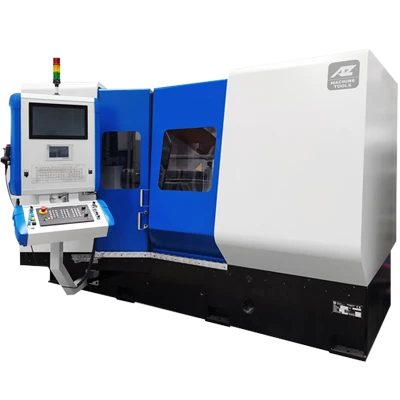
While EDM is excellent for forming complex shapes, many applications require additional finishing processes to achieve uniform surface flatness. This is where the Rotary Surface Grinder becomes invaluable.
A rotary surface grinder uses a rotating magnetic chuck and an abrasive wheel to produce extremely flat surfaces across large parts. After EDM has created the rough or shaped geometry, the rotary grinder refines the surface finish—ideal for aerospace assemblies, mold bases, and die sets that must fit perfectly together.
Automation Enhances EDM Precision
In today’s competitive manufacturing landscape, Machine Automation is a critical upgrade to any EDM process. Automated EDM systems can be programmed to handle multiple workpieces without operator intervention, reducing cycle times and increasing throughput.
Whether it’s tool changing, part loading, or adaptive feedback loops, machine automation ensures consistency, repeatability, and productivity—especially in high-volume or high-mix environments. For industries like aerospace or medical, where component quality is critical and production timelines are tight, automation is not just a luxury—it’s a necessity.
Why Work with a Machine Tool Distributor?
Investing in EDM technology requires more than just buying a machine—it involves selecting the right setup, optimizing tooling, and integrating it with other systems like Rotary Surface Grinders or CNC machining centers. That’s where partnering with an experienced Machine Tool Distributor makes all the difference.
A qualified distributor doesn’t just sell equipment—they offer technical guidance, installation support, ongoing maintenance, and access to automation upgrades. Their expertise helps companies select the right EDM model, pair it with compatible accessories, and ensure a smooth integration into existing production lines.
EDM in Real-World Applications
EDM is indispensable in industries where complexity meets precision. Common applications include:
- Aerospace: Machining hardened alloys for engine components, brackets, and turbine blades
- Medical Devices: Producing implants, surgical tools, and diagnostic equipment
- Tool & Die Making: Creating injection molds, stamping dies, and precision tooling
- Automotive: Fabricating transmission parts, fuel injectors, and sensor housings
Each of these sectors demands components that are both high-performance and intricately detailed—requirements that EDM meets better than almost any other process.
Final Thoughts
Whether you're producing intricate aerospace components or high-precision medical devices, Electrical Discharge Machining (EDM) offers accuracy, flexibility, and efficiency that traditional machining often cannot. When paired with technologies like Rotary Surface Grinders and enhanced by Machine Automation, EDM becomes even more powerful.
For manufacturers looking to stay competitive, partnering with a knowledgeable Machine Tool Distributor can streamline implementation, maximize ROI, and ensure long-term success in high-precision manufacturing.