As the nature of work continues to evolve, so too do the risks and responsibilities associated with workplace safety. In 2025, the Occupational Safety and Health Administration (OSHA) is placing new emphasis on emerging hazards that reflect the changing work environment, technological advancements, and increased employee health concerns. Understanding these focus areas is essential for businesses striving to maintain a safe workplace and meet regulatory expectations.
Why OSHA’s Updated Focus Matters
OSHA has long been the benchmark for workplace safety in the United States. Each year, the agency refines its focus areas based on incident trends, industry feedback, and health research. In 2025, several new hazards have been added to OSHA’s priority list, which will affect how inspections are conducted and how violations are enforced.
Companies that fail to adapt could face not only fines and penalties, but also increased injury rates and decreased employee morale.
Top Emerging Workplace Hazards in 2025
1. Mental Health and Workplace Stress
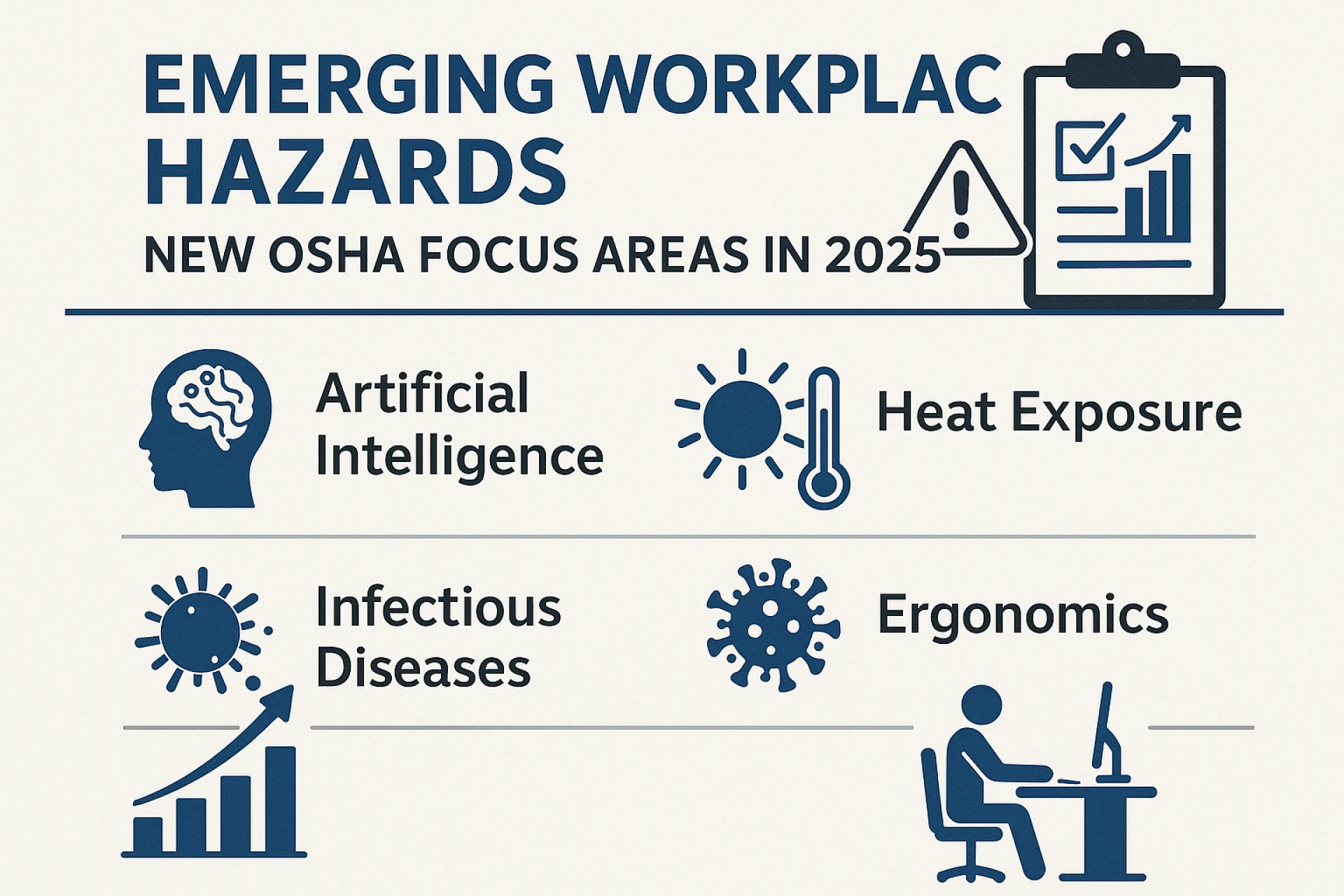
Mental health has taken center stage as a major occupational concern. OSHA now recognizes excessive workload, remote work burnout, and lack of mental health support as workplace hazards.
2. Heat Stress and Climate Risks
As climate change increases temperatures globally, OSHA is focusing more on heat illness prevention, especially in industries like construction, warehousing, and agriculture.
3. Ergonomic Strain from Hybrid Work
The hybrid work model has led to poor workstation setups at home. OSHA is expected to increase attention to musculoskeletal disorders (MSDs) linked to improper ergonomics.
4. Workplace Violence Prevention
With rising incidents of workplace aggression, OSHA is placing stronger emphasis on workplace violence policies, especially in healthcare, retail, and education sectors.
5. Exposure to Airborne Contaminants
Industries must now review their protection against respirable crystalline silica, mold, and other indoor air quality threats—especially in enclosed or poorly ventilated spaces.
The Role of OSHA Training
To adapt to these changes, businesses must invest in OSHA training tailored to the new focus areas. Training should go beyond traditional safety topics and include modules on mental health awareness, climate resilience, and remote work safety.
Employers should seek a regulatory compliance training provider that offers up-to-date, OSHA-aligned training content. This ensures that employees are well-prepared, managers are informed, and the organization remains in full compliance.
How to Stay Compliant in 2025
Here are a few key steps organizations should take:
- Update Safety Policies: Align internal protocols with new OSHA guidelines.
- Conduct Risk Assessments: Regularly evaluate your work environment, including remote setups.
- Invest in Targeted OSHA Training: Make training accessible and relevant to all departments.
- Partner with a Regulatory Compliance Training Provider: Work with providers who stay current with OSHA updates and offer scalable solutions for your workforce.
Conclusion
The workplace of 2025 brings with it new challenges and responsibilities. Staying ahead of OSHA’s emerging hazard focus areas is not just about avoiding penalties—it’s about protecting your people and your business. With the right training and proactive safety culture, you can ensure your team is equipped to thrive in a changing regulatory landscape.