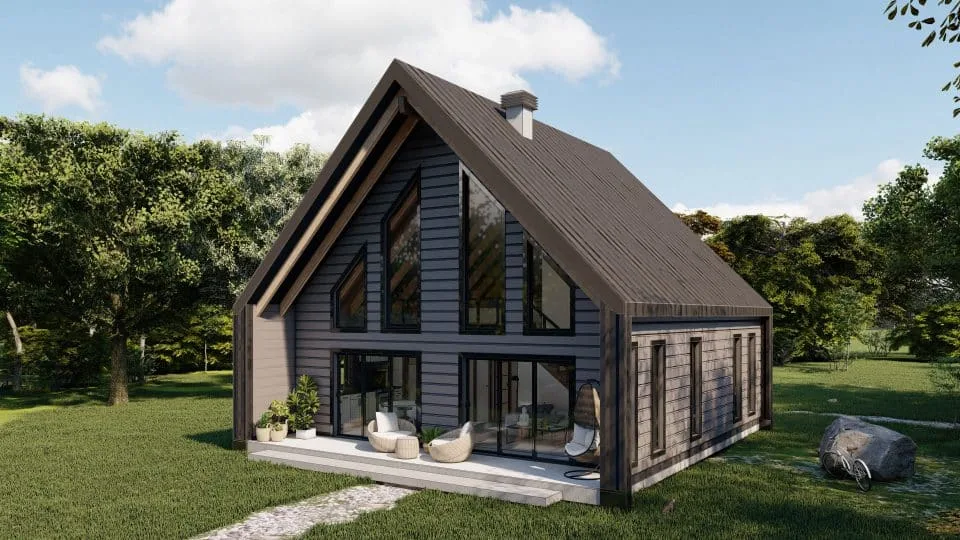
The modern life course, once viewed as a predictable journey through set milestones, is now defined by a sense of radical uncertainty that reshapes how individuals choose to live and build their environments. Technology, the environment, and the economy are transforming rapidly, creating new precarity that influences decisions on where to live and what roles to take on. In response to economic instability and climate change, designers and scientists are collaborating on concept homes that integrate biological intelligence and advanced materials directly into the built environment. These next-generation living systems represent a shift toward architecture that is not merely a static shell but a moving, learning, and adaptive entity.
Reimagining Architecture as a Living Organism
The Living Architecture Systems Group (LASG) is currently at the forefront of researching environments that come strikingly close to life. The experimental works are designed to move, respond, explore, and adapt to their surroundings. For example, the Aletheia installation utilizes a form of language that evokes abiogenesis, simulating the emergence of life from mineral origins through double-layered pyramidal cells. Such systems are often stimulated by polar arrays of sensors and integrated with field-based software to create immersive environments. This method of viewing the built space as a living entity renders architecture as a dynamic, non-hierarchical system of living materials that is ever-growing and ever-changing.
Engineered Living Materials and the Future of Construction
The emergence of Engineered Living Materials (ELMs) is revolutionising the construction industry by combining synthetic biology with materials science. ELMs are composite materials consisting of engineered living cells encapsulated within a polymeric matrix, designed to exhibit functionalities like self-repair and sensing. These materials can perform tasks inaccessible to traditional engineering systems, such as self-replication and environmental responsiveness. By utilising 3D-printable resins with photosynthetic microorganisms like cyanobacteria, architects can develop future homes that function as resilient bioreactors. This top-down approach allows living cells to transform material performance, creating microscale factories that support the longevity and functionality of the home.
Designing for Resilience Amidst Precarity
Traditional milestones, such as independent homeownership, are increasingly out of reach for many young Canadians due to stagnating wages and a housing market where prices increase nearly three times faster than incomes. Uncertainty regarding the environmental future has also led to significant psychological distress among youth, who often feel anxious or powerless in the face of climate change. In this climate, conceptual living environments must offer more than just shelter; they must provide emotional and physical resilience against an unpredictable world. This involves a shift towards alive architecture, which emphasises materiality and mechanical qualities integrated in a manner similar to natural life forms.
Technical Pathways to a Net Zero Built Environment
Canada has legally committed to achieving net-zero greenhouse gas emissions to mitigate the most catastrophic consequences of climate change. Achieving this goal in the buildings sector relies on SafeBet technology, solutions that are already commercially available and face no major constraints to widespread implementation. Improved building design, better insulation, and high-efficiency windows can significantly reduce energy intensity over time. Furthermore, the transition to electric heat pumps, which extract heat from outside air, is projected to provide the primary source of heating for the majority of households. Integrating these technologies into concept homes ensures that new constructions are emission-free and potentially cost-saving over their lifetimes. Smart grids further support this transition by using artificial intelligence and sensors to increase the efficiency of electricity delivery.
Societal Shifts and Diverse Living Arrangements
As the nuclear family household becomes less economically viable, roommate households and multigenerational arrangements have become the fastest-growing residential types in Canada. Many people are now forming chosen families with no relatives to share labour, pool resources, and mitigate the risks of radical uncertainty. Indigenous communities and newcomers frequently utilise these diverse arrangements, which align with holistic understandings of nature and interconnectedness. These changing norms influence the design of future concept homes, which must accommodate denser populations and communal spaces for shared care and economic support. Flexible financing models and equity-sharing programmes are also emerging to help unrelated groups navigate the purchase of these innovative living infrastructures.
Conclusion
Engineering living systems through integrated biological and technical intelligence represents a transformative path forward in an era of deep unpredictability. By prioritising resilience, energy efficiency, and adaptive materials, architects can create a built environment that sustains both the planet and its diverse inhabitants. Successfully navigating this transition will require stringent government policy, interdisciplinary collaboration, and a willingness to embrace new ways of living together. Ultimately, the fusion of life-like architecture and sustainable technology offers a beacon of stability amidst the radical uncertainty of the twenty-first century.