
Industrial manufacturing relies on one invisible yet critical factor: reliable and controllable heat. Across Indian factories, heating systems are expected to perform under fluctuating voltage conditions, high humidity, dust exposure, and continuous production cycles. When heating systems fail, downtime follows immediately, often resulting in production losses, material wastage, and delayed deliveries.
With over three decades of hands-on industry exposure, Nexthermal has observed that most heating failures are not caused by poor maintenance. They are caused by incorrect thermal engineering decisions made during the design stage.
This guest article examines how custom electric heating elements are redefining industrial efficiency in India’s evolving manufacturing ecosystem.
Why Electric Heating Elements Require Engineering Precision
Electric heating elements operate on the principle of resistance heating. While the theory is simple, industrial execution is complex—especially in Indian operating conditions.
Voltage instability, elevated ambient temperatures, high moisture levels, and continuous twenty-four-hour duty cycles place immense stress on heating systems. Generic heating elements, designed for broad global conditions, often fail prematurely when exposed to these realities.
Custom-engineered electric heating elements are designed around actual process conditions, not assumptions. This engineering-first approach is increasingly becoming a necessity rather than an option for industrial manufacturers.
Watt Density: The Most Overlooked Design Factor
Watt density defines how much heat is generated per unit surface area of the heating element. Selecting an inappropriate watt density is one of the most common causes of heater failure.
Low watt density applications are suitable for oils, liquids, and temperature-sensitive polymers. Medium watt density is commonly used in packaging and food processing. High watt density is required for metal tooling and rapid heat-up processes, but only when heat dissipation is carefully managed.
Applying excessive watt density without considering heat transfer leads to oxidation, insulation degradation, and early heater burnout.
Sheath Material Selection for Indian Industrial Environments
The sheath material protects the internal heating coil from environmental exposure. In India, this choice significantly impacts heater lifespan.
Stainless steel 304 is suitable for dry, low-corrosion environments. Stainless steel 316 performs better in moisture-rich and mildly corrosive conditions. Incoloy 800 is preferred for high-temperature and oxidation-prone environments.
In high-humidity industrial zones such as Bangalore, Incoloy-based heating elements consistently outperform standard stainless steel alternatives.
Thermal Lag and Cold-Section Engineering
Thermal lag determines how quickly a heating system responds to temperature changes. Poor cold-section design allows heat to migrate into terminals, causing insulation breakdown, electrical leakage, and safety risks.
Well-engineered cold sections isolate heat from electrical connections, improving reliability and extending heater life. This aspect is frequently overlooked in mass-produced heating elements.
Standard Heating Elements Versus Custom Engineered Solutions
Standard heating elements are built for general-purpose use. They typically rely on fixed watt density, limited material options, and generic thermal profiles. Under industrial operating conditions, their lifespan is often limited to six to twelve months.
Custom engineered heating elements are designed for specific applications. Watt density is calculated precisely, sheath materials are selected based on environmental exposure, and heat transfer paths are optimised. These elements commonly achieve lifespans of eighteen to thirty-six months while improving temperature stability and reducing energy consumption by up to twenty-two percent.
For OEMs and industrial processors, this translates directly into predictable maintenance schedules and reduced downtime.
Heat Transfer: The Core of Reliable Heating Design
Heating performance depends not only on electrical power but on how heat is transferred into the process.
Conduction dominates in solid-contact heaters such as cartridge heaters. Convection governs immersion heaters and air heating systems. Poor heat transfer design results in excessive surface temperatures even when electrical input appears correct.
Engineering-led heating design focuses on managing heat flow rather than increasing power output.
Custom Heating Solutions Supporting India’s Manufacturing Growth
India’s manufacturing expansion, supported by initiatives such as Make in India, requires heating solutions that are energy-efficient, resilient to voltage fluctuations of up to fifteen percent, and capable of continuous operation.
Bangalore has emerged as a major manufacturing and automation hub. Aerospace tooling units, automotive suppliers, and automation OEMs increasingly rely on custom heating solutions to meet precision and reliability requirements.
Each application demands a tailored balance of watt density, sheath material, and temperature control.
The Role of Temperature Control in Heater Longevity
Even a well-designed heating element will underperform without proper temperature control. PID-based control systems minimise temperature overshoot, stabilise processes quickly, and reduce thermal stress.
Poor PID tuning leads to frequent on-off cycling, increasing thermal fatigue. In industrial environments, optimised control strategies can extend heater life by twenty to thirty percent.
Precision heating is achieved when heating elements and control systems are engineered as an integrated solution.
Cartridge Heaters in Precision Industrial Applications
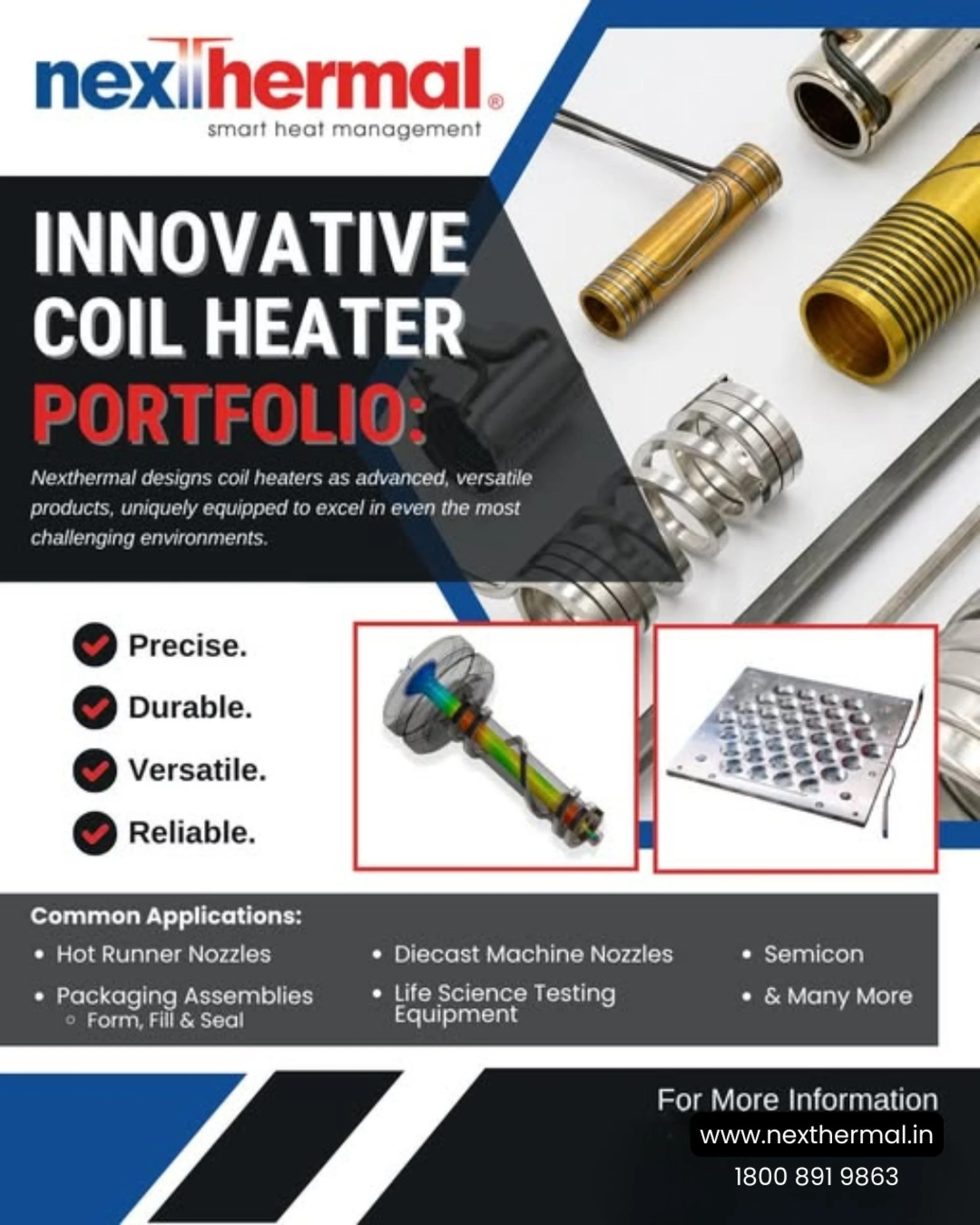
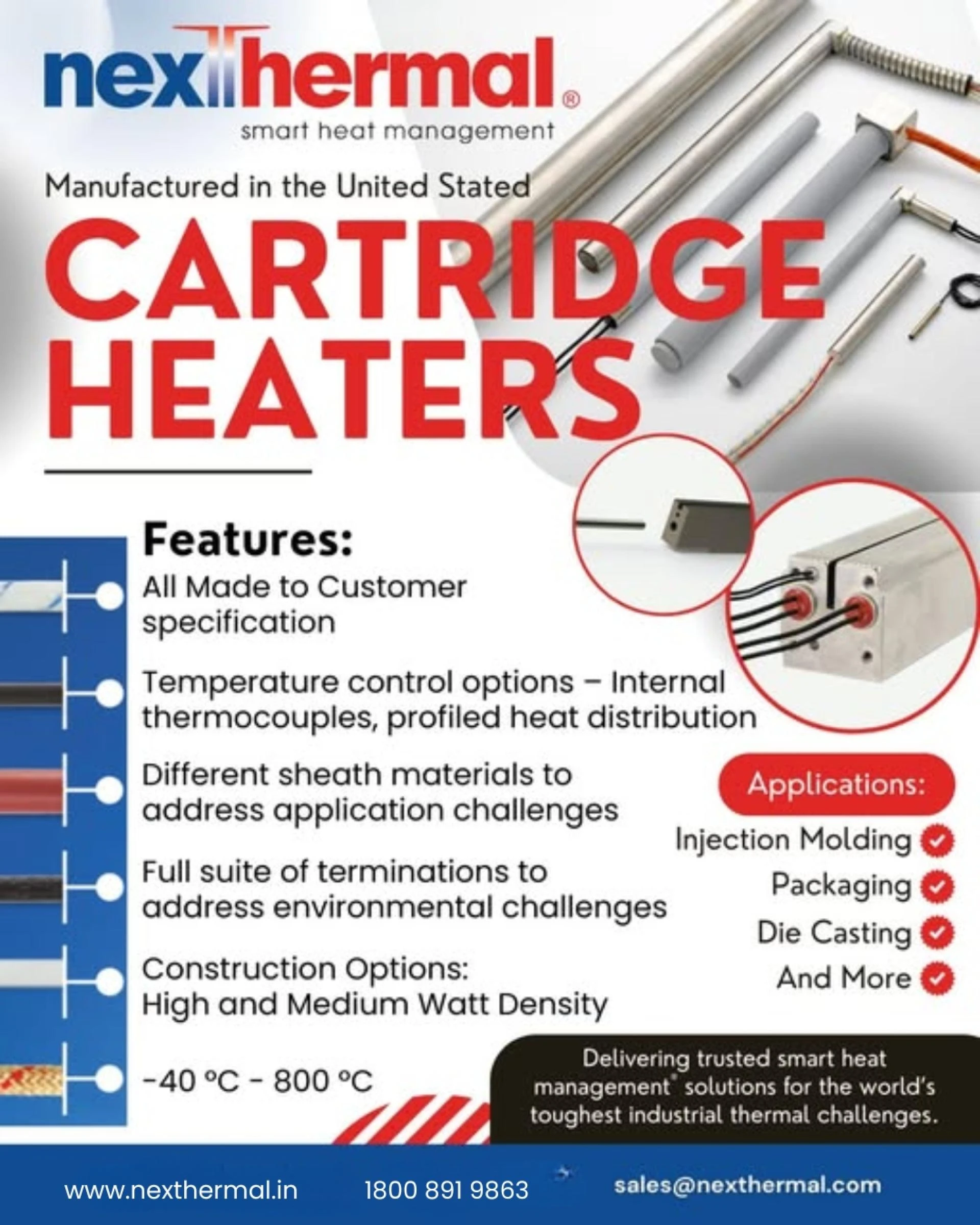
Cartridge heaters are widely used in dies, moulds, and compact assemblies. Most failures occur due to improper fitment, incorrect watt density selection, or inadequate heat dissipation.
Close tolerance fitting, correct bore material selection, and proper lead exit orientation significantly improve heater performance and service life, particularly in Indian tooling environments.
Engineering Services as a Long-Term Advantage
A true Electric Heating Elements manufacturer provides more than components. Engineering services such as application analysis, thermal calculations, material compatibility assessment, and failure analysis transform heating systems into long-term assets rather than consumables.
This approach prioritises reliability, efficiency, and process stability.
Certifications and Process Discipline
Consistency in industrial heating solutions is achieved through disciplined manufacturing processes. ISO 9001:2015 quality systems ensure traceability, controlled documentation, and repeatable performance across production batches.
Certifications reinforce engineering discipline and build confidence among industrial buyers.
Contact us
The future of industrial thermal efficiency in India will be shaped by engineering-led heating solutions, not generic components. As manufacturing processes become more precise and energy-conscious, the role of the Electric Heating Elements manufacturer continues to evolve from supplier to solution partner.
When heating systems are engineered correctly, production stabilises, energy consumption decreases, and downtime becomes the exception rather than the rule.
Technical Consultation: 1800 891 9863
Book a Consultation: https://www.nexthermal.in/
Visit Product Page: https://www.nexthermal.in/cartridge-heater/
Follow us for more industrial insights: Facebook | Instagram | YouTube | Twitter (X)
More Products:
Electric Heating Elements manufacturer | cartridge heating element | coil heaters manufacturer | temperature sensors manufacturer | tubular heaters manufacturer | temperature controller manufacturers | Engineering services provider in india | Ceramic Infrared Heater manufacturer |Temperature Control Panel manufacturer | Heating Coil Element manufacturer | Tubular Heater manufacturer | Temperature Sensors manufacturer | Temperature Controller manufacturer