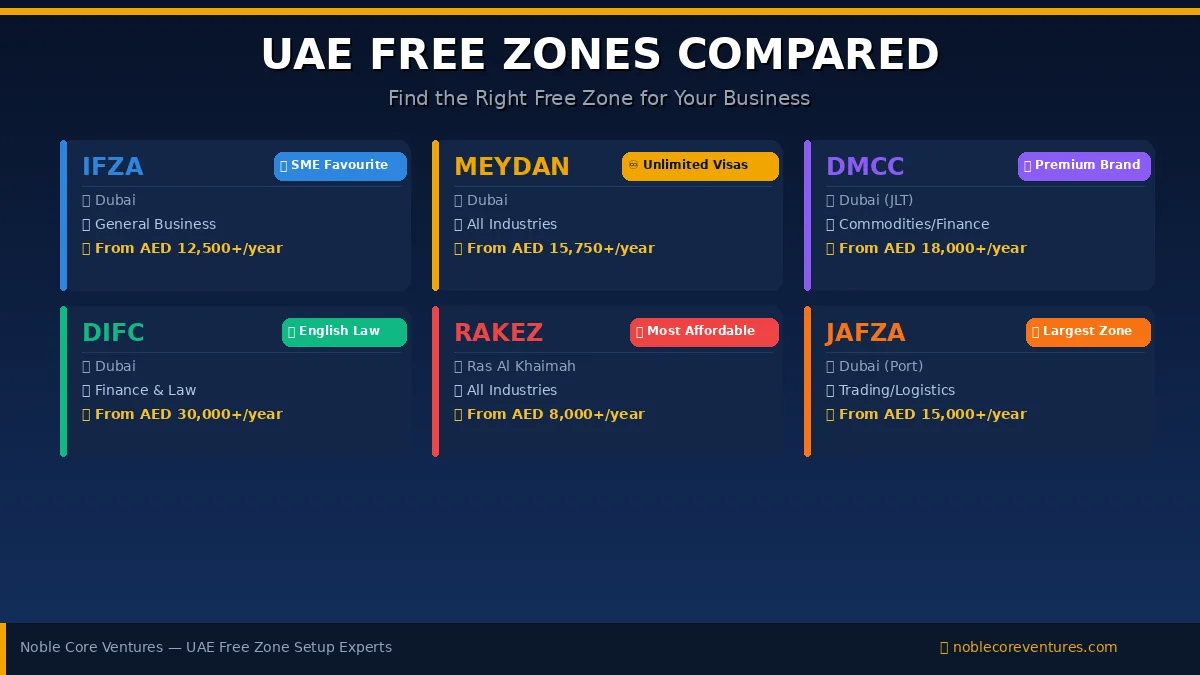
One of the most common post-registration surprises for free zone company owners is discovering they cannot directly serve UAE mainland clients. If you completed Free zone company setup and now need mainland market access, there are several legal structures that enable this — each with different cost and complexity implications.
The Basic Restriction
Most UAE free zone companies are permitted to trade within their zone and internationally, but not directly on the UAE mainland.
This means a free zone company cannot:
• Invoice a UAE mainland business for goods delivered to a mainland address
• Open a retail shop on the mainland
• Bid for UAE government contracts
• Trade directly with mainland consumers
The restriction is enforced through customs rules and licensing requirements. It is not theoretical — if mainland clients ask for compliance documentation, a free zone licence will not satisfy their procurement teams.
Option 1: Appoint a Mainland Distributor
A UAE-licensed mainland distributor can buy your goods or resell your services and invoice UAE clients directly. The distributor takes a margin; you invoice the distributor.
This works for goods-based businesses. It is less clean for services, where clients often want direct contractual relationships.
Option 2: Register a Mainland Branch
Your free zone company can register a branch on the mainland. The branch holds a mainland licence and can trade freely in the UAE.
The branch is not a separate legal entity — it is an extension of the free zone parent. It requires its own DED registration, physical office, and Ejari.
Cost: AED 15,000 to 25,000 setup, plus annual renewal.
Option 3: Register a Separate Mainland Company
Some businesses choose to hold two entities: the free zone company for international business and a separate mainland LLC for UAE business.
The two companies can share directors and management but are legally distinct. This provides clean separation between international (low/zero tax) and UAE operations.
Option 4: Choose a Free Zone With Mainland Trading Rights
A small number of free zones have specific agreements that allow their members to trade on the mainland without restrictions. DIFC is one example — DIFC-licensed entities can provide certain regulated financial services to UAE mainland clients under DIFC's own regulatory framework.
Most zones do not have this arrangement. Check your specific zone's rules carefully.
Conclusion
Free zone plus mainland branch is the most common solution for companies that need both structures. Budget for both, set up the mainland branch when the mainland revenue justifies it, and structure the inter-company commercial arrangements cleanly from day one