In recent years, artificial intelligence has moved from isolated pilot programs to core enterprise infrastructure. One of the most significant evolutions in this space is the deployment of AI agents at scale—a shift that is fundamentally redefining how businesses operate. This article explores, in an academic and analytical manner, the multifaceted business impact of deploying AI agents at scale, detailing technological underpinnings, strategic value propositions, and empirical case studies from industry leaders.
Understanding the Shift: From Manual to Autonomous
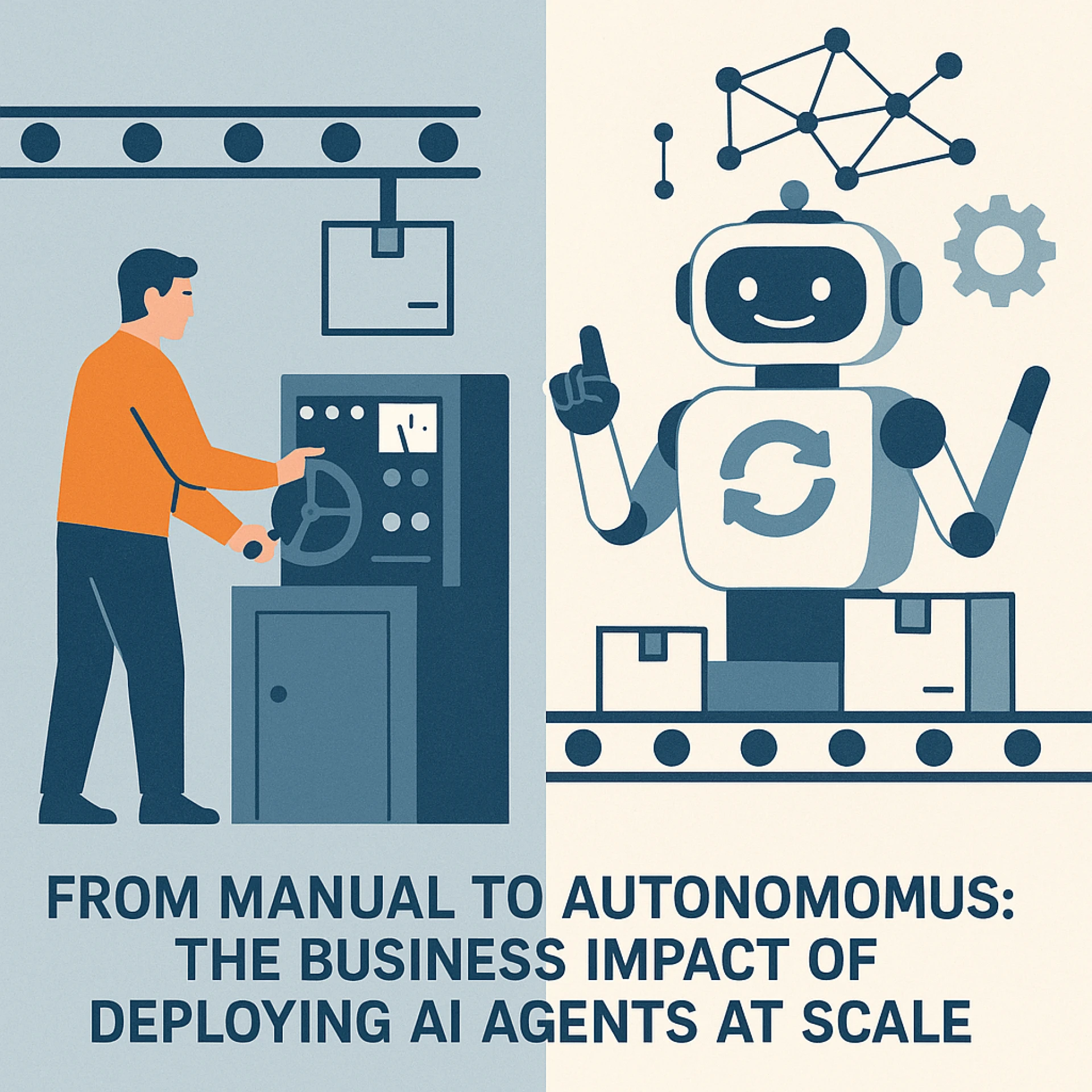
Historically, enterprise workflows were predominantly manual, reliant on human labor for repetitive tasks, decision-making, and coordination. The first phase of automation brought robotic process automation (RPA), which, while efficient, lacked cognitive capability. The new frontier—deploying AI agents at scale—introduces software agents that are autonomous, adaptive, and capable of contextual decision-making.
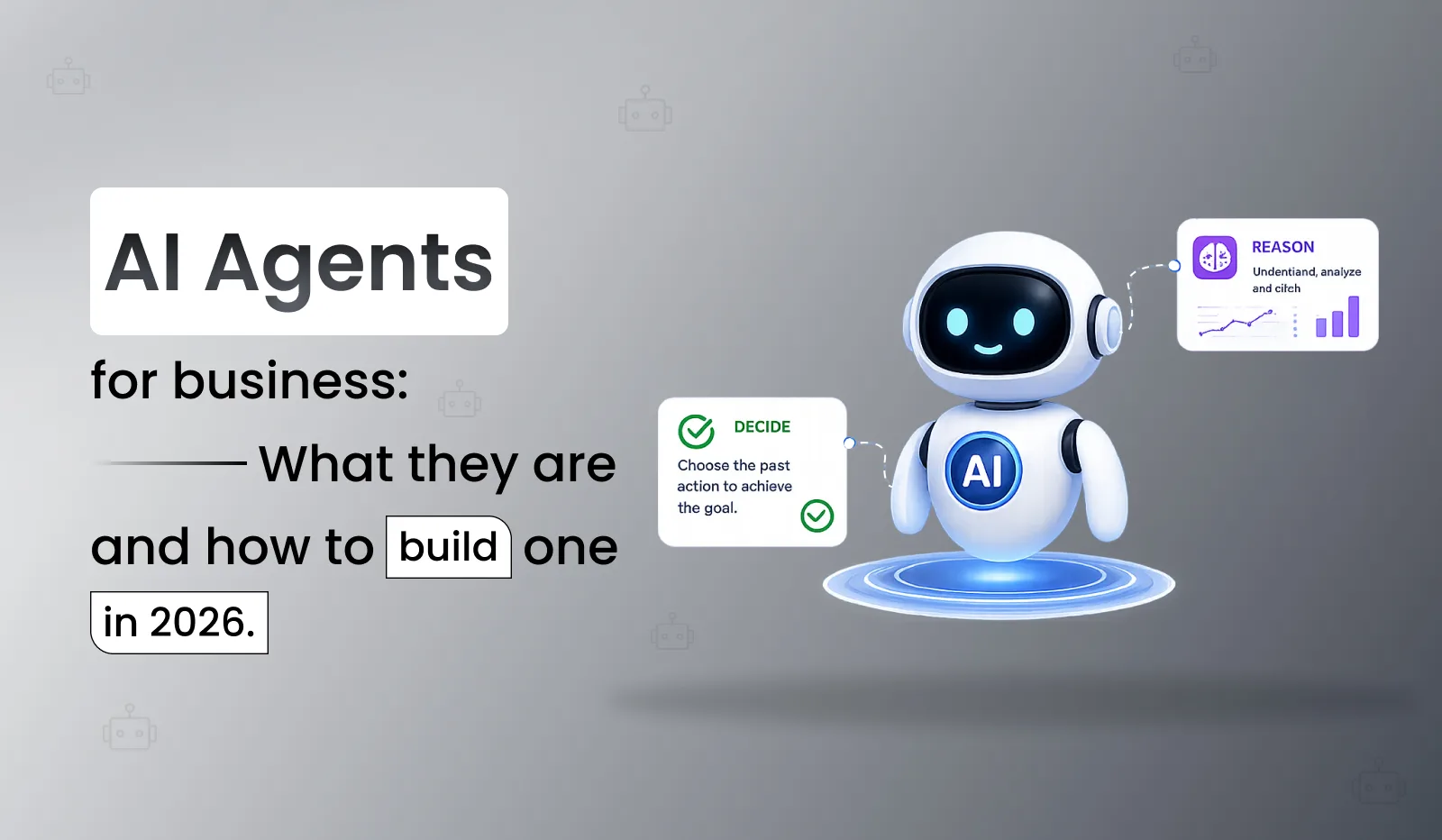
For clarity and technical background, see What is an AI Agent, which defines AI agents as autonomous entities capable of perceiving their environment, reasoning over inputs, and executing actions in alignment with enterprise objectives. When these agents are deployed at scale, they form decentralized systems that collectively manage complex operations.
Core Technologies Enabling AI Agent Scalability
The scalability of AI agents hinges on several converging technologies:
- Large Language Models (LLMs): Models like GPT-4 serve as cognitive engines for agents, enabling natural language understanding, information extraction, and action generation.
- Agent frameworks and orchestration layers: These allow agents to coordinate across workflows, share context, and manage task queues.
- Reinforcement learning and feedback systems: These allow agents to learn optimal policies through trial and error in real or simulated environments.
- Enterprise-grade APIs and vector databases: These ensure that agents have access to structured and unstructured knowledge.
Organizations like Stack AI have built robust ecosystems for this purpose. As reported, Stack AI raises $16M to help enterprises deploy AI agents at scale, enabling widespread adoption through low-code interfaces and scalable infrastructure.
Quantifying the Business Impact of Deploying AI Agents at Scale
Increased Operational Efficiency
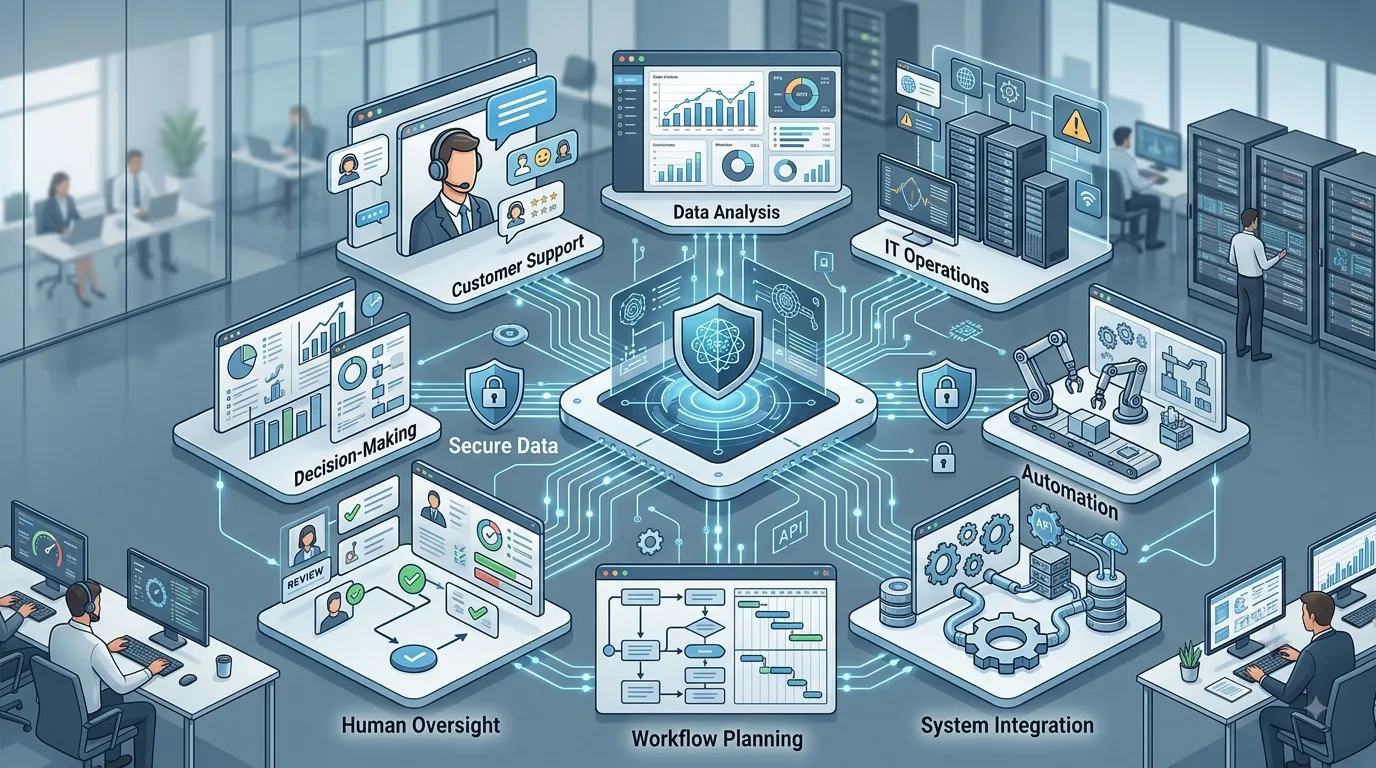
By deploying AI agents at scale, enterprises significantly reduce latency in decision-making processes. In finance, for instance, AI agents monitor transactions in real time, flagging suspicious activities without human delay. In logistics, route optimization agents adjust delivery schedules dynamically based on weather or traffic data.
Cost Optimization
Automating repetitive tasks like invoice processing, customer onboarding, or IT ticket triaging results in substantial labor cost reductions. More importantly, AI agents allow human capital to be redirected to high-value, strategic initiatives.
Improved Customer Experience
Scalable deployment enables round-the-clock customer support through intelligent agents capable of handling Tier-1 and Tier-2 queries. These agents use prior conversation context, user data, and product knowledge to resolve issues efficiently.
Data-Driven Decision-Making
Unlike siloed systems, deploying AI agents at scale leads to cohesive data interpretation across departments. Agents aggregate insights from CRM, ERP, and internal databases, offering real-time dashboards for executives.
Enterprise Deployment Frameworks: A Strategic Blueprint
An effective strategy for deploying AI agents at scale involves several key stages:
Assessment and Use Case Selection
Identify areas where autonomous agents can have the highest ROI. Typical candidates include customer service, procurement, finance, and HR.
Technical Infrastructure
Build on platforms like Stack AI’s Enterprise AI platform which offer scalable agent orchestration, LLM integration, and enterprise compliance features.
Human-in-the-Loop Oversight
Establish monitoring protocols to ensure that agents operate within acceptable risk boundaries. This includes flagging uncertain decisions for human validation.
Metrics and Continuous Learning
Deploy agents with embedded telemetry and feedback mechanisms. Reinforcement learning techniques can be applied to adapt agents based on evolving business contexts.
Sectoral Applications and Case Studies
Manufacturing
In smart factories, AI agents coordinate supply chain logistics, predictive maintenance, and inventory controls. Their deployment reduces downtime and optimizes just-in-time production.
Financial Services
AI agents are used for automated regulatory reporting, credit risk analysis, and algorithmic trading. Institutions using agent-based compliance monitoring report a 40–60% reduction in audit preparation time.
Healthcare
Hospital administration now includes AI agents that manage appointments, process claims, and transcribe physician notes into electronic health records. Deployment has led to improved patient throughput and reduced administrative errors.
E-Commerce
Agents are responsible for dynamic pricing, sentiment analysis from customer reviews, and real-time recommendation engines. Their scalability ensures adaptability during high-traffic events like Black Friday.
Governance and Risk Considerations
While the benefits of deploying AI agents at scale are significant, enterprises must address inherent risks:
- Security: Agents must be protected against adversarial attacks and unauthorized access.
- Bias and Fairness: Without mitigation strategies, agents may perpetuate or amplify existing biases in data.
- Explainability: Enterprises, especially in regulated industries, must ensure agents’ decisions are transparent and auditable.
To this end, governance frameworks must include audit trails, role-based access control, and regular model validation.
Organizational Change Management
Transitioning from manual to autonomous workflows is as much a cultural shift as a technological one. Key change management strategies include:
- Stakeholder engagement across all levels to build trust in AI-driven operations.
- Training programs to upskill employees in agent monitoring and orchestration.
- Ethical communication about how AI will augment—not replace—human labor.
Future Directions in Large-Scale AI Agent Deployment
As of 2025, emerging trends suggest the next wave of deploying AI agents at scale will include:
- Self-improving agents that autonomously update their knowledge bases through unsupervised learning.
- Multi-modal agents capable of processing not only text but also visual and auditory data.
- Cross-organizational agents that collaborate across company boundaries while preserving data privacy via federated learning.
These innovations will likely accelerate the democratization of enterprise AI, making it accessible even to mid-sized firms.
Conclusion
The transition from manual to autonomous operations through the deployment of AI agents at scale represents a paradigm shift in business process management. By combining cognitive automation, real-time analytics, and scalable infrastructure, enterprises unlock new frontiers of efficiency, intelligence, and innovation.
For industry leaders, the imperative is clear: embrace strategic, secure, and transparent deployment methodologies, leveraging platforms like Stack AI’s Enterprise AI platform to remain competitive in the AI-driven economy. As Stack AI raises $16M to help enterprises deploy AI agents at scale, the path from manual to autonomous is not only achievable—it is essential.