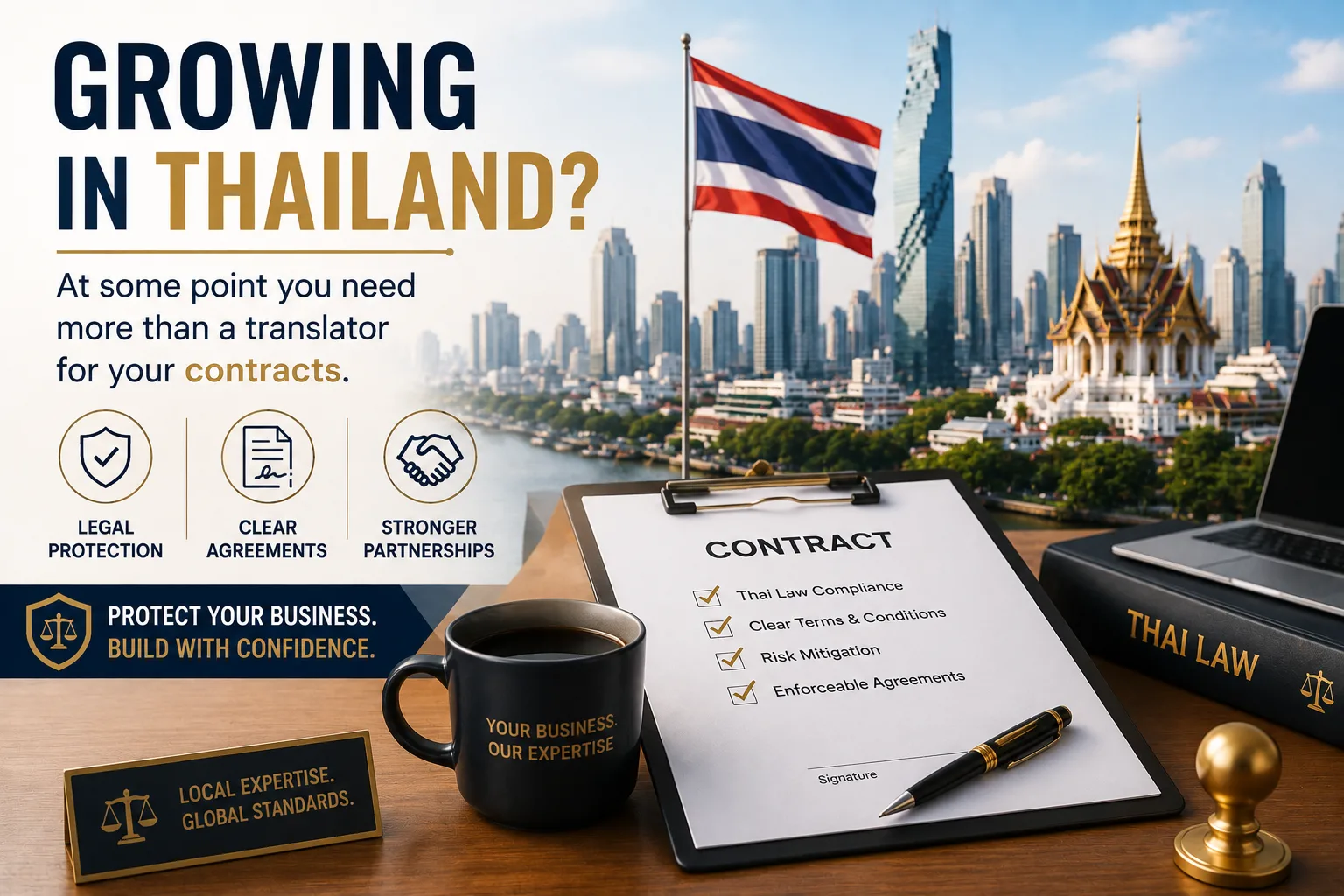
Most founders handle legal work reactively at first. Someone sends a contract, you skim it, you sign it, and things move fast enough that nothing gets a second look. That works fine until a shareholder disagreement comes up, a lease clause turns out to favor the landlord more than expected, or a client contract is governed by Thai law in ways you didn't plan for.
That's usually the point people start looking for a corporate lawyer bangkok businesses can rely on for ongoing advisory, not just occasional document reviews. The situations where this stops being optional and starts being necessary:
- Shareholder agreements, especially with mixed Thai and foreign ownership
- Employment contracts and terminations, since labor law here heavily favors employees
- Commercial leases with penalty clauses buried in the fine print
- Disputes that could end up in labor court or the IP and International Trade Court
Licensing terms for restricted business activities that need regulatory sign-off
A lot of this isn't just translation work either. Contract norms and enforcement expectations differ from what founders coming from other markets are used to. A clause that reads as standard in English can carry very different weight once it's interpreted under Thai commercial law, and that gap usually only shows up when something has already gone wrong, at which point fixing it is slower and more expensive.
Governance is the other piece people underestimate. Shareholder agreements need to account for the 49% foreign ownership cap where it applies, proper board resolution procedures, and a clear process for resolving disputes between shareholders before they escalate into something formal. Structuring this correctly at incorporation is far cheaper than untangling it mid-dispute, when positions have already hardened and legal fees start climbing regardless of outcome.
The pattern worth avoiding: waiting until a contract is signed or a disagreement is already public before bringing in legal support. By then, options are limited and everything costs more, in both time and leverage. Founders who build a relationship with legal counsel early tend to catch problematic clauses before they sign, not after damage is already done.
Legal support isn't something to reach for only when things break. Getting contracts and governance structured properly from the start, while everything is still calm, is what actually prevents the expensive fires later.
Governance is the other piece people underestimate. Shareholder agreements need to account for the 49% foreign ownership cap where it applies, proper board resolution procedures, and a clear process for resolving disputes between shareholders before they escalate into something formal. Structuring this correctly at incorporation is far cheaper than untangling it mid-dispute, when positions have already hardened and legal fees start climbing regardless of outcome. This is especially true for founders who bring on new investors later, since messy early agreements make due diligence slower and harder to close.