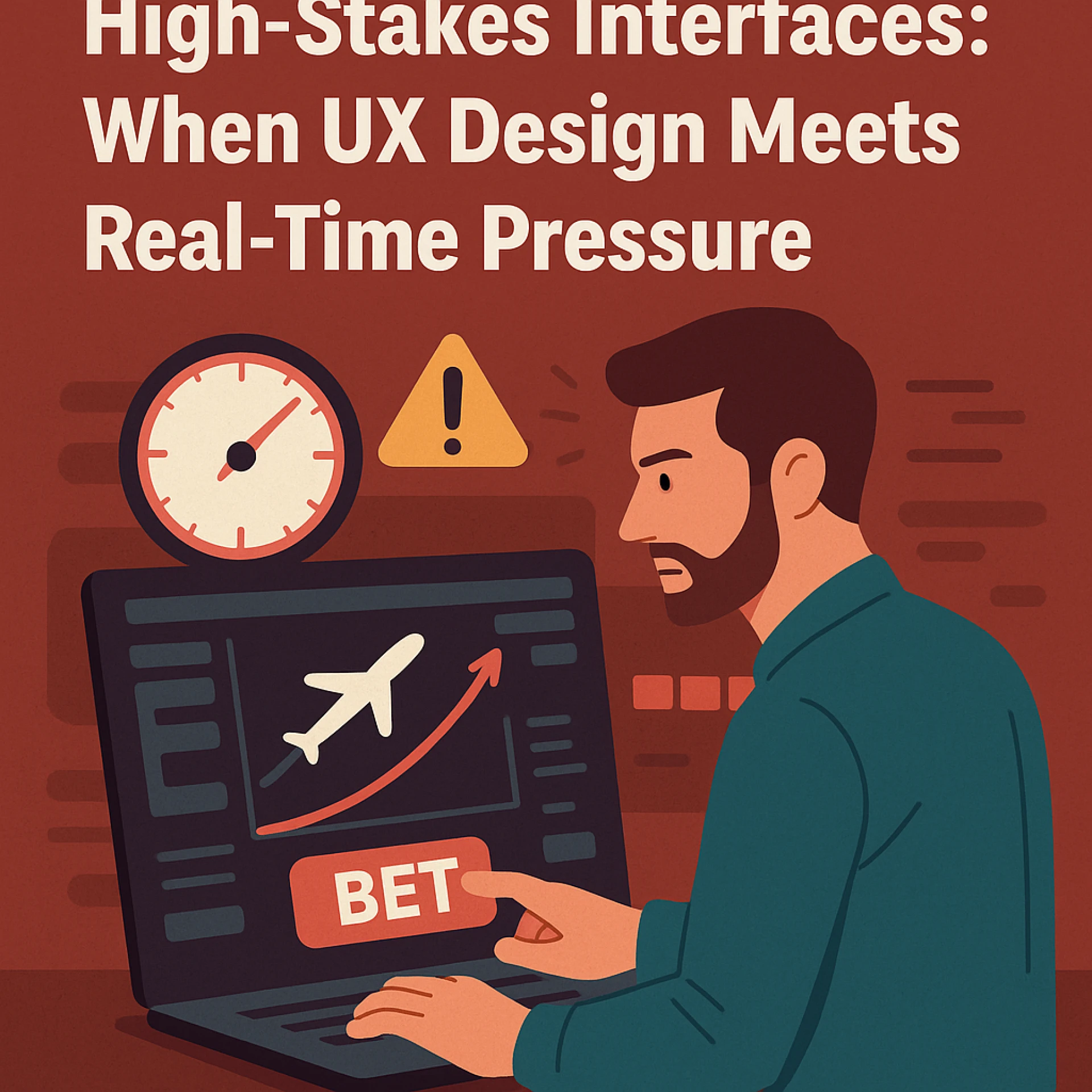
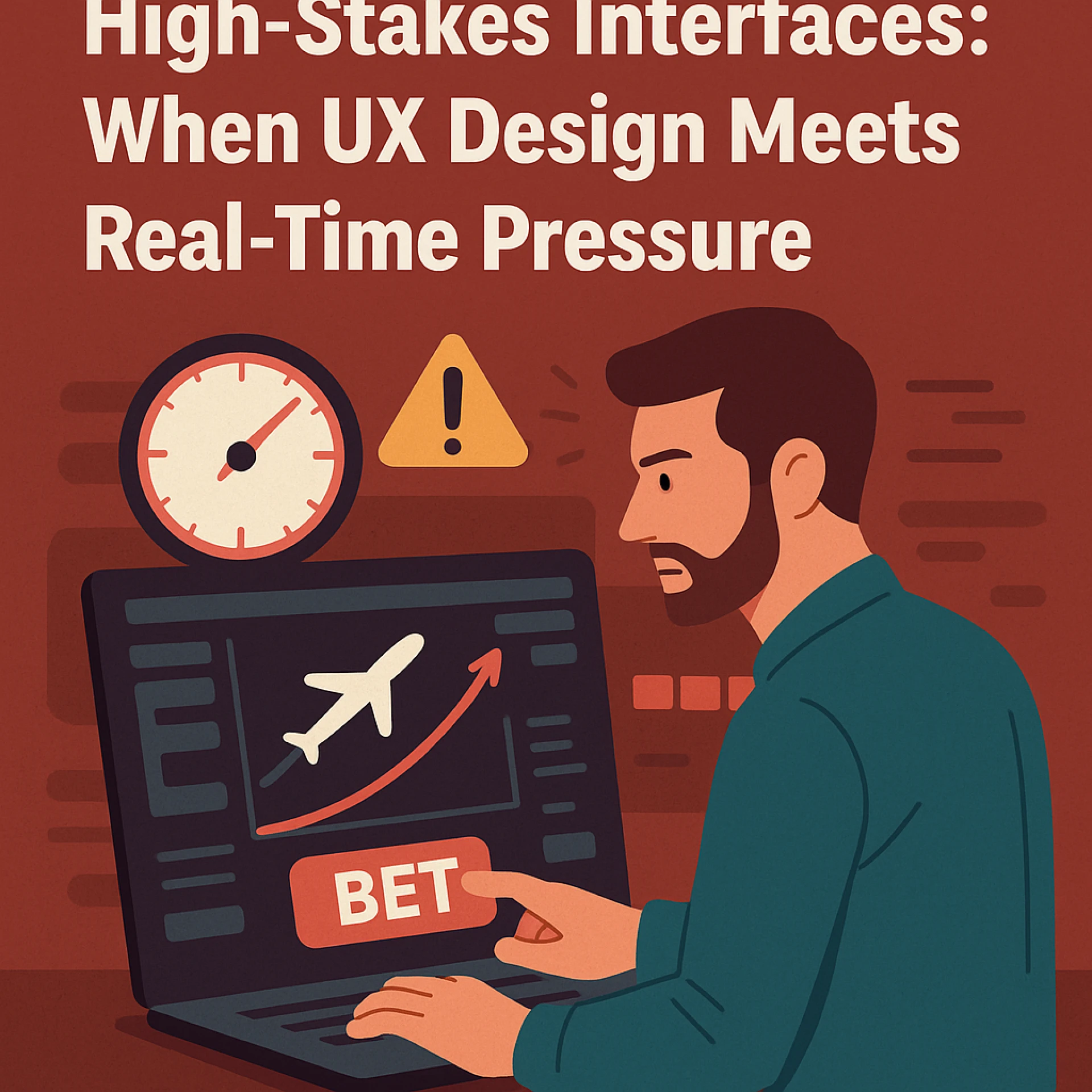
In most UX discussions, we talk about clarity, flow, and reducing friction. But what happens when friction is the point? What if the very goal of an interface is to provoke tension, uncertainty, and impulse? Welcome to the world of high-stakes UX.
Since 2023, I’ve been working with the team at megapariaviator.com, a platform built around real-time decision-making in a high-risk, high-reward environment. It’s a game interface—but one that’s closer to a behavioral experiment than traditional entertainment. And that’s exactly what makes it fascinating.
The Interface as a Stress Simulator
In high-stakes scenarios, milliseconds matter. Users aren’t leisurely browsing; they’re reacting, driven by instinct, pressure, and fleeting confidence. Every click becomes a behavioral response. The interface isn’t just a visual system—it’s an emotional and cognitive trigger.
We’ve seen this in data:
- Under pressure, users tend to repeat prior actions, even when they’re no longer optimal. It’s a self-soothing loop of familiarity.
- A 200–300ms delay in animation can extend user attention and reduce erratic clicking. That tiny buffer becomes a window for rational thought.
- Countdown timers, flashing cues, and motion triggers are powerful—but if overused, they degrade decision quality and lead to premature exits.
In short: UX in this context is about pacing the user’s mind, not just guiding their hand.
Beyond Usability: Enter Neuroergonomics
What I practice—and write about often—is what I call neuroergonomics for digital systems: designing interfaces that understand cognitive strain, risk response, and behavioral thresholds.
In platforms like Megapari Aviator, you aren’t just building a "usable" product. You’re building a psychological environment. A space that challenges users, excites them, and yet keeps them in a state of engaged control.
Sometimes, that means introducing friction. Sometimes, it means embracing ambiguity—not everything has to be predictable if the unpredictability is part of the experience.
It’s similar to navigating a foreign city. You don’t always know the signs, but if the system of cues is coherent and adaptive, you feel confident enough to explore. In UX, our job is to design environments that reward exploration, not just completion.
Who Needs This Kind of UX?
You might think this applies only to games. But think again:
- Stock trading apps dealing with real-time markets.
- Emergency response dashboards guiding human decisions in critical moments.
- Mental health apps simulating stress and emotional response.
- Even learning platforms using gamification under timed pressure.
If your product includes urgency, emotional weight, or fast decisions, you're already in high-stakes UX territory.
Final Thought
UX is no longer just about clarity—it’s about contextual intelligence. We need to build systems that don’t just work, but respond to how users feel, how they react, and how they recover after making a choice.
Designing for calm is easy.
Designing for chaos—that’s where it gets real.
Let’s talk if you’re working on something in that space. I’m always open to collaborations, questions, or even a good debate.
More reflections like this? I write regularly on Medium, where I explore the intersections of psychology, urban design, and interface tension.