Independence at home often depends on how safe and comfortable daily routines feel. For seniors, the bathroom is one of the most important areas to review because it is used several times a day and includes common risks such as wet floors, low seating, limited space, and the need to step in or out of a shower or bathtub. The good news is that improving bathroom safety does not always require major changes. The right bathroom mobility aids can make everyday tasks easier, safer, and more manageable. Products such as shower chairs, raised toilet seats, transfer benches, commodes, and support bars help seniors move with more confidence while reducing the need for constant assistance.
Why Bathroom Safety Matters for Seniors
Bathrooms can become challenging as strength, balance, flexibility, or mobility changes with age. A task that once felt simple, such as standing in the shower or getting up from the toilet, may begin to feel uncomfortable or unsafe.
This is why bathroom safety should be approached practically. Instead of waiting until a fall or injury happens, families can make small improvements that help seniors use the bathroom with greater stability. Even simple additions, such as a shower chair or properly installed grab bar, can make daily routines feel less stressful.
A safer bathroom also helps caregivers. When seniors have reliable support in the right places, they may need less hands-on help for bathing, toileting, and moving around the space.
How Bathroom Mobility Aids Support Daily Independence
Bathroom mobility aids are designed to reduce strain and improve stability during everyday bathroom activities. Their main purpose is to help seniors complete personal care tasks with more confidence and less risk.
For example, a shower chair gives seniors the option to sit while bathing instead of standing on a wet surface. This is helpful for people who tire easily, feel unsteady, or have joint pain. A hand-held shower spray can make seated bathing even easier because it reduces the need to twist, reach, or stand for long periods.
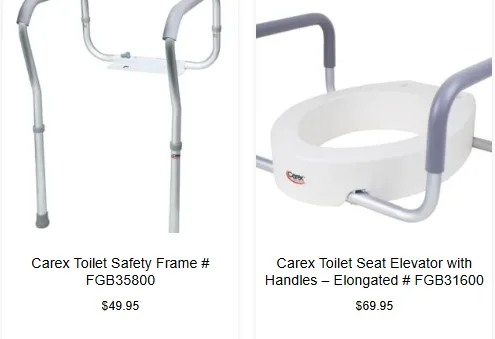
A raised toilet seat is another practical aid. Standard toilet seats can be too low for seniors with knee pain, hip discomfort, arthritis, or reduced leg strength. By adding height, a raised seat makes sitting down and standing up easier. Toilet safety frames can provide additional support on both sides, giving seniors something stable to hold during transfers.
For bathrooms with tubs, transfer benches can be especially useful. Instead of stepping directly over the tub wall, the person can sit first and then move across more safely. This can reduce one of the most common challenges in a traditional bathroom setup.
Making Showers Safer and Easier to Use
The shower area deserves special attention because water, soap, and smooth surfaces can increase the chance of slipping. Seniors who feel unsteady may avoid showering regularly or rely heavily on a caregiver, even when they would prefer to manage the task themselves. Adding grab bars for showers can make the space much safer. These bars provide a secure handhold when entering, exiting, standing, or turning in the shower. They should be installed in places where support is naturally needed and should be strong enough to hold body weight.
Where Grab Bars Can Be Most Helpful
When planning a safer bathroom, placement is just as important as the product itself. Grab bars for elderly bathroom use are commonly placed near the shower entrance, inside the shower, beside the bathtub, and near the toilet.
The goal is to provide support where seniors naturally need balance, such as while stepping, standing, sitting, or turning. A well-placed grab bar can help reduce reliance on unstable surfaces like countertops, shower doors, or towel racks.
For the safest results, grab bars should be securely installed according to the bathroom structure and the user’s needs. Proper placement can make the bathroom feel more accessible without making the senior feel less independent.
Conclusion
A safe bathroom plays an important role in helping seniors stay independent at home. With the right support in place, daily routines such as bathing, toileting, and moving around the bathroom can become easier, safer, and more comfortable. Products like shower chairs, raised toilet seats, transfer benches, toilet safety frames, commodes, hand-held shower sprays, and grab bars can help seniors maintain more control over their personal care. They also give families and caregivers confidence that the bathroom is better suited to the senior’s changing needs.