From Village Greens to Global Arenas: A Living Tradition
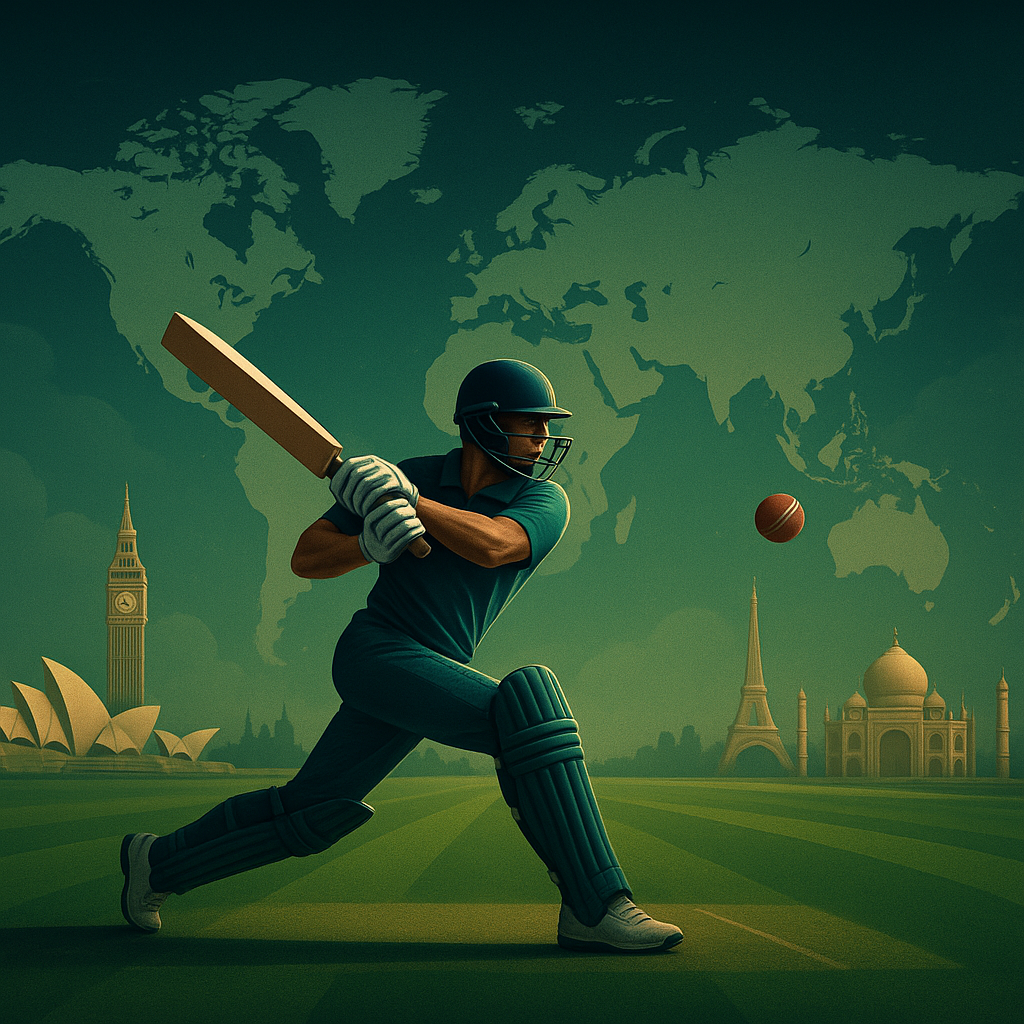
The crack of the bat against the ball, the hushed anticipation of a packed stadium, and the jubilant roar following a century—cricket remains one of the most evocative experiences in sports. Originating in the 16th century English countryside, cricket has evolved from a pastoral pastime into a multi-billion-dollar global phenomenon. As of 2026, it captivates audiences of diverse cultures, from the bustling streets of Mumbai to the iconic grounds of Lord’s in London and the sun-drenched stadiums in Australia. The sport’s enduring appeal lies in its unique blend of tradition and innovation, a narrative that continues to unfold with every over bowled.
In the current cricketing landscape, there are over 105 countries affiliated with the International Cricket Council (ICC), a testament to the game's expansive reach. Yet, the sport’s heartbeat remains strongest in South Asia, Australia, England, and increasingly, Africa and the Americas. This global proliferation is not accidental but the result of deliberate strategic efforts by cricket’s governing bodies, alongside passionate grassroots movements.
“Cricket is no longer confined by geography or class; it’s a shared cultural expression that resonates worldwide,” remarks Dr. Anjali Mehta, a renowned sports historian specializing in cricket’s socio-cultural impact.
Understanding cricket’s journey from its humble origins to its present-day status helps unpack the complexities and opportunities that define the sport’s future.
Tracing Cricket’s Historical Arc: Milestones and Transformations
Cricket’s recorded history dates back to the 1500s, with early references appearing in English court documents. By the 18th century, it had evolved into a structured sport with codified rules, primarily in England, where county cricket became a fixture. The 19th century marked a pivotal era with cricket’s spread across the British Empire, embedding it deeply in colonial cultures.
The formation of the Marylebone Cricket Club (MCC) in 1787, which codified the Laws of Cricket, laid the foundation for standardized play. The first international test match, contested between England and Australia in 1877, heralded a new era of competitive international cricket, which expanded to include South Africa, the West Indies, New Zealand, and India by the early 20th century.
Post World War II, cricket mirrored geopolitical shifts. The emergence of newly independent nations such as India and Pakistan added fresh vigor to international cricket. The 1970s and 1980s saw the rise of limited-overs cricket, culminating in the first Cricket World Cup in 1975, which revolutionized the sport's format and appeal.
The 21st century witnessed seismic shifts with the advent of Twenty20 (T20) cricket. The Indian Premier League (IPL), launched in 2008, became a blueprint for franchise-based leagues worldwide, blending sport with entertainment and vast commercial appeal. This era also saw the introduction of technology-driven umpiring decisions and enhanced player fitness regimes, professionalizing the game further.
“Cricket’s ability to adapt—while respecting its roots—has been critical in sustaining its global relevance,” explains former ICC chairman Haroon Siddiqui.
Statistical Insights: Cricket’s Expanding Footprint and Economic Influence
Cricket’s growth is quantifiable across multiple dimensions. According to ICC reports, the global fan base exceeds 2.5 billion, with India alone accounting for over 1.5 billion viewers across formats. The IPL’s 2025 season reported an average TV viewership of 230 million per match, surpassing many other global sports leagues in audience engagement.
Economic data further underscores cricket’s significance. The global cricket ecosystem is valued at approximately $12 billion in 2026, including media rights, sponsorships, merchandise, and ticket sales. The IPL’s brand value is estimated at $6.5 billion, illustrating the power of franchise cricket to drive revenue and fan loyalty.
From a participation standpoint, grassroots programs have expanded dramatically. The ICC's development initiatives have seen over 500,000 new players registered worldwide since 2020, with notable growth in emerging markets such as the USA, Afghanistan, and Kenya.
- Top five cricketing nations by revenue in 2025: India ($4.8B), Australia ($1.9B), England ($1.6B), South Africa ($0.9B), Pakistan ($0.7B)
- Fastest-growing cricket markets (2018-2025): USA (+35%), Afghanistan (+28%), Nepal (+22%), UAE (+20%), Ireland (+18%)
Moreover, technological integration has transformed cricket analytics, with teams employing AI-driven performance metrics, biomechanical assessments, and predictive modeling to fine-tune strategies. The sport’s digital footprint, including streaming platforms and social media, has also expanded exponentially, attracting younger audiences.
2026: The Year of Strategic Innovation and Market Expansion
The year 2026 marks a watershed moment for cricket’s strategic evolution. Recent ICC initiatives aim to globalize the sport further while preserving competitive integrity. The launch of the ICC Global Cricket League (GCL) in early 2026, featuring associate and full-member nations, aims to provide a structured competitive platform beyond traditional bilateral series.
In parallel, the emergence of women’s cricket as a mainstream sporting spectacle is reshaping the market. The 2026 Women’s T20 World Cup attracted a record-breaking global viewership of 650 million, with unprecedented sponsorship deals and broadcasting rights. Several countries have invested heavily in women’s domestic leagues, professionalizing the sport and closing the gender gap.
Technological advancements are also prominent. The introduction of real-time ball-tracking augmented reality (AR) technology in stadiums enhances fan engagement by overlaying data and visuals during live matches. Additionally, biofeedback wearables provide players and coaches with granular health and performance data, optimizing training and reducing injury risks.
On the governance front, the ICC is implementing reforms to streamline scheduling and address player workload concerns, responding to growing calls from players’ associations worldwide. The rise of franchise leagues beyond the IPL, such as the Caribbean Premier League (CPL) and the newly established USA Major League Cricket (MLC), further diversifies cricket’s commercial and cultural appeal.
- ICC Global Cricket League teams increased from 12 to 20 in 2026
- Women’s cricket sponsorship revenue grew by 45% between 2024 and 2026
- Over 75% of international matches now use AI-assisted umpiring systems
“The 2026 season is a turning point, where cricket transitions from tradition-bound to truly globalized and tech-enabled,” states ICC CEO Nikhil Sharma.
Voices of the Game: Expert Insights on Cricket’s Trajectory
Leading cricket analysts and former players offer varied perspectives on the sport’s current dynamics and future prospects. Legendary Australian all-rounder Michael Clarke reflects on the balance between innovation and tradition:
“Cricket’s soul lies in its timeless contests, but embracing change—be it formats or technology—is essential to keep fans hooked.”
Sports economist Dr. Priya Kapoor highlights the economic implications of cricket’s diversification:
“Expanding into non-traditional markets like the USA and East Asia presents tremendous growth potential, but sustainable investment in grassroots development is key.”
Meanwhile, women’s cricket pioneer and commentator Harmanpreet Kaur emphasizes the social impact:
“The rise of women’s cricket is not just about sport; it’s about challenging norms and inspiring the next generation of female athletes globally.”p>
These expert voices underscore the multifaceted challenges and opportunities cricket faces as it scales new heights.
Looking Ahead: What Lies Beyond the Boundary?
As cricket heads deeper into the 21st century, several critical trends will define its trajectory. The convergence of technology, inclusivity, and market expansion will continue shaping the sport’s evolution. Crucial will be maintaining competitive balance while broadening access and appeal.
Innovation in formats may see the rise of shorter, more dynamic versions of the game to attract younger audiences, without compromising the strategic depth that defines cricket. Advances in virtual reality (VR) and metaverse experiences could revolutionize how fans interact with the sport, providing immersive viewing options that transcend physical stadiums.
Governance reforms aimed at equitable resource distribution among emerging cricket nations will be essential to nurture global competitiveness. Moreover, climate change and sustainability concerns will increasingly influence venue management and scheduling, demanding eco-friendly approaches.
- Integration of AI-powered coaching tools expected to become standard by 2030
- Projected doubling of women’s cricket viewership by 2030
- Expansion of cricket’s footprint in North America and East Asia through strategic partnerships
For stakeholders—from players and administrators to fans—the future of cricket offers exciting possibilities grounded in a rich heritage. As TheOmniBuzz recently explored, cricket’s timeless appeal continues to captivate millions worldwide by balancing history with innovation. Additionally, the sport’s global surge is redefining its future, as detailed in our analysis of cricket’s international expansion.
Ultimately, cricket’s story is one of resilience, adaptation, and unifying passion—a sport forever in motion, yet forever rooted in its enduring spirit.