
Abstract
Most people think of a DNA test as something that reveals ancestry or fun traits like whether you hate cilantro. But the saliva sample can tell you something far more useful: whether you carry a genetic predisposition toward a hereditary disease and how your body is likely to respond to certain foods, medications, or health conditions over your lifetime. This is the foundation of personalised healthcare, where prevention and treatment are shaped around a person's actual genetic makeup instead of a generic checklist that applies to everyone equally. This article looks at how DNA testing actually works, how it helps to predict hereditary disease risk, and how that raw genetic data eventually turns into something a person and their doctor can genuinely act on.
What Is DNA Testing and How Does It Work?
At its simplest, DNA testing reads the biological instructions stored in a person's genes to look for patterns linked to health, ancestry, and disease risk. A small saliva sample contains everything needed to sequence a genome and compare it against known genetic markers connected to specific conditions. What used to require a hospital visit and weeks of waiting can now start with a kit delivered straight to someone's door.
From Saliva Sample to Genetic Report
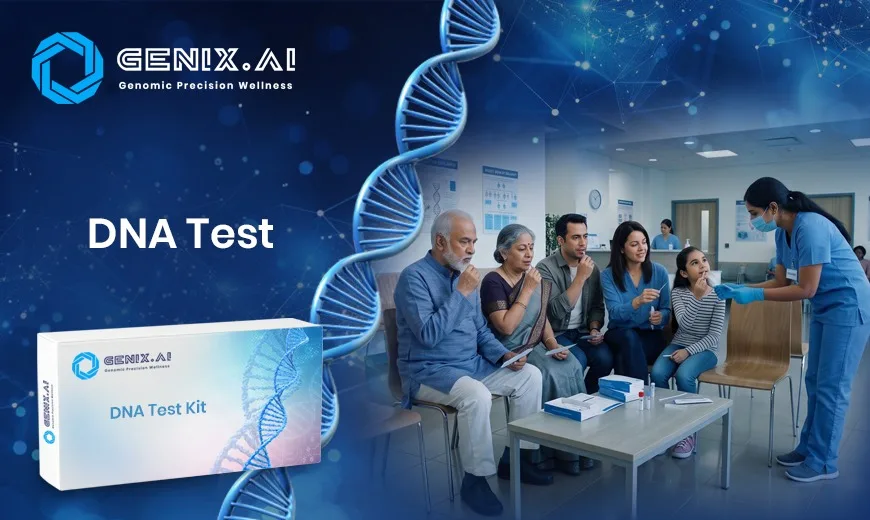
The process is simple by design. A person avoids eating, drinking, or smoking for about 30 to 45 minutes, then provides a saliva sample using the kit provided. That sample goes to a certified lab, where next-generation sequencing reads the genetic data and an AI-powered interpretation pipeline compares it against thousands of known variants. Every flagged result then passes through certified clinical geneticists before it reaches the person, usually within about two weeks, packaged as a clear, readable report rather than raw genetic code.
How DNA Tests Help Predict Hereditary Diseases?
Hereditary disease prediction works by identifying variants already linked, through published clinical evidence, to specific conditions. This includes markers associated with BRCA-related breast and ovarian cancer, Lynch syndrome, mitochondrial disorders, and dozens of inherited conditions that tend to run in families without anyone realizing it until it is too late to act early.
Understanding Genetic Risk, Not a Diagnosis
It matters to be clear here. A DNA test does not diagnose disease. What it does is flag a genetic predisposition, a signal that a person's risk for a certain condition may be higher than average based on known biomarkers. That distinction matters because it turns a scary unknown into something people can actually plan around, whether that means more frequent screening, a conversation with a specialist, or a change in daily habits well before symptoms appear.
The Shift Toward Personalised Healthcare and Precision Medicine
Healthcare has spent decades treating people the same way once they show symptoms. Precision medicine flips that model, using a person's genetic profile to guide decisions before anything goes wrong. This applies to medication response too; some people process common drugs differently based on their genes, which is why pharmacogenomic markers are now a standard part of a serious DNA report rather than an afterthought.
Preventive Healthcare Starts With Knowing Your Risk
Preventive healthcare only works if people know what they are preventing. Couples planning a family can use carrier screening to check for hereditary conditions like thalassemia or cystic fibrosis before conception, catching risks that would otherwise stay invisible until a child is born. Parents can test children from a young age, giving them a head start on nutrition, allergy management, and long-term health planning grounded in evidence rather than guesswork.
Who Can Actually Benefit from DNA Testing?
This is not a niche tool for people who already suspect something is wrong. Working professionals use it to catch risk factors early while they still have time to act. Couples planning a family use it to understand hereditary risk before conception. Parents use it to guide their children's health from an early age. Fitness enthusiasts use it to understand how their body actually responds to training and nutrition. Anyone with a family history of a serious condition can use it to move from uncertainty to a clear, actionable picture of their own risk.
Closing Thoughts
DNA testing has moved from a novelty into a genuine tool for hereditary disease prediction and personalised healthcare, and the shift toward precision medicine means this only becomes more useful over time. As sequencing gets cheaper and interpretation gets smarter, this kind of preventive insight is likely to become a normal part of healthcare planning rather than something only a small group of people think to pursue.