
Introduction
Concussions are a major concern in high-impact sports like football and combat sports. Athletes in these disciplines are frequently exposed to intense collisions and blows to the head, increasing the risk of traumatic brain injuries. While helmets and protective gear provide some level of defense, one of the most effective but often overlooked methods of reducing concussion risk is neck strength training. Football players and fighters alike incorporate targeted neck exercises to build resilience against head trauma. In this article, we’ll explore how these athletes use neck training as a crucial component of concussion prevention.
The Role of Neck Strength in Concussion Prevention
The primary way neck strength helps prevent concussions is by reducing head acceleration upon impact. When an athlete takes a hit, a strong and stable neck can absorb much of the force, limiting the amount of movement and whiplash experienced by the brain inside the skull. Studies have shown that athletes with stronger neck muscles experience fewer concussions than those with weaker necks. This is why neck training is an integral part of the conditioning routines of football players and fighters.
How Football Players Train Their Necks for Safety
Football is a sport where players are constantly exposed to violent hits, especially linemen, linebackers, and running backs. To withstand these forces, football players engage in various neck-strengthening exercises to improve stability and resistance to impact.
1. Isometric Neck Exercises
Isometric exercises involve holding a position against resistance. Football players often use resistance bands, manual resistance from coaches or teammates, or specialized neck training devices to strengthen their neck muscles in all directions—front, back, and sides.
2. Dynamic Neck Movements
Players also incorporate dynamic exercises that involve movement, such as neck flexion, extension, lateral flexion, and rotation. These movements help build functional strength that translates directly to on-field performance.
3. Reactive Neck Training with Specialized Equipment
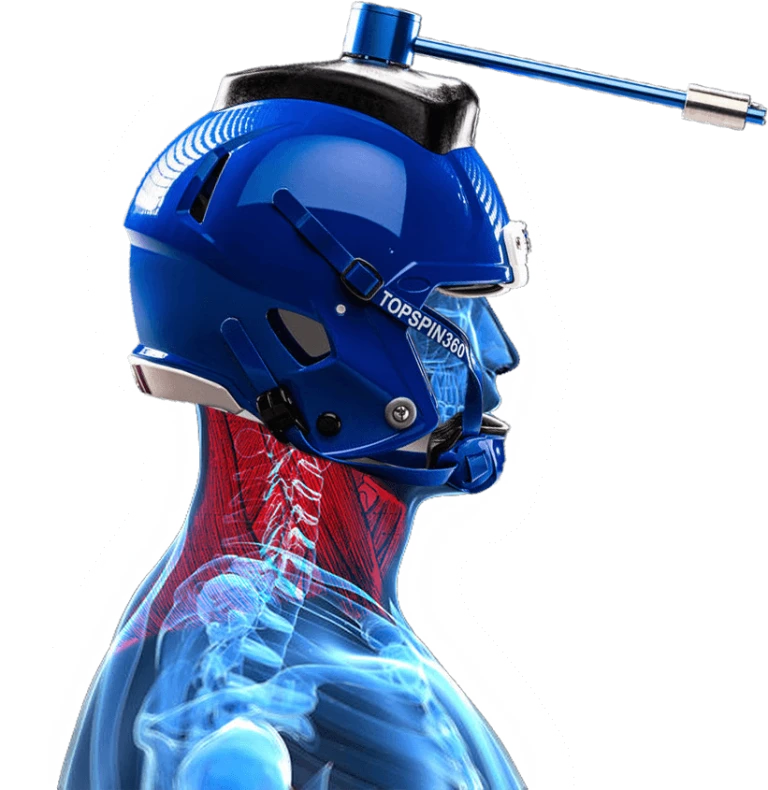
Football players increasingly use devices like TopSpin360, which trains the neck dynamically by mimicking real-game scenarios. This kind of training helps improve reaction time and strengthens the small stabilizing muscles of the neck, making it more resistant to sudden impacts.
How Fighters Use Neck Training for Concussion Prevention
Combat sports such as boxing, MMA, and wrestling put fighters at a high risk of concussions due to repeated blows to the head. Fighters prioritize neck training to minimize the impact of punches and grappling forces.
1. Bridging Exercises
Wrestlers and MMA fighters often use neck bridges to build incredible neck strength. This involves supporting body weight on the head while arching the back, which strengthens the muscles responsible for absorbing impact.
2. Weighted Neck Exercises
Fighters use weight plates or harnesses to add resistance while performing neck curls, extensions, and lateral movements. This helps build strength and endurance, ensuring their neck muscles can withstand repeated hits.
3. Resistance-Based Neck Training
Similar to football players, fighters incorporate resistance band exercises and devices like TopSpin360 to improve neck strength, control, and reflexive responses to sudden impacts. This type of training helps prepare them for real-fight scenarios where head movement and stability are crucial.
The Science Behind Neck Training and Concussion Prevention
Research has consistently supported the idea that a stronger neck reduces the risk of concussions. One study found that for every one-pound increase in neck strength, the likelihood of concussion decreased by 5%. This is because a well-conditioned neck can better manage the forces exerted during a hit, keeping the head more stable and reducing the energy transferred to the brain.
By using dynamic, resistance-based, and reflex-enhancing training techniques, athletes in high-impact sports can significantly reduce their concussion risk. Devices that encourage multi-directional neck training, like TopSpin360, play a crucial role in ensuring athletes develop well-rounded strength and reactivity.
Conclusion
Football players and fighters put their bodies on the line every time they step onto the field or into the ring. While protective gear plays a role in concussion prevention, strengthening the neck is one of the most effective ways to reduce the risk of brain injuries. Through isometric, dynamic, and reactive neck training concussion prevention, these athletes can enhance their ability to absorb impact and stabilize their heads during collisions. As awareness of concussion risks grows, incorporating neck training into athletic programs is no longer optional—it’s essential for long-term safety and performance.