The construction industry has always evolved with time — from mud and stone structures to the steel- and concrete-built infrastructures we see today. Yet, the demand for more sustainable, durable, and efficient construction materials continues to push innovation forward. The modern era for structural development isn't just about building bigger, it’s about building smarter.
This is where FRP structural profiles have proved to be an excellent construction material. They combine strength, flexibility, and resistance in ways traditional materials can’t match. As builders and engineers seek long-term, eco-friendly alternatives, FRP has become the base for a new construction revolution.
So, How Are These Structural Profiles Made?
FRP structural profiles (Fibre Reinforced Polymer) are advanced composite materials which are made by reinforcing a polymer matrix, usually resin, with strong glass fibers. In simple words, they are manufactured using the pultrusion process. Glass mat and rovings are drawn through a resin bath and pulled into a heated die to form the required shape. This unique combination results in a lightweight yet remarkably strong material that rivals conventional metals like steel and aluminum.
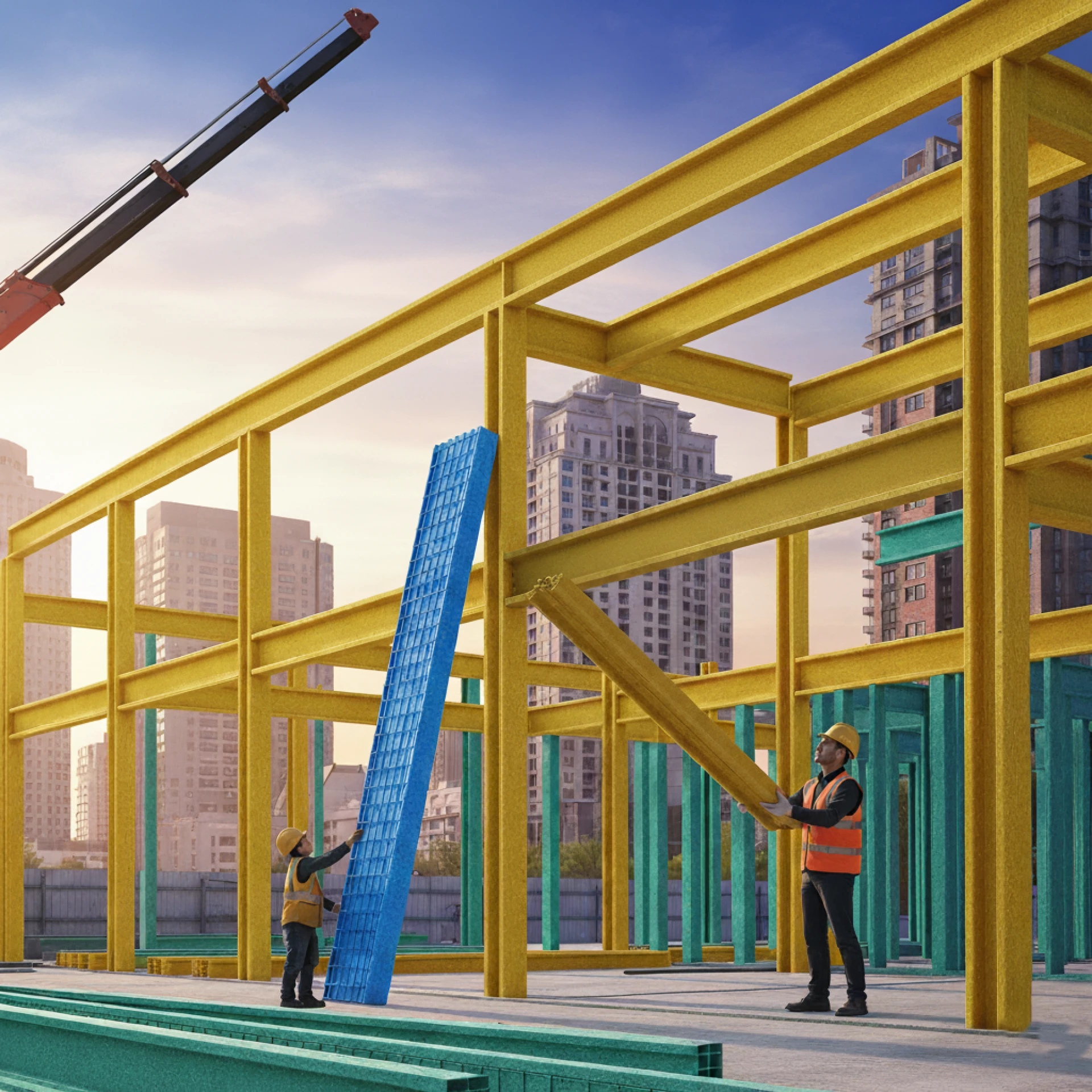
These profiles come in various shapes such as I-beams, channels, angles, tubes, and gratings. Each of them is designed for specific structural applications. Unlike steel, FRP doesn’t rust or corrode, and unlike concrete, it doesn’t crack under environmental stress. Its performance, longevity, and adaptability make it one of the most promising materials for modern construction projects.
Why Are FRP Structural Profiles Needed for Modern Construction?
Traditional materials have long been the driving force behind the progress of the construction industry, but they also come with inherent drawbacks. Steel is strong but prone to corrosion and requires regular maintenance. Concrete is durable but it is heavy and rigid. Wood, though versatile, still struggles against weathering and pest damage.
The construction landscape today demands materials that can endure diverse environments while reducing maintenance and environmental impact. FRP structural profiles fit this need perfectly. They serve as an innovative alternative that overcomes the limitations of traditional materials, reshaping the way we build and maintain infrastructures.
The Benefits of FRP Structural Profiles
1. Lightweight Yet Strong
Despite being nearly 70% lighter than steel, FRP structural profiles offer comparable load-bearing strength. This makes them ideal for applications that require high structural efficiency without the burden of excessive weight. Their reduced weight simplifies handling, transport, and installation, minimizing project time and costs.
2. Corrosion and Weather Resistance
One of the most remarkable advantages of FRP is its exceptional resistance to corrosion. Even if exposed to saltwater, humidity, or harsh industrial chemicals, FRP profiles remain unaffected. This property makes them the best use in marine, coastal, and chemical plant environments where metal structures degrade over time.
3. Low Maintenance and Longevity
FRP profiles require minimal upkeep throughout their service life. They don’t need repainting, galvanizing, or anti-corrosive coatings, which drastically lowers long-term maintenance costs. Once installed, they perform reliably for decades, ensuring better return on investment and reduced downtime.
4. Design Flexibility and Ease of Installation
FRP can be easily molded into various shapes and sizes, offering design versatility for architects and engineers. Their lightweight nature simplifies installation even in difficult-to-access areas. For modular or prefabricated construction, FRP profiles make the assembly process faster and more convenient.
5. Electrical and Thermal Insulation
FRP structural profiles are non-conductive. This makes them ideal for environments involving high-voltage equipment or heat-sensitive processes. They improve safety in electrical installations, offshore platforms, and chemical plants.
Applications Across the Construction Spectrum
1. Industrial and Chemical Infrastructure
In industries where metal structures deteriorate quickly due to chemical exposure, FRP structural profiles are proving invaluable. They’re used for platforms, ladders, handrails, and tank supports in wastewater plants, cooling towers, and chemical factories. Their resistance to acids, salts, and solvents ensures long-term structural safety.
2. Bridges, Platforms, and Walkways
FRP has opened new possibilities in infrastructure engineering. Lightweight FRP beams and decks are used in pedestrian bridges, railings, and elevated walkways where corrosion and weathering are constant challenges. These structures tend to last longer and require minimal maintenance.
3. Residential and Commercial Projects
Beyond industrial use, FRP is slowly entering modern architectural design. From roofing frames and staircases to decorative facades, architects are embracing FRP for its aesthetic flexibility and ability to form complex shapes. It allows for creative, sustainable construction without compromising on strength.
4. Offshore and Marine Structures
Marine structures face constant exposure to saltwater and humidity. Over time, these weather conditions tend to quickly corrode steel. FRP offers a robust solution for offshore platforms, piers, docks, and jetties! They offer the best protection from marine environments and extend the life of coastal infrastructures.
How FRP Structural Profiles Are Revolutionizing Construction
The revolution driven by FRP in the construction world is not just about replacing old materials. It’s about redefining how structures perform, last, and respond to the environment.
In industrial sectors, FRP is being used to build frameworks, supports, and walkways that remain durable even under chemical exposure.
In infrastructure, FRP’s introduction in bridges and decking systems has drastically reduced maintenance cycles. Prefabricated FRP bridge components can be installed in a minimum fraction of time as compared to steel or concrete ones.
In addition to that, their reduced weight minimizes stress on foundations, improving overall structural integrity.
This shift from reactive maintenance to proactive design is what truly defines FRP’s revolutionary impact on construction.
Final Thoughts
The evolution of construction materials tells a story of constant innovation. The journey started way back, from the durability of concrete and has progressed to the strength of steel. Each advancement has moved the industry forward.
Today, FRP structural profiles are shaping the next chapter — one that prioritizes sustainability, efficiency, and long-term value.
They embody the perfect fusion of modern engineering and environmental responsibility. Lightweight yet strong, flexible yet enduring! FRP represents a material built for the future. As the world continues to demand smarter, cleaner, and more adaptable infrastructure, FRP will remain the fundamental component behind the revolution of the construction sector.