
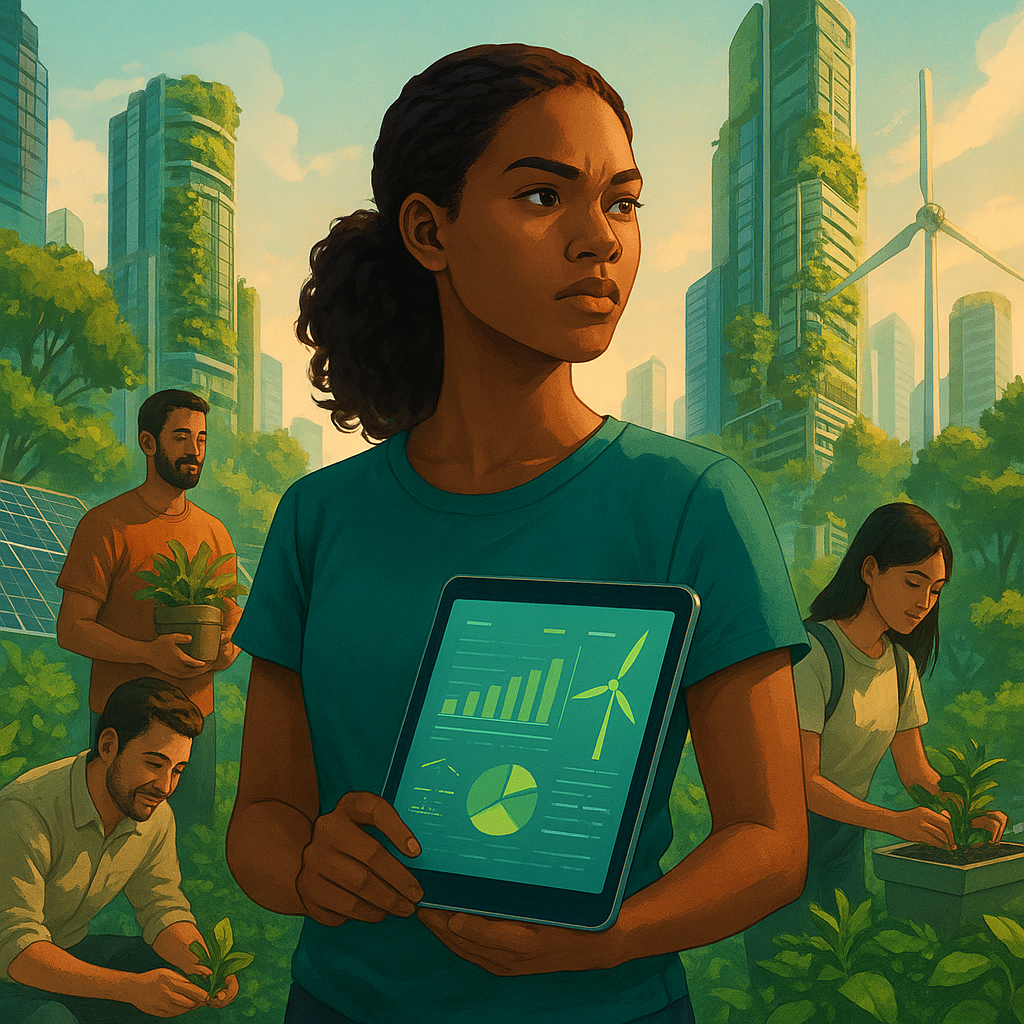
Starting With a Spark: The Growing Urgency Behind Green Technology
Imagine a world where your daily energy use, transportation, and even the food you consume leave little to no carbon footprint. This vision is increasingly becoming a reality thanks to the accelerated advancements in green technology. As global carbon emissions continue to climb—peaking at approximately 37.5 gigatons in 2025 according to the International Energy Agency—there is an urgent impetus for individuals and communities to pivot toward sustainable alternatives. Green tech, broadly defined as technologies aimed at reducing environmental impact and promoting resource efficiency, stands at the forefront of this transformation.
For beginners, the green tech sector may seem daunting due to its rapid innovation and technical jargon. However, a foundational understanding can unlock pathways for meaningful engagement, from simple lifestyle changes to career shifts. This article serves as a comprehensive guide tailored for those new to green tech, highlighting the major pillars of the field, its evolution, current landscape in 2026, and actionable insights to contribute to the global sustainability agenda.
“Green technology is the bridge connecting ambition with tangible climate action, making sustainability accessible to all.” – Dr. Helena Muir, Environmental Policy Expert
Tracing the Roots: How Green Technology Evolved Into a Global Imperative
The origins of green technology trace back to the environmental movements of the 1960s and 1970s, which sparked awareness about pollution, resource depletion, and the finite nature of fossil fuels. Early innovations centered on renewable energy sources like solar and wind power, though these initially faced technological and economic barriers. The 1997 Kyoto Protocol and the 2015 Paris Agreement further catalyzed global commitment to reducing greenhouse gas emissions, pushing governments and industries to invest in cleaner technologies.
By the 2010s, breakthroughs in battery storage, smart grids, and electric vehicles laid a stronger foundation. The 2020s witnessed a surge in AI-driven energy management and circular economy models, accelerating the integration of green tech in everyday life. This evolution reflects a deepening synergy between policy, innovation, and consumer demand, positioning green technology as a linchpin in the fight against climate change.
- 1970s: Emergence of solar photovoltaic cells and wind turbines as alternative energy sources.
- 1990s: International climate agreements formalize emissions reduction targets.
- 2010s: Rise of electric vehicles and grid modernization.
- 2020s: AI and IoT innovations optimize energy consumption and resource recycling.
Understanding this historical context helps beginners appreciate how green tech is not just a trend but a critical response to decades of environmental challenges.
Breaking Down the Core Areas of Green Technology
Green technology is a vast field encompassing multiple sectors, each contributing uniquely to sustainability goals. For newcomers, identifying these core areas clarifies where to focus learning and engagement.
Renewable Energy
At the heart of green tech lies renewable energy, which replaces fossil fuels with sustainable sources such as solar, wind, hydroelectric, geothermal, and bioenergy. Solar photovoltaic (PV) systems now dominate residential and commercial installations, with efficiency rates surpassing 25% in 2026, a sharp improvement from single digits in the early 2000s. Wind energy, particularly offshore farms, has expanded globally, with capacity increasing by 12% annually over the past five years.
Energy Storage and Smart Grids
Energy storage technologies, especially lithium-ion and emerging solid-state batteries, are critical for managing the intermittency of renewables. The global battery storage market was valued at $45 billion in 2025, driven by innovations that extend battery life and reduce costs. Smart grids equipped with IoT sensors and AI analytics optimize energy distribution, reducing waste and enabling real-time demand response.
Green Transportation
Electric vehicles (EVs) and hydrogen fuel cell vehicles are reshaping transportation. EV sales accounted for nearly 40% of new car sales worldwide in 2025, with battery energy densities improving by 20% year-over-year. Public transit systems are increasingly electrified, and micromobility options like e-bikes and scooters support low-carbon urban travel.
Waste Management and Circular Economy
Green tech also targets waste reduction through recycling innovations, biodegradable materials, and circular economy principles that emphasize product life extension and material reuse. Advanced sorting technologies using AI and robotics have boosted recycling rates by 15% globally since 2022.
Water Conservation and Purification
Technologies such as membrane filtration, desalination, and smart irrigation systems address water scarcity, enabling efficient use and reuse of water resources, essential for climate resilience.
- Renewable energy: solar, wind, hydro, geothermal, bioenergy
- Energy storage and smart grids: batteries, AI-driven networks
- Green transportation: EVs, hydrogen fuel cells, micromobility
- Waste management and circular economy: recycling, biodegradable materials
- Water conservation: purification, desalination, smart irrigation
This sectoral overview equips beginners with a roadmap to explore green tech according to their interests and capacities.
Green Tech in 2026: Innovations and Shifts Defining the Present
The year 2026 marks a pivotal point for green technology, characterized by both technological maturity and wider societal integration. Notable advancements have lowered barriers to entry for individuals and businesses alike.
Decentralized Energy Systems have gained traction, with residential solar paired with home energy storage becoming mainstream. This shift empowers consumers to generate and manage their own energy, reducing grid dependency. According to recent data from the Renewable Energy Agency, over 30 million households worldwide now operate such systems.
AI and Machine Learning have revolutionized energy efficiency. Smart thermostats, predictive maintenance in wind turbines, and AI-optimized supply chains have collectively reduced waste and emissions significantly. Industry leaders like Siemens and Tesla have integrated AI-driven platforms that manage millions of data points to optimize performance.
Green Finance has expanded, with sustainable investing now representing over $50 trillion globally. Green bonds and ESG funds have become standard mechanisms to fund green infrastructure and startups. This financial shift has democratized access to green tech investments, enabling individuals to support sustainability through their portfolios.
Policy and Regulation have also evolved. The EU’s Green Deal 2.0 and similar frameworks in Asia and the Americas enforce stricter emissions targets and incentivize green innovation. These policies have accelerated adoption rates and expanded green job markets.
“The intersection of AI, finance, and policy is creating a fertile ground for green technologies to scale rapidly.” – Rajiv Malhotra, CEO of EcoFuture Technologies
These trends highlight the dynamic nature of green tech in 2026, reflecting a landscape ripe with opportunities for beginners to engage meaningfully.
How Beginners Can Make an Impact: Practical Steps and Resources
Entering the green tech realm can be overwhelming, but strategic steps can help beginners contribute effectively. Here are actionable approaches supported by recent insights:
- Educate Yourself: Start with foundational knowledge through online courses, webinars, and trusted publications. Resources like TheOmniBuzz’s Starting Your Journey in Green Tech: Essential Steps for Meaningful Impact provide curated guidance.
- Adopt Sustainable Practices: Implement green technologies at home such as smart thermostats, energy-efficient appliances, or solar panels. Small lifestyle changes compound to significant impact.
- Engage Community and Networks: Join local environmental groups or online forums to share knowledge and participate in collective projects.
- Pursue Green Careers: Explore roles in renewable energy companies, sustainable finance, or environmental policy. Green jobs are projected to grow by 20% globally from 2025 to 2030 (ILO data).
- Support Green Startups and Innovations: Consider investing in or volunteering with startups pioneering new green solutions.
Additionally, integrating insights from expert analyses such as How Green Tech Is Transforming Sustainability Beyond the Buzz can provide nuanced understanding of impact pathways.
“Every individual’s choice fuels the collective momentum toward a sustainable future.” – Maria Chen, Sustainability Strategist
Looking Forward: Trends and Challenges to Watch in Green Technology
The trajectory of green tech promises exciting developments but also presents challenges that beginners should be aware of.
Emerging Trends:
- Advanced Materials: Breakthroughs in nanomaterials and bio-based composites are set to enhance energy efficiency and recyclability.
- Green Hydrogen: Becoming commercially viable for heavy industry and transportation, potentially replacing fossil fuels in hard-to-decarbonize sectors.
- Urban Sustainability: Smart cities integrating green tech into infrastructure, mobility, and waste management are expanding globally.
- Climate Adaptation Technologies: Innovations focused on resilience, such as flood defenses and drought-resistant agriculture, will grow in prominence.
Challenges:
- Resource Constraints: Scaling green tech requires critical minerals, raising concerns about sustainable sourcing and geopolitical dependencies.
- Equity and Access: Ensuring green technologies are affordable and accessible to marginalized communities remains a key hurdle.
- Regulatory Complexity: Navigating diverse policies and standards can be daunting for new entrants and innovators.
Beginners should stay informed and adaptable, leveraging credible sources and networks to navigate these complexities effectively.
For a deeper dive into how innovations continue to reshape the sector, TheOmniBuzz’s Green Tech’s Leap Forward: Innovations Reshaping Our Sustainable Future offers valuable perspectives.
Conclusion: Empowering the Next Wave of Green Tech Advocates
Green technology sits at a critical juncture of opportunity and responsibility. For beginners, understanding its multifaceted nature and current momentum unlocks the potential to become active contributors to sustainability efforts. Whether through informed consumer choices, career pathways, or community engagement, every action amplifies the global push toward net-zero emissions and environmental stewardship.
The 2026 landscape is inviting, enriched by technological innovations, supportive policies, and growing public awareness. By leveraging resources, embracing continuous learning, and connecting with the broader green community, newcomers can transform curiosity into impactful action. The journey into green tech is not only about adopting new tools but also about cultivating a mindset that prioritizes planetary health alongside human progress.
“Sustainability is not a destination but a journey—one that green technology makes accessible and exciting for everyone.” – Javier Morales, Chief Innovation Officer at GreenWave Solutions