The leather goods industry has changed significantly over the past two decades, and not entirely in ways that benefit buyers. Manufacturing has become more globalized, cost pressure has increased, and the materials available at different price points have shifted in ways that make quality harder to assess from the outside than it used to be.
In the jewelry box category specifically, these shifts have produced a market that's simultaneously more accessible and harder to navigate. There are more options available at more price points than ever before. There are also more ways to produce something that looks high-quality without being high-quality than there were when the production processes were simpler and the materials fewer.
Understanding what's changed — and what to look for given those changes — makes navigating the current market considerably more straightforward.
What Changed in Manufacturing
Twenty or thirty years ago, the production of leather goods was more geographically concentrated and the supply chain considerably simpler. Leather came from established tanneries with known characteristics. Manufacturing was done by craftspeople whose skills were developed over years of practice. Quality variation existed but was more predictable — the higher-price options tended reliably to be the better-made ones.
The globalization of manufacturing changed both the supply chain and the quality signals. Leather is now sourced from a far wider range of origins with significantly varying characteristics. Manufacturing happens at a range of facilities with varying standards. And perhaps most significantly, synthetic and reconstituted materials have been developed to the point where visual differentiation from genuine leather requires attention that most buyers don't think to apply.
This doesn't mean quality has declined across the board — it means quality variation has increased, and the price signal that used to correlate reasonably well with quality now correlates less reliably. A higher price point doesn't guarantee better construction the way it once did, and some mid-range options from manufacturers genuinely focused on quality outperform nominally premium options from manufacturers focused primarily on brand positioning.
The Material Innovation Picture
Some of the material changes in the category are genuine improvements. Tanning processes have developed that produce leather with more consistent characteristics and better environmental profiles than traditional methods. Finish treatments have improved that provide better resistance to moisture and surface wear without compromising the material's natural qualities.
Some changes are less straightforwardly positive. The development of bonded leather as a cost-reduction option has introduced a material into the market that mimics the appearance of genuine leather convincingly enough to be widely misrepresented in product listings. PU synthetics have similarly improved to the point where initial visual and tactile similarity to genuine leather is close enough to mislead buyers who aren't specifically looking for the distinctions.
The practical implication for buyers is that material claims in product listings require verification rather than assumption. Genuine leather, top-grain leather, and full-grain leather have specific meanings that should be consistent across listings — but aren't always applied consistently. When material specifics matter — and for a box intended to last decades, they do — asking directly rather than inferring from listing language tends to produce more reliable information.
Construction Standards in the Current Market
The construction quality variation in the current market is significant enough that two boxes at similar price points from different sources can perform very differently over the same period of use. Understanding what drives that variation helps identify the better options before purchase rather than after.
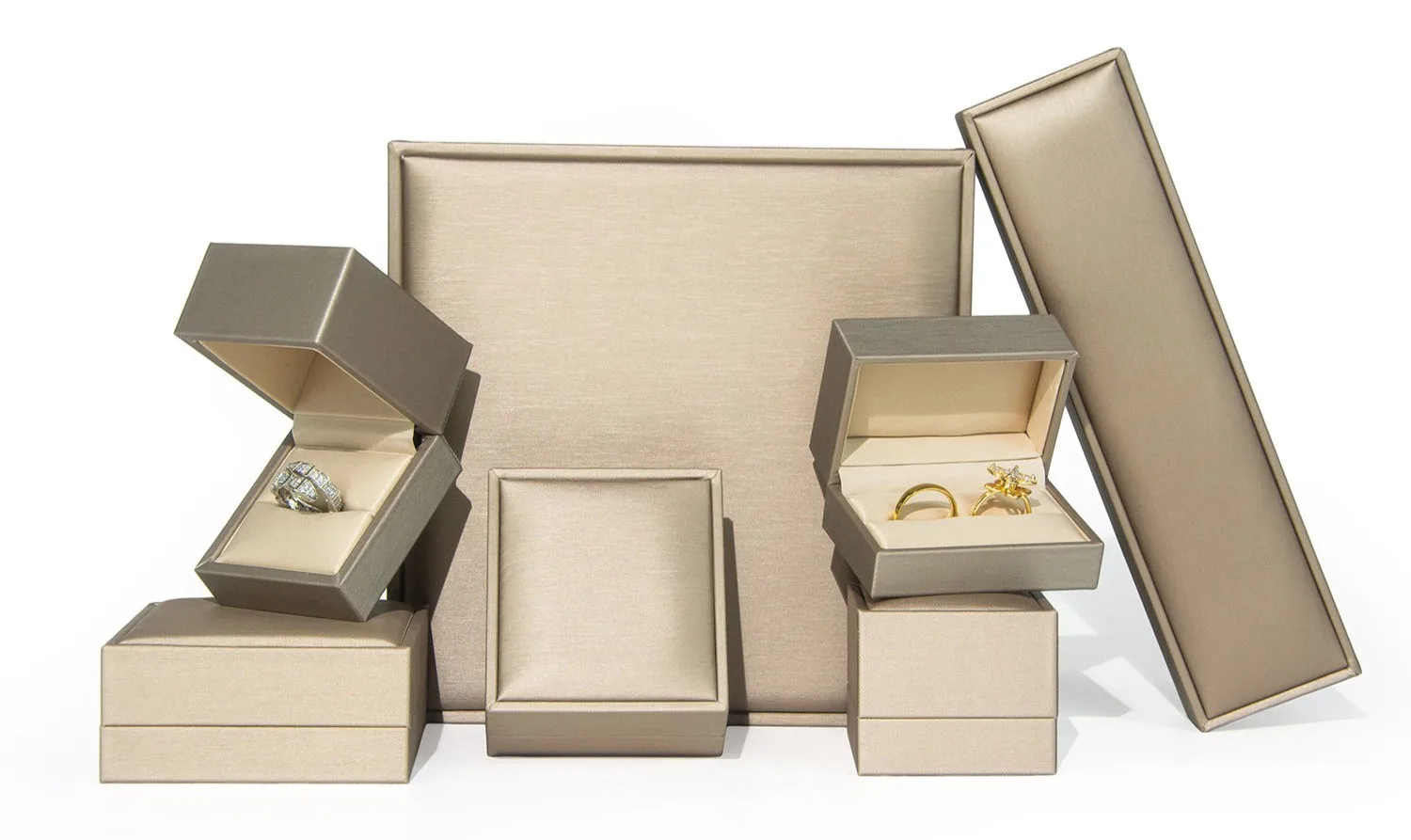
Manufacturer expertise and focus matters more than brand recognition in this category. A specialist manufacturer whose primary focus is leather goods — with established processes for material sourcing, construction quality, and finishing — tends to produce more consistently better results than a general accessories manufacturer for whom jewelry boxes are one category among many. Working with an established Leather Jewelry Box Manufacturer whose expertise is specific to this category is one of the more reliable ways to improve the probability of a good outcome in a market where visual signals are increasingly unreliable.
The availability of construction detail — specific information about materials, interior dimensions, hinge type, and substrate — is itself a signal. Manufacturers confident in their construction quality tend to be willing to provide specific details. Those whose products would compare unfavorably to scrutiny tend to provide less.
What Hasn't Changed
Despite everything that's shifted in manufacturing and materials, the fundamental requirements of a well-made leather jewelry box haven't changed. Genuine leather that improves with age rather than deteriorating. Solid substrate that maintains its structure over years. Properly engineered interior that protects pieces during storage. Substantial hardware attached with appropriate care. Construction details at stress points — corners, hinge attachments, edge finishing — that reflect standards applied throughout rather than just to the most visible surfaces.
These requirements are as true now as they were decades ago. What's changed is that meeting them requires more deliberate selection than it once did — because the options that meet them are now surrounded by options that convincingly appear to, without actually doing so.
The Custom Option in the Current Market
One response to the quality navigation challenge in the standard retail market is moving to custom — working directly with a manufacturer rather than selecting from existing inventory.
Custom pieces have a natural quality advantage in one specific way: a Custom Leather Jewelry Box Supplier working to a specific order has both the opportunity and the obligation to communicate clearly about materials and construction before production begins. The conversation required for custom production — what leather, what configuration, what hardware, what finishing details — surfaces the material and construction information that's often unavailable or unreliable in standard retail listings.
This doesn't mean custom is always the right option — standard pieces from quality manufacturers are entirely appropriate for many situations. But for buyers who find the quality navigation challenge in the standard market frustrating, the custom route offers a more transparent process and, typically, a more reliable outcome.
Final Thoughts
The leather jewelry box market today rewards informed buyers more than it used to, because the gap between what looks good and what is good has widened with the proliferation of options and materials at different quality levels. Spending a bit of time understanding the material distinctions, the construction details that matter, and the source characteristics that correlate with quality tends to produce better purchasing decisions than relying on appearance and price — which remain the most commonly used selection criteria and the least reliable ones in the current market.