
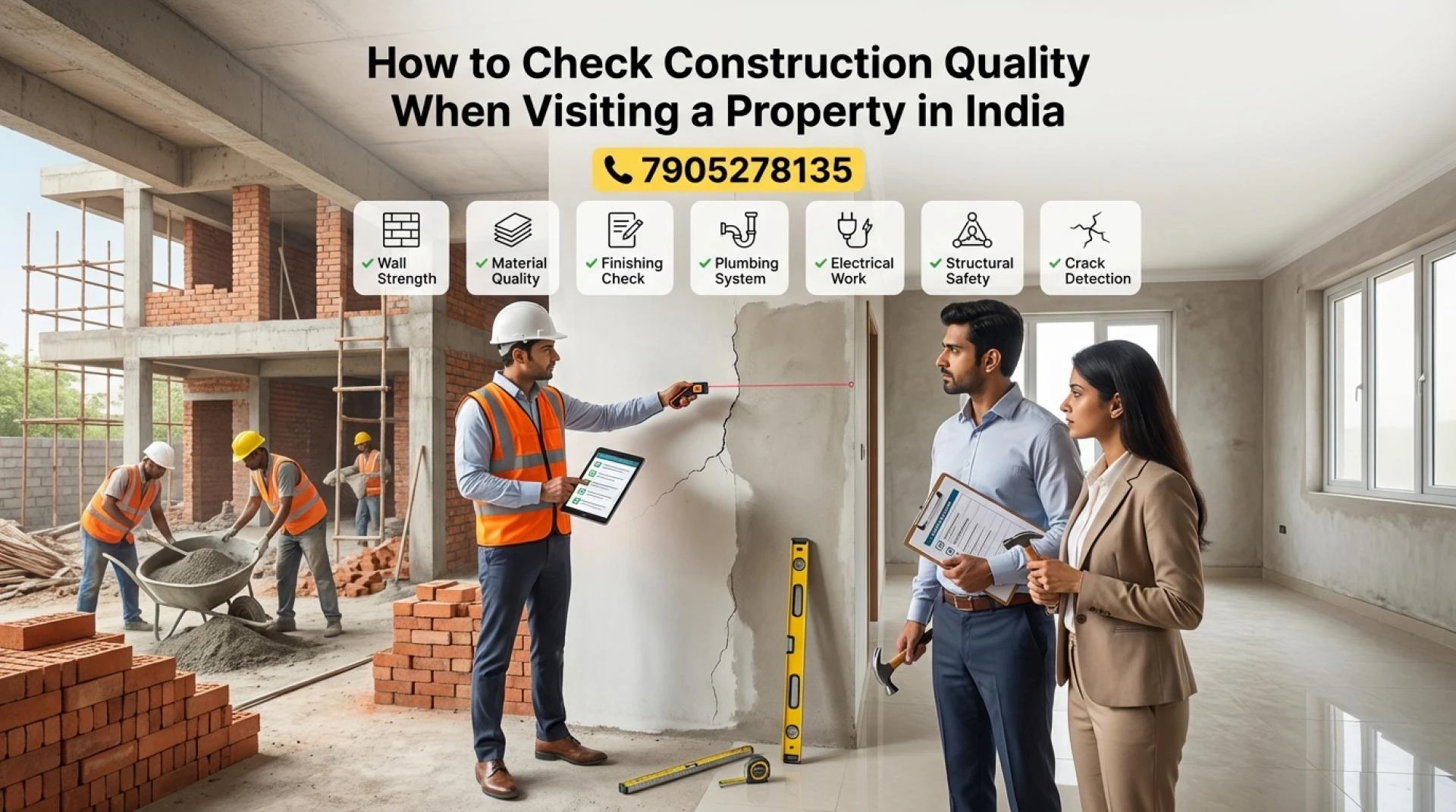
The Finish Can Be Fixed After You Buy. The Structure Cannot. This Is Why Structural Quality Comes First.
When Indian home buyers visit a property, they naturally focus on what they can see and immediately assess — the tiles, the paint, the kitchen fittings. These are important. But they are all repairable and replaceable after possession. What is not easily or cheaply fixable is the structural integrity of the building — the quality of the columns, beams, walls, and foundation that hold the entire home together.
Structural problems are the most expensive post-purchase discovery. A home with a beautiful interior but poor structural quality is a financial disaster in slow motion. This guide helps Indian buyers identify the visible signs of structural quality or weakness during a site visit — without needing engineering qualifications.
Understanding RCC Construction — The Foundation of Modern Indian Homes
Most residential buildings in India today use RCC (Reinforced Cement Concrete) frame construction — meaning concrete columns and beams form the structural skeleton, with brick or block infill walls in between. The quality of this RCC frame determines the building's strength, durability, and earthquake resistance.
You cannot see the inside of a concrete column during a property visit. But you can see the evidence of construction quality in several visible ways.
Structural Quality Checks — What to Look For
Check 1: Column Width and Visibility
In RCC construction, columns should be visible at the internal corners of rooms — either flush with the wall or slightly projecting. If you cannot see any column presence at corners, the building may be using a bearing wall system (load-bearing brick walls without concrete columns) — which is acceptable for low-rise construction but requires verification that the walls are the correct thickness and grade.
Check 2: Wall Crack Pattern Analysis
Not all cracks are equal. The crack pattern in a wall tells you whether the issue is minor settling or serious structural movement:
- Hairline cracks following mortar joints (between bricks): Common settling cracks — usually cosmetic, not structural.
- Cracks running diagonally through brick (at 45 degrees): Differential settlement — more serious, indicates unequal load movement in the foundation.
- Horizontal cracks running along the full length of a wall: Structural warning — indicates lateral pressure or beam-wall separation.
- Cracks that go all the way through the wall (you can see light on the other side): Serious — requires structural engineer assessment before any decision.
Check 3: The Column Honeycomb Test
If any concrete column is exposed or has a damaged plaster section, look closely at the concrete surface. Quality concrete should be smooth and uniformly dense. 'Honeycomb' — pockets, voids, and rough porous patches in the concrete — indicates poor concrete mixing, improper vibration during pouring, or low cement content. Honeycombed concrete is significantly weaker than sound concrete.
Check 4: Roof Slab Inspection
Look at the ceiling of each room — this is the underside of the slab above you. Look for:
- Cracks in the slab: Cracks on the ceiling, especially near the corners or spanning the middle, can indicate structural stress in the slab above.
- Rust stains: Brown or orange streaks running down from a crack indicate that the steel reinforcement inside the concrete is rusting. Water has penetrated the slab, reached the steel, and the expanding rust is cracking the concrete.
- Sagging: A slab that visibly dips in the middle (you can check with a long spirit level or simply look along the ceiling surface) suggests either overloading or inadequate slab thickness during construction.
Check 5: Floor to Floor Height
Measure or estimate the floor-to-ceiling height in each room. In Indian residential construction, the minimum comfortable height is 10 feet (approximately 3 metres) clear height. Anything below 9 feet (2.74 metres) feels cramped and affects ventilation. Low ceiling height is often a cost-cutting decision — using less concrete and fewer materials — but it significantly affects the quality of living in the home.
Check 6: Staircase and Landing Quality (if multi-storey)
In multi-storey homes or apartments, inspect the staircase carefully. The steps should be uniform in height and depth — unevenness in stair dimensions is both a safety hazard and an indicator of poor site supervision. The stair railing should be firmly fixed — push it sideways firmly; it should have no movement.
The structural checks above are the invisible foundation of every home visit. For buyers in Lucknow looking for a 3 BHK House For Sale In Lucknow where the structure genuinely matches the finish quality — Ashoka Developer's 1,250 sq ft independent home at Ashok Vihar Colony, Faizullaganj is built to these structural standards. The RCC frame is properly designed. The walls are constructed with quality brick and mortar. The ceiling heights are comfortable. The columns are where they should be. When you visit this residential property in Lucknow and apply the checks in this guide, you will find a home where the structural quality matches the premium finish it presents. This is what makes the difference between an Affordable 3BHK house in Lucknow that is a good purchase and one that is a regret — the quality under the paint.
FAQs on Structural Quality
Q: How can I tell if a building has a good RCC structure without being an engineer?
You cannot fully assess an RCC structure without engineering expertise, but there are clear visible indicators that suggest good or poor quality. Positive signs: columns are evenly spaced and visible at room corners, concrete surfaces visible on any exposed sections are smooth and dense without honeycombing, no diagonal cracks running through walls, ceilings are level without visible sag, and the floor-to-ceiling height is 10 feet or more. Concerning signs: diagonal cracks in walls (especially 45-degree cracks through bricks, not just mortar joints), rust staining running from ceiling cracks, visible sagging in ceiling slab, honeycombed concrete on any exposed column or beam surface, or cracks that go all the way through a wall. If you see any concerning signs, invest ₹2,000 to ₹5,000 in a 2-hour assessment by a qualified civil engineer before making any purchase decision. The cost is negligible relative to the purchase price.