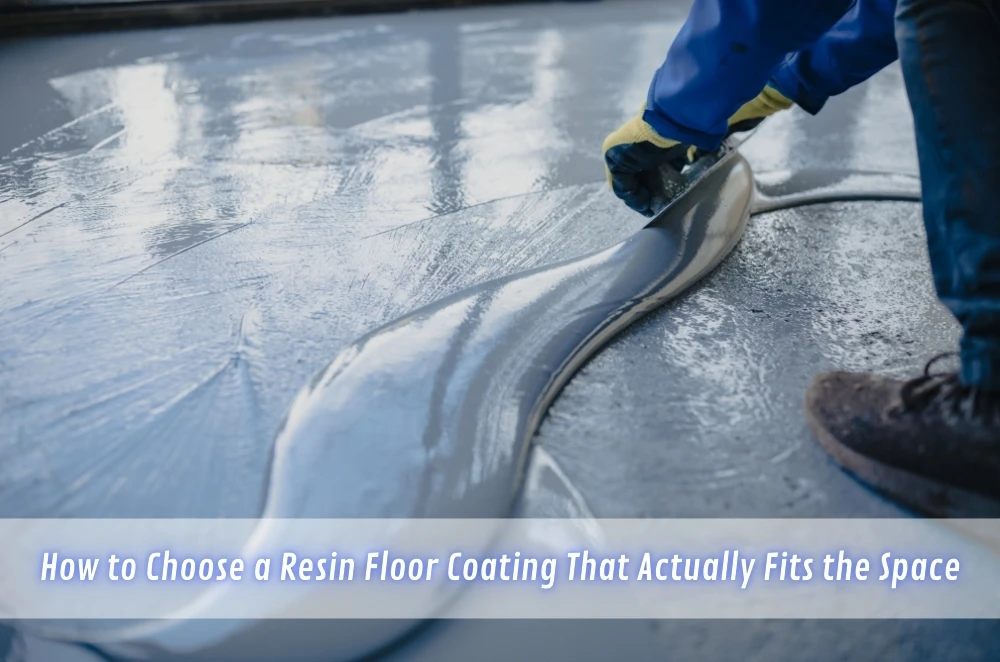
Resin floors look dead simple on a highlight reel.
In real life, hot tyres, wet boots, tool chests, trolleys, chemical drips, they’re a bit less forgiving.
A good coating job isn’t “pretty product”, it’s the right system on the right slab, installed with the boring details done properly.
This guide breaks down how to pick resin floor coating specialists for your resin coating that suits the space, what to look for in the scope, and the common traps that lead to peeling, bubbling, or a floor that’s a pain to live with.
What resin coatings are (and what they aren’t)
Resin floor coatings are layered systems that bond to concrete and create a sealed wearing surface. Depending on the chemistry and build, they can reduce dusting, make cleaning easier, improve slip resistance, and handle abrasion or chemicals better than bare concrete.
They’re not a magic skin that fixes a dodgy slab. If the concrete is weak, contaminated, damp, or coated in old sealers, the resin can only hang on for so long.
They also don’t automatically flatten an uneven floor. If levels matter, say for pallet jacks, machinery, or water run-off, you’ll need patching or levelling as part of the plan, not wishful thinking.
Most long-term headaches start at the edges and details: door thresholds, drains, steps, movement joints, and any areas where water or grime can get underneath.
The real success factor: substrate condition and preparation
Prep is where the job is won or lost.
Resin needs a clean, sound, properly profiled concrete surface so it can bite in and bond. That usually means mechanical grinding (and sometimes shot blasting) to remove weak surface paste, contaminants, and any old coatings or sealers that would stop the system from keying in.
Acid etching gets talked about a lot in DIY circles, but it’s inconsistent and won’t reliably deal with oils, tyre residue, or patchy sealers. If the slab has ever been used as a “catch-all” space, cars, garden gear, compressors, solvents, assume contamination is part of the story.
Moisture is the other big one. A slab can look dry on top and still push vapour up from underneath, especially with older concrete, poor drainage, or periods of wet weather. If the system isn’t chosen with the slab’s moisture conditions in mind, you can end up with blistering, cloudy patches, or sections that lift cleanly off.
Cracks and joints need a sensible approach too. Some cracks are static and can be repaired; others reflect ongoing movement. Control joints are designed to move, bridging them without the right detailing can mean the joint simply “prints” back through later.
Match the system to how the space is actually used
Start with the day-to-day reality of the space, not the finish you saw online.
A garage used for parking and storage has very different demands to a workshop that sees solvents and hot work, or a back-of-house corridor that’s constantly being mopped and rolled over. The right question isn’t “What’s the best coating?”, it’s “What does this floor cop every week?”
Light-duty residential spaces (garages, storerooms, home gyms)
For most homes, the floor needs to handle hot tyres, general abrasion, and whatever gets dragged in from outside. Decorative flake systems are popular because they’re forgiving, dust and small marks don’t shout at you the way they do on a flat, solid colour.
The big trap here is timing. People treat “dry” as “ready”, then park too early or slide heavy gym gear across it and wonder why it scuffs.
If the space gets wet (or you wash the car inside), think about grip and cleaning together. Too smooth can be slippery; too aggressive can be hard to mop without dragging grime around.
Heavy-use workshops and automotive spaces
Workshops are hard on floors: rolling toolboxes, impacts, oil and brake cleaner, metal shavings, and repeated point loads. This is where chemical resistance, abrasion resistance, and the right topcoat matter more than aesthetics.
Texture is usually non-negotiable in areas that get wet or oily, but it should match how the space is cleaned. If the plan is “quick mop at the end of the day”, don’t choose a texture that needs a scrubber to stay hygienic.
If welding or grinding happens on the floor, consider sacrificial mats or a designated hot-work zone. Expecting any coating to shrug off constant sparks and grinding grit without visible wear is setting up disappointment.
Commercial and light industrial (warehouses, retail back-of-house, small factories)
For commercial sites, the balance is usually performance versus downtime. Forklifts, pallet jacks, trolleys, and daily cleaning will expose weak spots fast, especially along traffic lanes and turning points.
If most movement happens in predictable paths, it can make sense to specify extra build or a tougher finish in those lanes, rather than coating everything the same and hoping it lasts evenly. Doorways and transitions also deserve attention, edges are where impacts and lifting often start.
Downtime planning is part of “system selection” too. A technically perfect coating that shuts down operations for too long might be the wrong choice for the site.
Finish choices that change performance (not just looks)
Finish isn’t just about what looks good in photos; it changes how the floor behaves.
Glossy finishes can look unreal when fresh, but they show scuffs, dust, and surface imperfections more quickly. Satin finishes are often more forgiving in busy spaces where “showroom perfect” isn’t the goal.
Smooth versus textured is the real functional decision. A fully smooth finish is easy to mop, but can get slippery when wet or contaminated. A lightly textured finish can give grip without turning cleaning into a chore.
Decorative flake can be practical as well as decorative. It helps hide everyday grime and small scratches, which can reduce the pressure to keep the floor looking perfect 24/7.
Colour choice matters in commercial spaces too: some sites prefer a surface where spills show immediately; others prefer a finish that masks marks between cleans.
Common mistakes that shorten coating life
Most coating failures aren’t mysterious, they’re predictable.
Skipping moisture checks because the slab “looks fine”. Moisture issues can show up as bubbles, cloudy patches, or whole sheets lifting later on.
Vague prep in the quote. “Clean and prepare” can mean anything; without detail, it’s hard to compare scopes.
Not taking contamination seriously. Oils, tyre residue, curing compounds, and old sealers change what prep is required.
Going super textured everywhere. Grip is good, but too much texture can make cleaning harder than it needs to be.
Rushing the cure. Parking, racking, or wet-cleaning too early can permanently mark the surface.
Bridging movement joints incorrectly. If the joint moves, the coating will eventually show it.
Treating a mixed-use site as one zone. Entries, wet bays, and traffic lanes often need different surface characteristics.
Decision factors when choosing a contractor or approach
When comparing options, ignore the glossy language and look for the unsexy specifics.
1) Scope detail beats big promises
A solid scope should spell out the preparation method, what happens to cracks and joints, the coat build (primer/base/topcoat), whether slip resistance is added (and where), and realistic cure and return-to-service timing. If those points aren’t clear, you’re not comparing like-for-like.
If comparing scopes is getting messy, a simple reference like the Ultimate Epoxy Floors project checklist can help confirm what prep, coats, and curing time are actually included before committing.
2) Downtime and access planning
Ask how long the area must be off-limits and what conditions affect that timing, temperature, humidity, ventilation, and whether doors can stay open. For businesses, clarify staging options so parts of the site can keep running while other areas cure.
3) Moisture and slab risk
Find out whether moisture testing is included and what the plan is if readings are high. It’s usually cheaper to deal with slab risk up front than to repair a failure after the fact.
4) Finish selection aligned to real use
Confirm the finish is chosen for slip risk, cleaning methods, chemical exposure, and tolerance for visible marks. A floor that’s safe and easy to maintain beats one that looks perfect for three weeks.
5) Edges and details
Ask how terminations are handled at doors, drains, steps, and thresholds, and whether any cove base or special detailing is required. It’s not glamorous, but it’s where a lot of floors start to lift.
Practical Opinions (exactly 3 lines)
If the space gets wet, choose grip you can still clean without drama.
If moisture risk is unknown, treat testing and the right primers as non-negotiable.
If downtime is tight, pick a system built around realistic return-to-service timing.
A simple 7–14 day first-actions plan
This is a practical way to go from “we should do the floor” to a clear, install-ready brief.
Days 1–2: Define use and constraints.
Write down what happens on the floor (cars, forklifts, washdowns, chemicals, heavy point loads) and the maximum downtime available. Note any safety concerns like wet entries or oily zones.
Days 3–4: Inspect and document the slab.
Mark cracks, spalling, and any areas that look damp, dusty, or contaminated. Photograph doorways, drains, steps, and transitions, these details matter for scoping.
Days 5–7: Decide on performance choices.
Choose a texture level, finish (gloss/satin), and whether flake makes sense for hiding day-to-day marks. Identify zones that need different performance, like a wet bay versus storage.
Days 8–10: Request properly scoped quotes.
Ask for preparation method, crack/joint approach, coat build, cure/return-to-service timing, and exclusions. Confirm whether moisture testing is included and what the response is if results are high.
Days 11–14: Lock in logistics and aftercare.
Plan access, ventilation, and staging, and schedule around deliveries or peak operating times. Set rules for the first week, no early parking, avoid harsh cleaners during cure, and protect high-impact areas until the system is fully hardened.
Operator Experience Moment
The quickest red flag on a coating job is when prep and moisture are treated like optional extras. If no one’s talking about what’s in the slab or what’s soaked into it, the job is being priced like a cosmetic upgrade. The best installs usually start with a blunt conversation about slab condition, downtime, and what happens if the readings aren’t ideal.
Local SMB mini-walkthrough (Sydney, NSW)
A Sydney trade business wants a tougher workshop bay and a safer customer entry.
They choose a lightly textured finish at the entry to handle wet shoes on rainy days.
The workshop bay is specified for chemical spills and rolling loads, not just looks.
Work is staged so one area stays usable while the other cures.
Moisture risk is checked before final system selection is locked in.
Control joints are detailed rather than simply coated over.
Return-to-service timing is planned around deliveries so heavy loads don’t hit too early.
Key Takeaways
- Pick the coating system based on how the space is used, not the photo finish.
- Prep and moisture management are the biggest predictors of whether it lasts.
- Texture should suit slip risk and how the floor will actually be cleaned.
- Compare quotes by scope detail: prep, coat build, joints, edges, and cure timing.
- Plan downtime and early care so the cure isn’t accidentally sabotaged.
Common questions we hear from businesses in Sydney, NSW, Australia
Q1) Is epoxy always the best choice for a garage or workshop?
In most cases, epoxy is a solid base for many garages and light-to-medium workshops, but the topcoat and site conditions do a lot of the heavy lifting. Next step: list what the floor will cop (hot tyres, solvents, washdowns, heavy rolling loads) and make sure the proposed system is designed around that list. In Sydney, humidity and wet-weather scheduling can affect cure and access, so timing and ventilation should be part of the conversation early.
Q2) What’s the biggest reason resin floors peel or bubble?
Usually it comes back to moisture vapour, contamination, or inadequate mechanical preparation, not a “bad batch” of product. Next step: ask whether moisture testing is included and what the plan is if the slab reads high, don’t accept “we’ll see on the day” as the strategy. Around NSW, older slabs and areas with drainage issues can be more moisture-prone than they look from the surface.
Q3) How long before the floor can be used normally?
It depends on the system, the weather, and what “normal” means, foot traffic is one thing, vehicles and heavy equipment are another. Next step: get return-to-service timing in writing for each type of traffic you expect (people, cars, pallet jacks, forklifts). In Sydney, cooler nights and damp spells can stretch cure windows, so it’s smart to build in a buffer rather than planning on best-case conditions.
Q4) Should slip resistance be added everywhere?
Usually it’s better to add slip resistance where it’s needed and keep other areas easier to clean, rather than making the whole site rough for no reason. Next step: map the space into zones (entry, wet bay, traffic lanes, storage) and decide where water, oils, or detergents are likely to be present. In Sydney commercial sites, back-of-house wet areas often need more grip than dry storage or office-adjacent zones, so zoning the finish is often the cleanest solution.