Theatre curtains are not just meant to cover the stage; they are also key design, acting, sound, and overall experience points when producing a theatre piece. If you're building any stage, whether it be at a school, community, or a professional theatre, you have to consider the variety of theatre curtains, the fabric of each curtain, and the applications in which each curtain can be used.
This article will cover all of the information you should know about theatre curtains, including the different types, functions, customisation, and safety standards.
Types of Theatre Curtains
Each type of theatre curtain has a distinct role to play in producing a performance. Below is a list of the most typical types of theatre curtains:
Main (House) Curtain
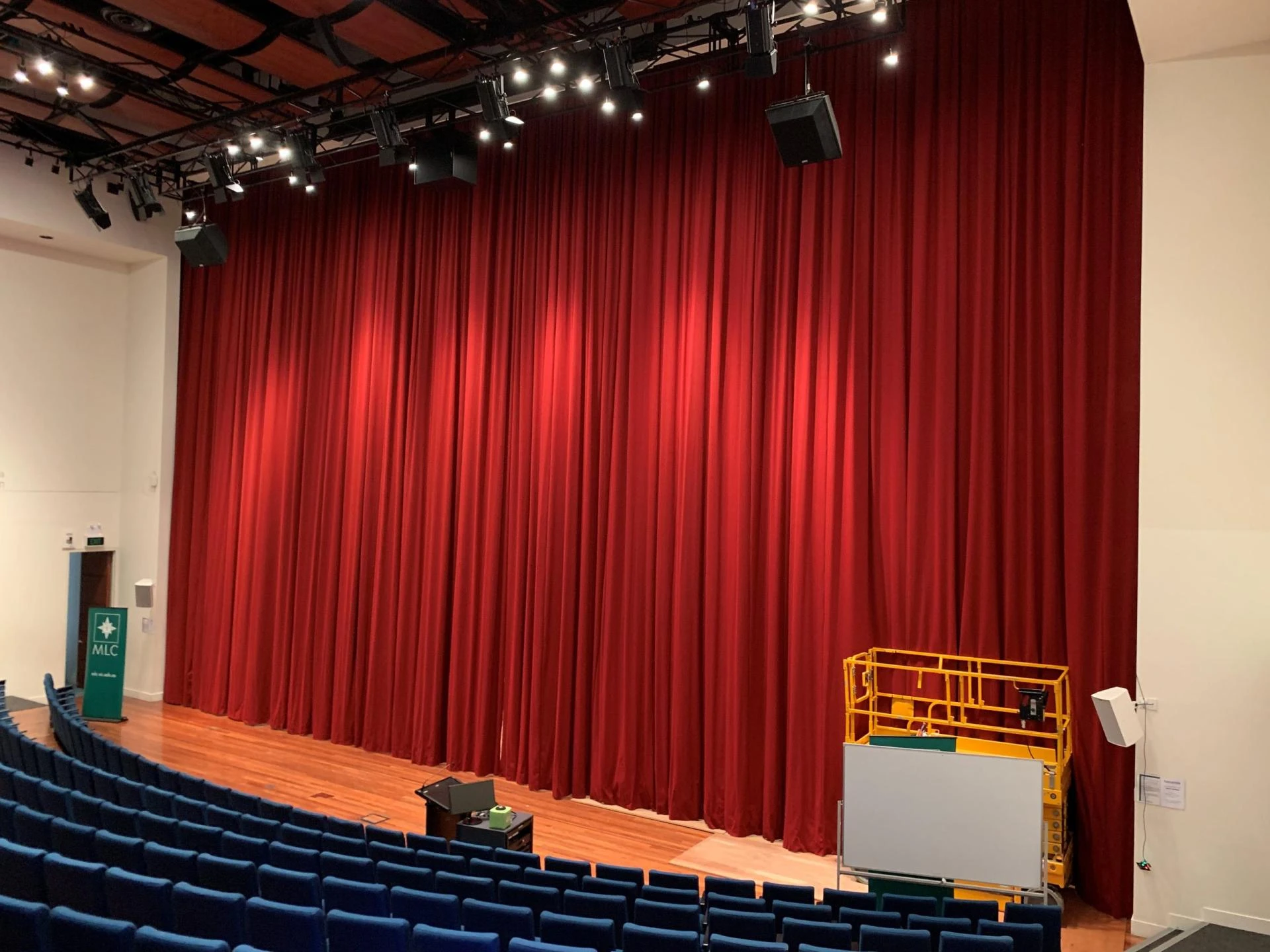
The main curtain, or "house curtain," is at the front of the stage and is the curtain that the audience will see first. Most main curtains are made of heavy, luxurious, velvety fabrics and will open either by draw or traveller. The main curtain is significant because it marks the beginning and end of a theatrical performance.
Legs and Borders
These curtains are typically narrow and vertical with the purpose to visually hide the wings and any equipment in the way. Commonly referred to as "legs," they can be located on either side of the stage and help keep the audience focused on the story before them. "Borders" are horizontal curtains that are most often the first curtain the audience will see. They run across the top of the stage and are used to conceal rigging systems and lighting.
Backdrop and Cycloramas
Backdrops and cycloramas are large pieces of fabric and are usually the background in some kind of way. Cycloramas, or colloquially "cycs," are often used for lighting effects or to create a canvas on which a digital projection can achieve various scenes.
Scrims and Gauzes
Scrims and gauzes are made from translucent materials and can create spectacular effects when lit from the front or the back.
Typical Materials
Theatre curtains are manufactured from specialist textiles that have been specifically designed to work well under stage lighting and heavy movement. Some common materials used include:
Velvet or velour - Well-liked for use as a main curtain due to their rich look and sound dampening qualities.
Wool serge - Used mostly for legs and borders and other masking because it is durable and flame retardant.
Muslin and canvas - Also good for drops, painted scenery, and lightweight.
While some materials are variable, all materials must comply with some level of flame retardant standards for safety.
Benefits of Theatre Curtains
It is important to note that theatre curtains serve a number of important purposes beyond just being decorative:
Hide the Scene - Cover up sets, equipment, or area of stage during scene changes.
Controlling Acoustics - Improve sound quality and eliminate echo.
Defining space for the audience - Framing the stage in such a way to direct the audiences eyes to what they are supposed to be paying attention to.
Lighting effects - Apply light and shadow through the use of scrims or degrees of gauze.
Customisation
Every venue is unique, this is one of the reasons custom made theatre curtains are a practicable solution. Here is just some of the things you can customize:
Size and dimensions of the curtain, to match or maybe make up for the length and width of your stage.
Pleating types (box pleats, ripplefold etc.)
Fabric colour and texture (usually to complement the venue decor.)
Branding/logo, printed or sewn into fabric.
Fire Safety & Compliance
Safety cannot be compromised with stage curtains. It is necessary to ensure that all theatre curtains:
1. are of flame-retardant fabric
2. comply with Australian safety standards (AS/NZS 1530.2 and AS 2755 standards)
3. are from reputable suppliers and have certificates of compliance.
Choosing the Right Curtains for Your Venue
Consider the following aspects when choosing curtains, whether you're fitting out a school hall, or an entirety performing arts theatre:
1. Type of performance (drama, musical, dance)
2. Budget
3. Expected frequency of use
4. Maintenance, cleaning and storage.
In professional venues, the curtains will most likely be high-end velvet mechanical with a motorised track. Schools and community centres will most likely want a durable wool or canvas curtain operated with manual movement.
Installation & Care Tips
Taking care of your curtains can help them last longer:
Vacuum regularly to remove dust
Store in a dry place when they are not in use
Spot clean or dry clean as needed
Check seams and rigging for wear and damage
Why We Supply Theatre Curtains Imported Theatre Fabrics
We give you:
Range of flame-retardant fabrics
Made-to-order options for any size and shape stage
Full consultation, design and installation service
Quick turnaround times and delivery all over Australia
Whether you just require a large stage curtain or masking legs for your kids' school production, Imported Theatre Fabrics has the range and degree's of customisation available to create a professional and appealing theatre experience in a safety conscious manner.
In Conclusion
The right theatre curtains do far more than simply open and close, they can form the performance, protect the cast and crew and enhance the audience experience. By exploring your options and engaging at least quality flame safe materials you can really revitalise spaces into a well-dressed professional theatrically appealing space.