
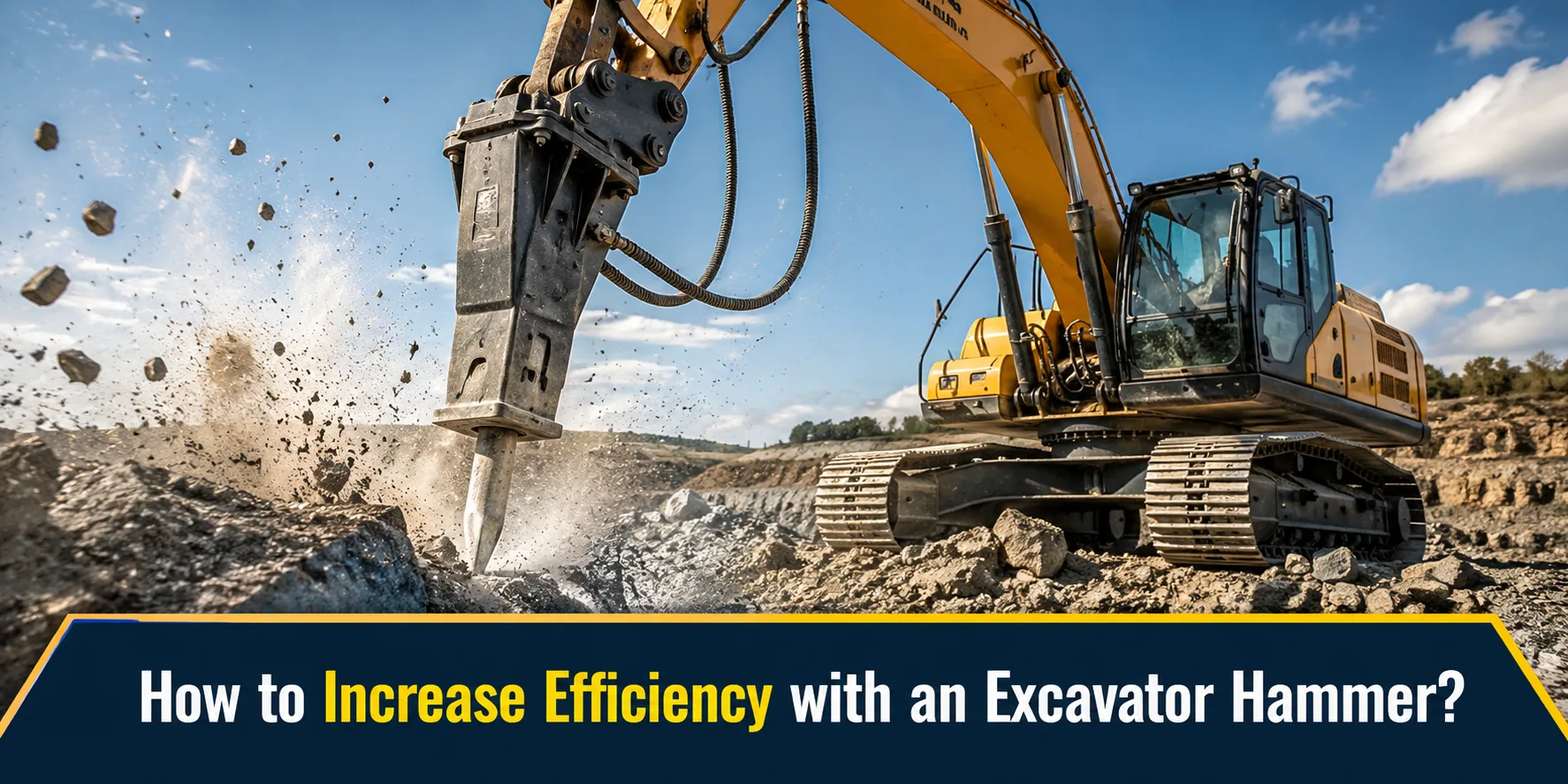
The breaker has been running on the same excavation site for two weeks. Fuel consumption has increased, daily output is lower than expected, and the chisel already shows visible wear. The operator feels the excavator hammer is struggling in the material, even though the rock condition has not changed since the project started.
In many situations, low excavator hammer efficiency is not caused by the attachment itself. The actual issue usually comes from incorrect hydraulic settings, poor breaker positioning, improper tool pressure, delayed maintenance, or a mismatch between the excavator hammer and the application.
An excavator hammer performs best when the machine, hydraulic system, operating method, and maintenance condition all work together properly. When one area is ignored, impact performance drops, wear increases, and the attachment takes longer to complete the same amount of work.
This blog explains how to improve excavator hammer efficiency through proper setup, correct operating practices, hydraulic adjustment, chisel management, and regular maintenance.
Key Factors That Improve Excavator Hammer Efficiency
Select the Right Excavator Hammer for the Application
Excavator hammer efficiency starts with correct attachment selection. A breaker that does not match the excavator’s hydraulic output or operating weight cannot maintain stable impact performance during operation.
If the excavator hammer is undersized for the material condition, breaking speed drops and the attachment requires more impact cycles to complete the work. If the breaker is too heavy, machine balance and boom control become difficult during operation.
Hydraulic flow and pressure should also match the hammer specifications. Incorrect hydraulic settings reduce impact force and increase unnecessary stress on internal components.
Machine weight, hydraulic capacity, material hardness, and operating conditions should always be considered before selecting an excavator hammer for the project.
Use Proper Operating Technique During Breaking Work
Operator handling has a major effect on excavator hammer productivity. Even a properly configured breaker loses efficiency when the tool is operated incorrectly.
The chisel should remain firmly pressed against the material during operation. If the tool loses contact while striking, part of the impact energy transfers back into the breaker body instead of entering the material properly.
The excavator hammer should also operate as close to vertical as possible. Sharp operating angles create side pressure on the chisel and bushings, reducing penetration performance and increasing wear.
When the material does not break after several seconds, the breaker should be repositioned slightly instead of continuing at the same point continuously. Working along natural cracks and edges usually improves fragmentation speed and reduces unnecessary load on the attachment system.
Blank firing should also be avoided during operation. Once the material separates, the breaker should stop immediately before repositioning for the next breaking point.
Maintain Proper Hydraulic Settings
Hydraulic condition directly affects excavator hammer performance during daily operation. Low hydraulic flow, unstable pressure, contaminated oil, or incorrect accumulator pressure reduce impact efficiency and increase attachment wear.
Hydraulic flow and pressure should be checked regularly from the auxiliary circuit to confirm that the breaker receives the correct oil supply. Actual machine output can differ from factory specifications because of pump condition, oil temperature, and hydraulic wear.
Accumulator gas pressure should also remain within the recommended range. Low nitrogen pressure reduces impact force and affects breaker consistency during long operating hours.
Hydraulic oil cleanliness is equally important. Dirty hydraulic oil affects valves, pistons, and seals inside the breaker system, reducing operating smoothness and increasing internal wear.
Regular oil and filter replacement helps maintain stable excavator hammer performance across demanding working conditions.
Monitor Chisel Condition and Lubrication
The chisel is the main contact point between the excavator hammer and the material. Its condition directly affects penetration and breaking performance.
Different applications require different chisel profiles. Moil point chisels are commonly used in hard rock applications because they focus impact energy into a smaller area. Flat chisels work better for demolition concrete and layered material conditions.
As the chisel tip becomes worn, breaking performance gradually decreases. A blunt tool requires more impact cycles to achieve the same result, increasing fuel use and attachment load.
Regular chisel inspection helps maintain stable excavator hammer productivity.
Lubrication is equally important during operation. The chisel and bushing area experience constant movement and friction while the breaker is working. Without proper greasing, heat builds up quickly and increases wear inside the lower breaker housing.
Greasing intervals should always follow the operating condition and manufacturer recommendations.
Maintenance Practices That Help Maintain Excavator Hammer Performance
Inspect Wear Components Regularly
Excavator hammer components operate under continuous impact load during demolition and rock breaking work. Bushings, retaining pins, side plates, seals, hoses, and mounting areas should be inspected regularly for wear or movement.
Early inspection helps identify developing issues before they affect attachment performance or lead to larger repair work.
Hydraulic hoses and connections should also be checked regularly to maintain stable oil pressure and reduce leakage during operation.
Reduce Unnecessary Attachment Stress
Continuous impact at one point, incorrect working angles, and poor contact pressure increase stress across the breaker system.
Proper operating practice reduces unnecessary vibration and helps maintain better condition across the chisel, bushings, seals, and internal moving parts.
Sites that follow regular maintenance schedules and proper breaker handling usually achieve better excavator hammer performance, lower attachment wear, and improved production efficiency throughout the project cycle.
Train Operators for Better Breaker Handling
Operator experience plays an important role in excavator hammer efficiency. Skilled operators understand how to position the breaker correctly, maintain proper pressure, avoid unnecessary impact cycles, and work with the natural fracture pattern of the material.
Proper handling improves breaking speed and reduces wear across the attachment system.
Training operators on correct breaker operation also helps improve fuel efficiency and supports more stable machine performance during long working hours.
Final Thoughts
Excavator hammer efficiency depends on proper machine matching, correct hydraulic setup, operator handling, chisel condition, and regular maintenance.
Going for the correct breaker option and its timely maintenance helps reduce fuel use, control attachment wear, and improve overall productivity during demolition, quarrying, mining, and excavation work.
When the excavator hammer is operated according to the machine capacity and material condition, the attachment performs more efficiently and supports stable long-term performance throughout the project.