Most people who find a box of old Hot Wheels assume one of two things: either every car is worth a fortune, or none of them are. The truth sits somewhere in the middle, and knowing how to tell the difference can mean thousands of dollars in your pocket.
This guide walks you through exactly what experienced appraisers look at first, what drives real value in the Redline hobby, and why age alone almost never tells the full story.
Not All Old Hot Wheels Are Created Equal
Here is something most generic price guides will not tell you outright: the vast majority of Hot Wheels cars produced since 1968 sell for a dollar or two at a garage sale. That is not a knock on the hobby. It is just reality.
What separates the ordinary from the extraordinary is a specific combination of era, casting, color, and condition. Get all four right, and you may be holding something that commands serious collector interest. Miss on one or two of those factors, and you likely have a display piece rather than a windfall.
Understanding that distinction before you sell is where most of the upside lives.
Start Here: The Redline Era (1968 to 1977)
If your Hot Wheels have a thin red stripe running around the circumference of each tire, you are looking at what collectors call a Redline. These cars were produced by Mattel between 1968 and 1977, and they represent the golden era of the hobby.
Redlines are not the only vintage Hot Wheels worth examining, but they are where the most significant collector interest has historically concentrated. For anyone sorting through an old collection, identifying whether your cars fall within this production window is the single most important first step.
To check, simply look at the tires. Original Redlines will show a distinct painted stripe on the outer edge of each wheel. The base of the car, usually stamped with either "USA" or "Hong Kong," will also help you confirm the era and origin.
When people search for information on the most valuable redline hot wheels, they are almost always referring to this specific production period, not the broader Hot Wheels catalog.
What Actually Drives Value: The Four Factors
Once you have confirmed you are looking at Redline-era cars, the evaluation shifts to four specific factors. Experienced appraisers weigh all four together rather than relying on any single one.
1. Casting (What Model Is It?)
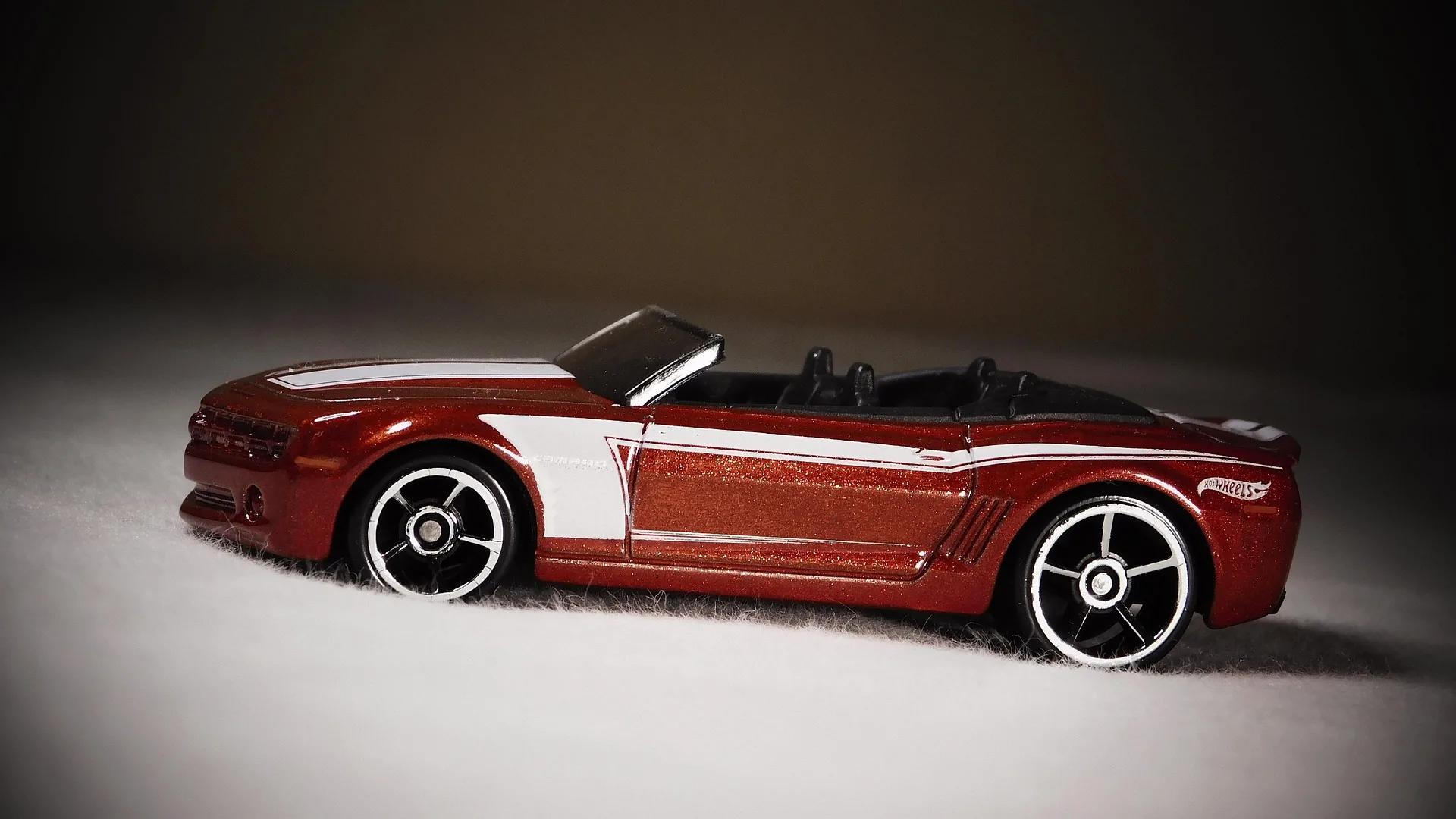
Certain castings have generated consistent collector demand for decades. The original 1968 Sweet 16 lineup, which included models like the Custom Camaro, Custom Barracuda, and Volkswagen Beach Bomb, remains among the most studied group in the hobby.
Not every Sweet 16 car is equally valuable, but they all carry more baseline interest than later production runs. A common model in excellent shape will still draw more attention than a later casting in similar condition.
2. Color (Not All Colors Are Equal)
This is where many first-time sellers are caught off guard. Two identical castings can vary by hundreds or even thousands of dollars based solely on paint color.
Mattel used a process called Spectraflame during the early Redline years. This translucent metallic lacquer, applied over a polished metal body, produced a deep, candy-like finish. Colors like blue, aqua, and red were produced in higher quantities and are relatively easy to find today. Colors like pink, purple, magenta, antifreeze, and olive were produced in far smaller numbers and are significantly harder to source.
Based on collections appraised in recent years, certain color-casting combinations have become notably harder to encounter in original, unrestored condition. When they do surface, they tend to attract buyers quickly.
3. Condition (The Market Rewards Preservation)
The 2026 collector market continues to place a premium on original, untouched examples. A car that has been stored in a dry shoebox since 1971 and shows honest wear will almost always outperform a car that has been polished, repainted, or repaired.
This matters for sellers because the instinct to clean up a collection before presenting it is understandable but potentially costly. Even removing surface dust in the wrong way can affect value.
What collectors refer to as "barn find" or "blister pack fresh" condition, meaning cars that have sat untouched in original storage for decades, continue to carry a premium in 2026 that shows no signs of softening.
4. Originality (Reproductions Have Changed the Game)
In recent years, high-quality reproductions and restored examples have become more convincing than ever. This has made originality one of the most scrutinized aspects of any serious Redline purchase.
Collectors look at rivet condition, wheel chrome, interior color accuracy, paint depth, and base markings to assess whether a car is truly original. The team at Redline Archeology often notes that two cars can appear nearly identical at a glance while occupying very different value categories once examined closely.
What to Check Before You Assume a Car Has No Value
Many sellers overlook significant pieces because they do not know what to look for. Before setting anything aside as common or unimportant, run through this quick checklist.
Check the wheels first:
- Is there a red stripe on the outer tire wall?
- Is the chrome on the wheel hubs intact or faded?
- Are the axles straight and original?
Check the base:
- Does it read "USA" or "Hong Kong"?
- Are the rivets original and unmodified?
- Is the base color chrome, bare metal, or black?
Check the paint:
- Does it show the deep, translucent quality of Spectraflame?
- Is the color one of the rarer shades, such as pink, purple, or antifreeze?
- Are there signs of repainting along edges or body lines?
Check the interior:
- Is the interior color correct for the model?
- Is it intact and unbroken?
These are the same reference points used during professional appraisals. Running through them before drawing any conclusions can help you avoid the most common mistake in the hobby, which is assuming a car is ordinary before it has been properly evaluated.
Why Complete Collections Often Outperform Individual Sales
One of the more consistent findings in recent years involves how complete, original-owner collections are received by serious buyers. When a group of cars surfaces together in untouched condition, having been stored in the same place since the 1970s, collectors view the group with a level of confidence that individual cars rarely generate on their own.
Provenance matters. A collection that has lived in one attic, in one family, for fifty years carries a story that supports its authenticity. That context can meaningfully influence how buyers approach the purchase.
This is one reason why many experienced sellers choose to turn hot wheels redlines into cash through a specialist who can evaluate the full collection rather than breaking it apart for individual listings. Selling piecemeal often loses the premium that comes with provenance, condition consistency, and the simple fact that a complete group tells a more convincing story than scattered individual cars.
Common Mistakes That Cost Sellers Real Money
Even people who know their collection has value often leave money on the table. These are the patterns that show up most often.
Cleaning or polishing cars before an appraisal. Natural aging and patina are part of what authenticates an original car. Removing them, even carefully, can reduce collector interest.
Selling individual cars without reviewing the full group. The most valuable car in a collection is not always the most obvious one. Rare color variations and unusual factory details can be easy to miss without specific knowledge.
Accepting the first offer without understanding the market. The Redline hobby has a wide range of buyers with different levels of expertise and motivation. What one buyer offers on a Tuesday is not necessarily what the market supports. Understanding why these cars hold such deep collector appeal, and why serious buyers pursue them the way they do, is part of what makes this the holy grail of the hobby and why informed sellers consistently come out ahead.
Assuming age equals value. A 1975 Redline in poor condition and a common color may be worth less than a well-preserved example from 1972 in a rarer finish. Age is a starting point, not a conclusion.
What the 2026 Market Is Telling Us
Collector demand for original Redlines has remained strong heading into 2026, particularly for cars with rare colors, intact original condition, and clear provenance. Complete attic and estate collections continue attracting serious interest from buyers who understand that untouched examples are becoming genuinely harder to find each year.
At the same time, the market has become more sophisticated. Reproductions and restored examples are more convincing than they were a decade ago, which has pushed serious buyers to look more carefully at authenticity markers. For sellers, this means that who buys hot wheel collections in 2026 tends to be a more informed group than ever, which is actually good news for anyone with a genuinely original set.
The collectors willing to pay premium prices are also the ones most capable of recognizing a premium collection. Getting your cars in front of the right buyer, rather than the nearest one, is where the real difference is made.
Before You Decide Anything
If you have found a box of old Hot Wheels and are wondering whether they have value, the best first step is simply to slow down. Do not clean, sort, or break apart the collection before you understand what you have.
Take clear photographs of the full group, the individual cars from multiple angles, and the base of each car. Those photos will tell an experienced appraiser more than almost any written description.
The gap between what an uninformed seller accepts and what an original Redline collection is worth in today's market can be significant. Taking the time to understand what you have is the single most valuable thing you can do before any transaction takes place.