
The British Virgin Islands (BVI) is a British Overseas Territory in the eastern Caribbean. Its corporate registry lists thousands of entities, and it has become a familiar base for international holding, trading and investment companies. Anyone thinking about forming a company there should know why owners choose the jurisdiction, how registration works and what has to be managed once the company exists.
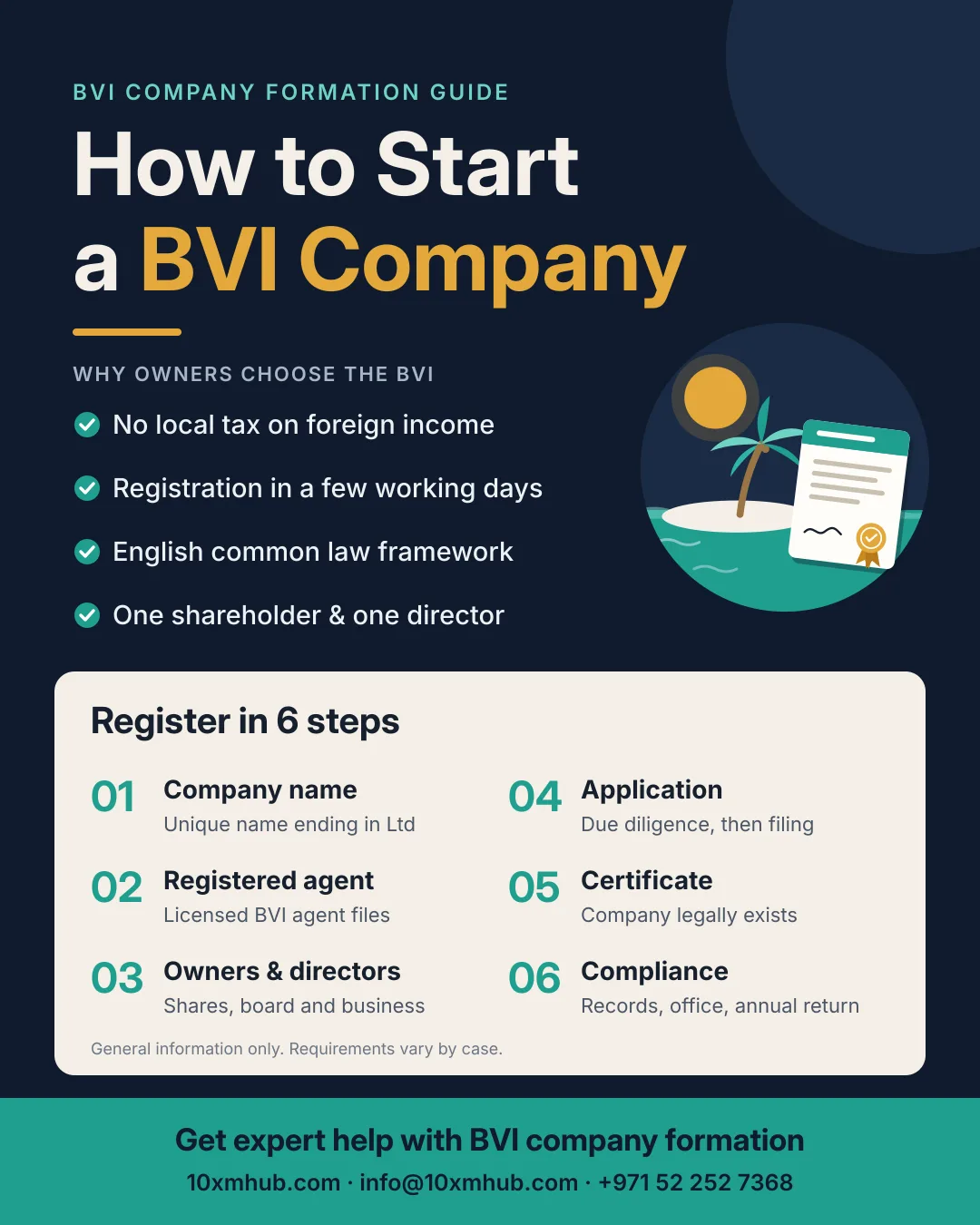
Why Owners Choose the BVI
Most people who set up a BVI company have a specific commercial goal. Some want one entity to hold shares or property. Others need a vehicle for cross-border trading or investment, or a parent company to sit above several investments.
The BVI does not tax a company’s corporate income, capital gains or withholding on earnings made outside the territory. Tax may still apply in the owner’s home country, either to the company or to the individual, so each owner should check their own position first.
The legal framework is another draw. Company formation and governance are mainly regulated by the BVI Business Companies Act, which is rooted in English common law. Overseas lawyers, courts and banks find this system familiar, so company documents are easier for them to assess.
Ownership rules are also simple. A company needs only one shareholder and one director, the director can be a corporate entity, and no minimum share capital applies. BVI companies offer a degree of privacy, but shareholder, director and beneficial ownership details are still subject to statutory filing and disclosure rules.
The Registration Process
Incorporation follows a defined sequence:
- Clear the name. It must be unique on the BVI register, follow the naming rules and end with a recognised suffix such as Limited or Ltd.
- Engage a registered agent. Every BVI company must use a licensed agent based in the territory. Only the agent can file the application, and it remains the company’s official local contact.
- Decide on shareholders and directors. The owners settle who holds the shares, who sits on the board and what business the company will carry on.
- File the application. The agent drafts the constitutional documents, checks everyone’s identity, completes due diligence and files with the registry.
- Receive the certificate. Once the registry accepts the filing, it issues the Certificate of Incorporation, and the company legally exists from that date.
Once the documents are in and due diligence is complete, registration can often be finished within a few working days.
What to Plan Beyond Registration
Registration is only the first stage. Owners should choose a bank early, because each bank runs its own checks and offshore structures often face closer review. The place where the company is managed affects how banks and tax authorities treat it, so records should accurately show where decisions are made.
BVI incorporation does not, on its own, settle how a company is taxed elsewhere. Tax residence can depend on where the company is managed and where its key decisions are taken. If the people running the company live in a high-tax country, that country may claim the right to tax its profits. Economic substance rules may also apply to activities such as holding or financing.
Staying in Good Standing
A BVI company must keep a registered agent and office and maintain proper records. Most companies must also submit an Annual Financial Return to their registered agent within nine months of their financial year end. Late filing can lead to penalties and put the company’s standing at risk.
For a more detailed look at each stage, this guide on how to start a BVI company covers the formation requirements, tax residence and ongoing compliance.