For some small businesses, yes, and the volume threshold is lower than most owners expect. For others, honestly, no. Anyone telling a five-truck operation that bulk delivery is automatically the right answer is selling, not advising.
Here is the framework for working out which category your business falls into.
What bulk delivery actually requires
Before the savings question, three practical requirements have to be met, and they disqualify some businesses outright.
A consistent location. Bulk delivery needs somewhere to deliver. A business whose vehicles are reliably parked at a yard, shop, or site overnight qualifies. A business whose trucks scatter across a region and rarely return to a home base generally does not.
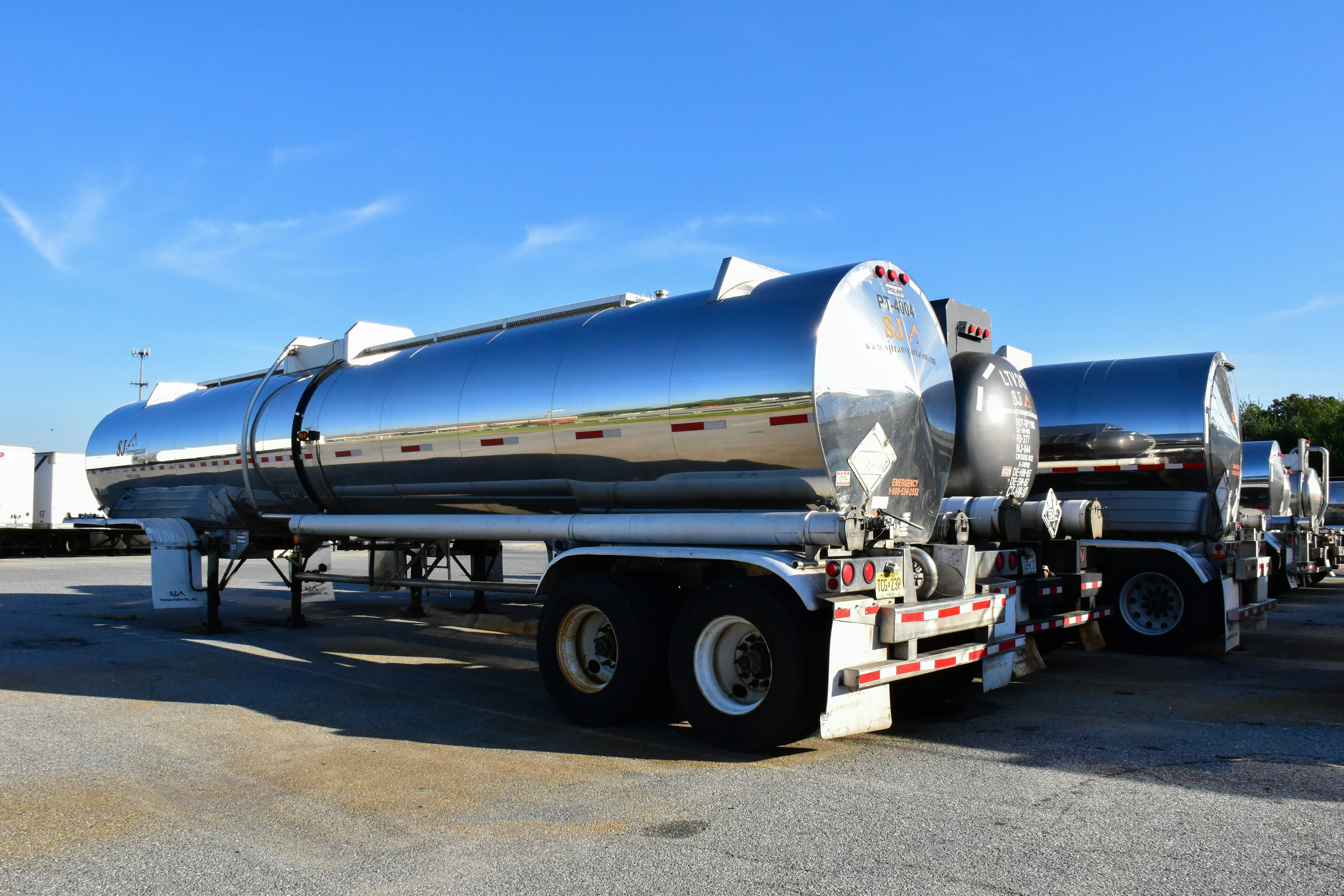
Somewhere to put the fuel. That means on-site storage, which means space, a suitable surface, and compliance with local rules. Tanks are available in a wide range, with skid tanks starting around 250 gallons and scaling well beyond, so capacity is rarely the constraint. Space and permitting sometimes are.
Reasonably predictable consumption. Bulk purchasing works when you know roughly how much you burn. Highly erratic consumption makes sizing difficult and increases the odds of either running short or sitting on standing inventory.
If a business fails the first requirement, the rest of the analysis is academic.
Where the savings actually come from
Most small business owners evaluate bulk delivery on price per gallon alone. That is the smallest of the four benefits and the one most likely to disappoint.
Per-gallon spread is real but modest in isolation. Retail pricing includes station margin and convenience premium; bulk delivered fuel is priced off the wholesale rack. On small volumes, the absolute dollar difference may not impress.
Recovered labor is usually the largest number and the one that never appears on a spreadsheet. A fueling stop costs 15 to 30 minutes of paid time producing nothing. For a business with five vehicles fueling twice a week, that is a meaningful number of paid hours per year spent buying something that could have been delivered. Small businesses feel this more acutely than large ones, because the owner or a key employee is often the person making the run.
Eliminated shrinkage matters more at small scale than owners assume. Card programs leak through unauthorized purchases and slippage, and a small business rarely has the administrative capacity to police it. Metered delivery into a known tank, particularly with secured dispensing that counts every gallon against an approved asset, closes that gap structurally.
Recovered attention. Harder to quantify, genuinely valuable. Fuel stops being something anyone thinks about.
The honest case against
Bulk diesel fuel delivery is the wrong answer for a real set of small businesses, and it is worth naming them plainly.
Businesses below roughly two to three thousand gallons annually will likely find that tank costs, site preparation, and any delivery minimums consume the savings. Businesses without a fixed location cannot practically use it. Businesses with highly seasonal or unpredictable consumption may find standing inventory ties up cash they need elsewhere. And businesses in jurisdictions with demanding permitting requirements sometimes find the compliance burden outweighs the benefit at small scale.
There is also a working capital consideration. Bulk purchasing means paying for fuel before you consume it. For a business managing cash tightly, converting a weekly expense into a larger periodic one is a real change to the cash cycle, even when the total annual cost drops.
How to run the numbers
Do not compare pump price to delivered price. That comparison is incomplete and points the wrong way.
Start with actual annual gallons from last year’s records. Apply the delivered-versus-retail spread your provider will actually quote, not a generic figure. Add recovered labor hours at whatever that person’s time genuinely costs the business. Add a conservative estimate of current card leakage.
Then subtract honestly: tank rental or purchase, site preparation, any delivery minimums, and the working capital tied up in standing inventory.
If the result is clearly positive, the decision is straightforward. If it is marginal, it probably is not worth the operational change yet, and revisiting it after the next growth step is the reasonable call.
The growth argument
The most compelling reason for a small business to consider bulk fueling and on-site delivery is often not this year’s savings. It is that the model scales in the right direction.
A card-based fuel program gets linearly worse as a business grows, because every added vehicle adds station trips, receipts, and exceptions. A bulk delivery program scales by adjusting tank size and delivery cadence, which is a conversation rather than a restructuring. The savings improve with volume rather than the complexity increasing with it.
For a small business on a growth path, establishing the relationship at the point where it first makes marginal sense means the program is already in place when the economics turn decisively favorable. For a business genuinely staying small with a handful of vehicles and no fixed yard, station fueling remains a perfectly rational choice, and there is no shame in the arithmetic saying so.