
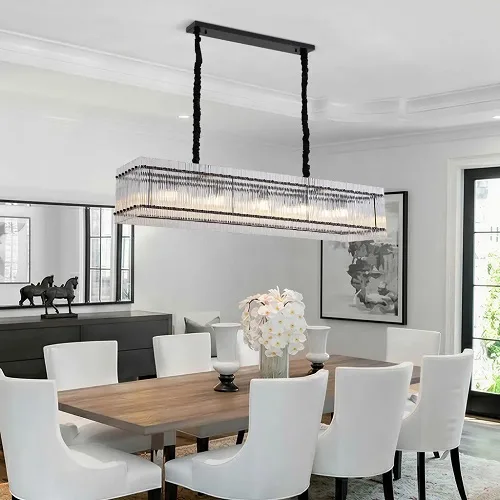
Big pendant lights don’t fade into the background—they define a space. When chosen well, they can bring a room together; when used incorrectly, they can make it feel unbalanced or incomplete. There’s very little middle ground with a large statement fixture. Its presence is immediate, and its impact depends entirely on how well it aligns with the scale, proportions, and layout of the room.
A large modern pendant light works best in spaces that can support its size and visual weight. High ceilings, open-plan living areas, and wide dining zones give it the breathing room it needs to feel intentional rather than overwhelming. In more compact spaces, the same fixture can feel heavy or intrusive, drawing too much attention and interrupting the natural flow of the room. But in the right setting, it becomes a strong focal point—anchoring the space and bringing clarity to how everything else is arranged around it.
In many Australian homes, where open layouts and generous proportions are common, designer ceiling pendant lights are often included as part of the initial design plan rather than added later. They serve a dual purpose: providing illumination and defining spatial structure. A well-positioned pendant can visually separate a dining area from a living space, centre a large table, or highlight a key zone without the need for walls or dividers. This allows the space to remain open while still feeling organised and purposeful.
Light distribution is another key advantage. Unlike single-point fixtures that create a bright, concentrated spot directly below, a large pendant is designed to spread light more evenly across a wider surface. This reduces harsh contrasts, softens shadows, and helps the entire area feel more connected. The result is a balanced lighting effect that supports both function and comfort, especially in spaces where people gather, work, or spend extended periods of time.
Material choice and finish also play a role in how the pendant interacts with the room. Whether it features glass, metal, or a combination of textures, the design should complement the surrounding elements rather than compete with them. A well-chosen finish can help the fixture feel integrated, reinforcing the overall aesthetic while still maintaining its presence as a focal feature.
Ultimately, selecting a large modern pendant light isn’t just about appearance. While it does contribute to the visual identity of the space, its real value lies in how it supports both function and proportion. When the scale, placement, and light distribution are all aligned, the fixture becomes more than just a decorative element. It holds the room together, enhances usability, and creates a sense of balance that makes the entire space feel complete, intentional, and easy to live in.