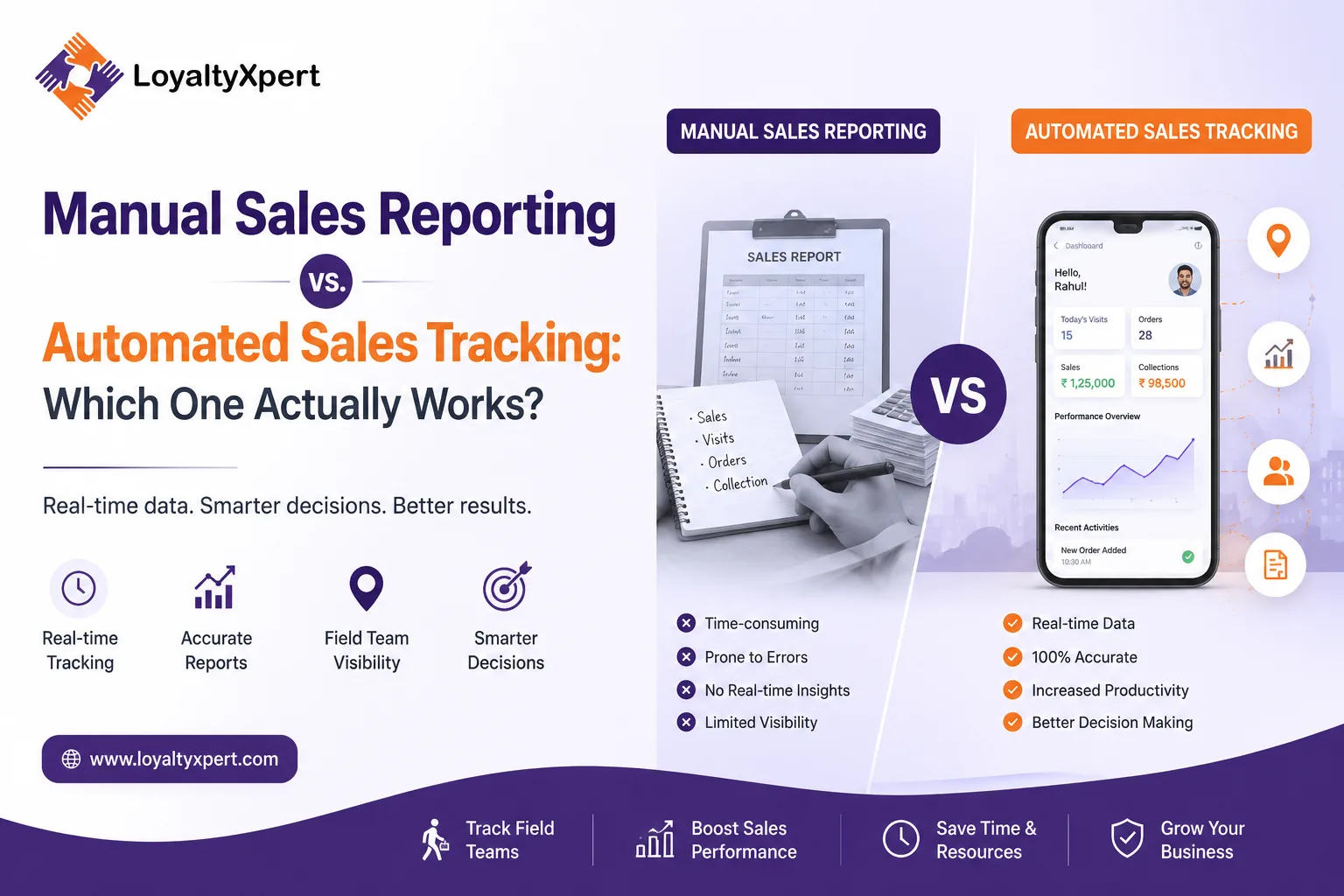
It's 6pm and your sales representatives are sending Excel sheets, WhatsApp messages, and the odd handwritten notes. You're the one who has to turn all that into something readable at one place. By the time it's done, half the numbers are already old news because it will take a lot of time.
This used to just be how sales teams worked till date the old pattern. They were doing it all manually because there wasn't much of a choice. But once a team grows past a certain size, once customers expect faster answers and your competitors start moving quicker, manual reporting starts falling apart at the seams. It starts getting delayed and we kind of fail in front of customers and competitors due to delay in everything.
That's basically why automated sales tracking apps took off. No more waiting for an end of day summary. You can see what's happening while it's happening only.
So which one tool or software is right for you? Yes, it depends on the business, honestly. But once a company grows past the "small team" stage, the difference between the two gets harder to ignore.
What Manual Reporting Looks Like in Practice
Pretty much what you'd guess from the name. Reps write down their day in spreadsheets, notebooks, emails, group chats, whatever's handy, and then a manager has to sit down and piece it all together afterward.
A lot of companies still run this way. Mostly because it's familiar, and nobody has to learn new software.
For a really small team, it can work fine for a while. Everyone knows each other, there aren't many visits to track, reports stay simple.
Problems show up once the team grows. A manager trying to track a few dozen reps across different cities ends up spending half their week just compiling numbers, and accuracy is usually the first thing that suffers.
What Automated Tracking Looks Like
Instead of spreadsheets, you get mobile apps and cloud software logging activity as it happens.
Reps log visits, orders, follow ups, and notes straight from their phone. Nobody's trying to remember what happened at 5pm by the time they sit down to write it up.
Managers get a dashboard showing:
- Which visits actually happened
- How sales are trending
- What follow ups are still open
- Daily activity across the team
- Overall productivity
- Where reps are out in the field, depending on the tool
Less busywork, and decision makers are working off current numbers instead of yesterday's.
Also Read: How Field Sales Tracking Apps Help Field Teams Beyond Reporting
Comparing the Two
Accuracy is one big difference. Manual reporting depends on people remembering things correctly after a long day, and even reliable reps forget details or mistype something. Automated systems catch the info the moment it happens, so there's a lot less room for duplicate entries or gaps.
Time matters too. Manual reports can take anywhere from thirty minutes to a few hours a day depending on team size. That's time reps aren't spending with customers. Automation cuts most of that out since the data's captured live instead of reconstructed later.
Then there's visibility. With manual reporting, you usually find out about problems after they've already caused damage. Miss a batch of Monday visits and you might not know until Wednesday. Automated tracking shrinks that lag considerably.
And scalability. A five person team can run on spreadsheets without issue. Fifty people is a different situation entirely. Manual coordination gets messy fast as you expand, while automated systems are designed to grow without adding a mountain of admin work.
When Manual Reporting Still Makes Sense
It's not dead, and it doesn't need to be. Sticking with manual reporting can still make sense if:
- You've got one or two salespeople
- You're a startup watching every dollar closely
- Customer visits are rare
- You're still figuring out your sales process
If reporting only eats up a few minutes a day, automating it isn't your most pressing problem right now.
Better question to ask: is the manual work actually slowing your team down, or is it just mildly annoying?
Signs You've Outgrown It
Most businesses don't realize they've hit this point until performance starts slipping. Time to consider automating if:
- Reports are consistently late
- Managers spend hours compiling spreadsheets every week
- Follow ups keep slipping through the cracks
- Numbers don't match across different reports
- You can't get a clear picture of what your field team is doing
- Decisions are being made on stale information
If several of these sound familiar, automating could remove a lot of friction you didn't realize was there.
Automation Doesn't Replace the Human Side
Common misconception: automating reporting somehow automates the salesperson out of the picture.
It doesn't work that way. Sales tracking Software handles reminders, dashboards, repetitive admin work. It can't build trust with a customer. People still buy from people, not from dashboards.
The best sales teams use automation to clear out the busywork so reps can spend their energy on what actually closes deals: conversations, problem solving, relationships.
Automation isn't there to replace salespeople. It's there so they have more time to actually sell.
Bottom Line
This was never really people versus technology. It's about where your team's time is best spent.
Manual reporting can still work for smaller teams. But as a company grows, the hidden costs pile up fast: late reports, numbers that don't match, hours lost to admin work, decisions made too slowly.
Automated tracking trades those problems for faster and more accurate information, better visibility, and reps who actually have time to be reps.
If your team is growing or spread across multiple locations, a good sales tracking app can take a lot of that reporting weight off your plate and give you real time insight that actually makes decisions easier.
The businesses that win in the end aren't the ones with the most data. They're the ones who can act on the right data at the right time.