
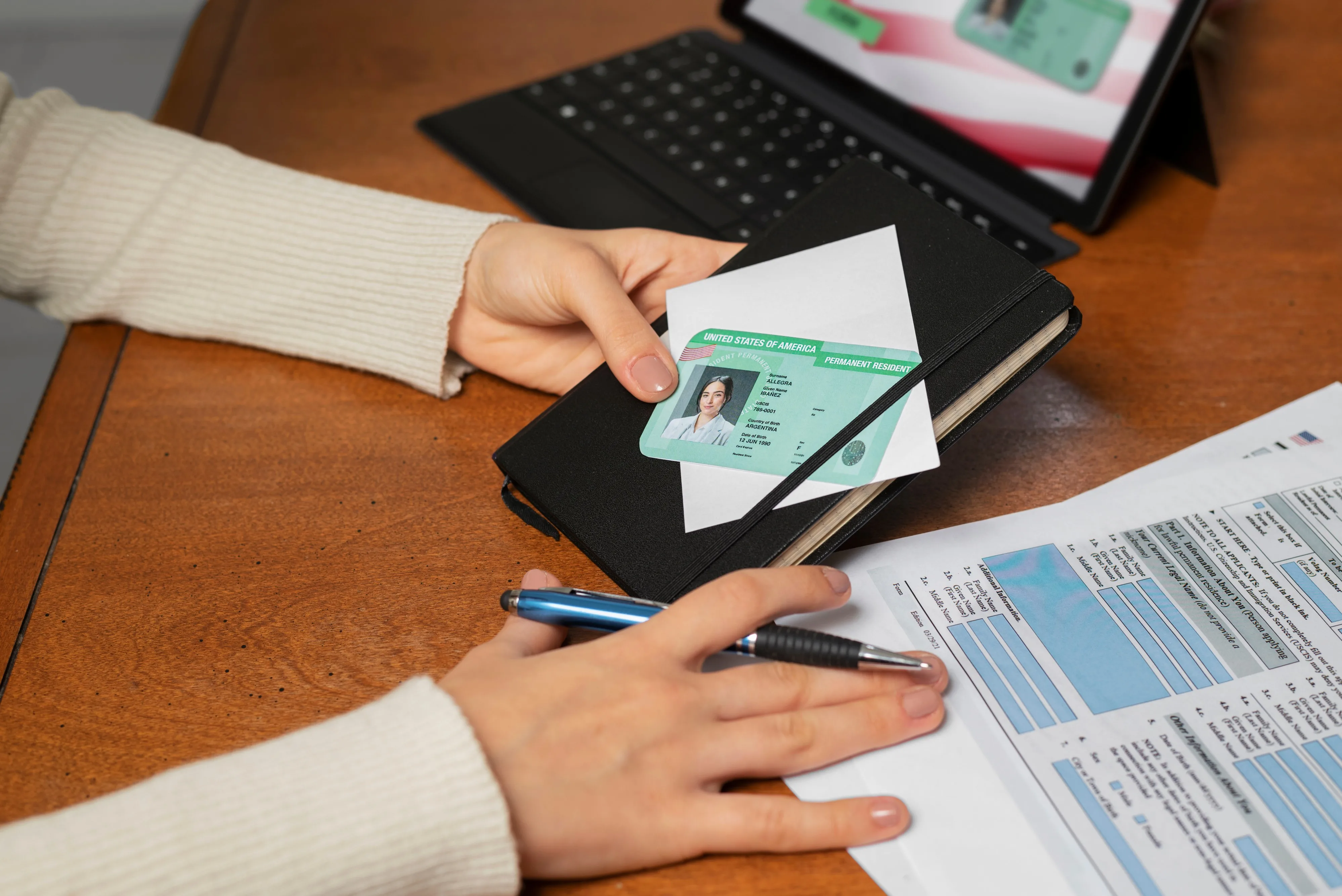
Marrying a U.S. citizen or lawful permanent resident can open the door to lawful permanent residence, but the process requires considerably more than submitting paperwork after the wedding. USCIS reviews marriage-based cases with particular care, examining eligibility, the authenticity of the relationship, and each applicant's immigration history. A single overlooked detail can result in delays, a Request for Evidence, or in more serious cases, denial.
At Immigration Vision, we serve as a marriage green card lawyer for couples navigating this process, whether the case involves adjustment of status from within the United States or consular processing for a spouse residing abroad. If you are seeking a marriage based green card attorney with the experience to guide your case from petition through approval, an early case review can help you avoid the errors that most often derail marriage-based filings.
What Is a Marriage-Based Green Card?
A marriage-based Green Card allows the spouse of a U.S. citizen or lawful permanent resident to obtain lawful permanent residence on the basis of that relationship. The applicable process and timeline depend on several factors, including whether the foreign spouse currently resides inside or outside the United States, and whether the petitioning spouse holds U.S. citizenship or permanent resident status.
Spouses of U.S. citizens are classified as "immediate relatives," a category not subject to annual visa caps, which generally allows for more efficient processing. Spouses of lawful permanent residents fall under a separate, numerically limited category and may experience considerably longer wait times.
Because the correct process depends heavily on where the spouse currently resides and the petitioner's immigration status, consulting a marriage green card lawyer early in the process helps ensure the filing strategy is appropriate from the outset. For couples where the petitioning spouse is a lawful permanent resident rather than a citizen, our Family-Based Green Cards page provides additional detail on category-specific wait times and eligibility.
Adjustment of Status vs. Consular Processing
Foreign spouses who are already present in the United States typically pursue adjustment of status, filing Form I-485 to change their status to lawful permanent resident without departing the country. Spouses residing outside the United States generally proceed through consular processing at a U.S. embassy or consulate instead.
Selecting the correct path is critical. Filing for adjustment of status without meeting the underlying eligibility requirements, or proceeding on the basis of an incorrect entry status, can create significant and sometimes irreversible complications. A qualified adjustment of status lawyer reviews entry records, current immigration status, and any prior violations before advising whether adjustment of status is an available option.
Proving a Bona Fide Marriage
Among the most closely scrutinized elements of any marriage-based case is the evidence establishing that the marriage was entered into in good faith, rather than for the primary purpose of obtaining an immigration benefit.
USCIS typically evaluates evidence such as joint financial accounts, shared leases or mortgages, joint insurance policies, photographs documenting the relationship over time, and affidavits from individuals familiar with the couple. Inconsistent or insufficient documentation remains one of the most common reasons couples receive a Request for Evidence or are referred for additional interviews.
A marriage based green card attorney helps couples understand which categories of evidence carry the most weight with adjudicators, and how to present that evidence clearly, particularly in cases involving a shorter courtship, a significant age gap, or a limited shared address history.
Common Issues That Complicate a Marriage-Based Case
Not every marriage-based case proceeds without complication. Certain circumstances introduce additional complexity and increase the likelihood of delay or denial, including:
- Entry without inspection or a prior period of unlawful presence
- A previous marriage that ended in divorce shortly before the current relationship began
- Immigration violations, overstays, or prior removal proceedings
- Criminal history that may affect admissibility
- A prior marriage-based petition that was denied or withdrawn
None of these circumstances automatically disqualifies an applicant, though each may require a waiver, additional supporting evidence, or an adjusted filing strategy. Applicants with a more complex immigration history, including prior removal proceedings, may also benefit from reviewing our VAWA Immigration Lawyer services, which address related protections in circumstances involving abuse or hardship. Consulting an adjustment of status lawyer before filing allows these issues to be identified and addressed proactively rather than during a USCIS interview.
The Adjustment of Status Process, Step by Step
Following the filing of the initial petition (Form I-130), eligible applicants residing in the United States may file Form I-485 for adjustment of status, often alongside applications for employment authorization and advance parole while the case remains pending.
Most applicants attend a green card interview, during which a USCIS officer reviews the petition, supporting evidence, and questions each spouse about the relationship and their respective backgrounds. Depending on the circumstances of the case, this may take the form of a joint interview or, in less common situations, separate "Stokes" interviews when USCIS has concerns regarding the legitimacy of the marriage.
Engaging a marriage green card lawyer throughout this process ensures the complete filing is reviewed prior to submission, and that both spouses are properly prepared for what to expect during the interview.
What If Your Case Is Delayed, Receives an RFE, or Is Denied?
Receiving a Request for Evidence is not equivalent to a denial, but it does indicate that USCIS requires additional documentation before the case can be approved. The manner in which that response is prepared can meaningfully affect the outcome.
Should a case be denied, available options may include filing a motion to reopen or reconsider, or, in certain circumstances, pursuing the matter before an immigration judge. The appropriate course of action depends significantly on the specific basis for the denial.
An experienced marriage based green card attorney reviews the notice, identifies the underlying issue, and advises on the realistic options available going forward. Applicants pursuing U.S. citizenship following approval of their green card may also find our Citizenship and Naturalization guidance a useful next step once permanent residence is secured.
Why Choose Immigration Vision?
At Immigration Vision, marriage-based cases are approached with attention to the complete picture, including immigration history, entry status, prior filings, and relationship evidence, rather than the forms alone.
Whether you are newly married and beginning the process, currently have a pending adjustment of status case, or have received a difficult notice from USCIS, our objective as your marriage green card lawyer is to help you move forward with clarity and confidence.
Frequently Asked Questions
Do I need a marriage green card lawyer if my case seems straightforward?
Not every case requires an attorney. However, even a seemingly straightforward marriage-based filing can encounter delays if documentation is incomplete or inconsistent. A brief case review prior to filing often identifies issues that are considerably more difficult to resolve once a case is already pending with USCIS.
What does an adjustment of status lawyer actually help with?
An adjustment of status lawyer confirms eligibility to file Form I-485, reviews entry and immigration history for potential concerns, assists in assembling evidence of a bona fide marriage, and prepares both spouses for the green card interview.
How long does a marriage based green card case usually take?
Timelines vary considerably based on USCIS processing volumes, whether the foreign spouse resides inside or outside the United States, and whether the petitioner holds citizenship or permanent resident status. A marriage based green card attorney can provide a more precise estimate based on the specific facts of the case.
Can I work while my adjustment of status application is pending?
Applicants who file Form I-485 may generally file a concurrent application for employment authorization, allowing them to work legally while the green card case remains under review. An adjustment of status lawyer can confirm eligibility and ensure this application is filed correctly alongside the primary petition.
What happens if my spouse and I divorce while the green card case is pending?
A divorce prior to approval can significantly affect a pending marriage-based case and, in some situations, may end eligibility under that petition entirely. Because the available options depend heavily on the stage of the case and the circumstances involved, speaking with a marriage green card lawyer as early as possible is strongly advised.
Do same-sex marriages qualify for marriage-based green cards?
Yes. Marriage-based immigration benefits are available to same-sex spouses on the same basis as opposite-sex spouses, provided the marriage is legally valid in the jurisdiction where it was performed. A marriage based green card attorney can confirm how this applies to your specific circumstances.
Talk With a Marriage Green Card Lawyer
Marriage-based immigration cases involve firm deadlines, close adjudicative scrutiny, and consequences that can affect a family for years to come. Approaching the process with proper preparation makes a substantial difference in the outcome.
If you are searching for a marriage green card lawyer, a marriage based green card attorney, or an adjustment of status lawyer, Immigration Vision can help you understand your options and prepare a strong filing from the outset.