
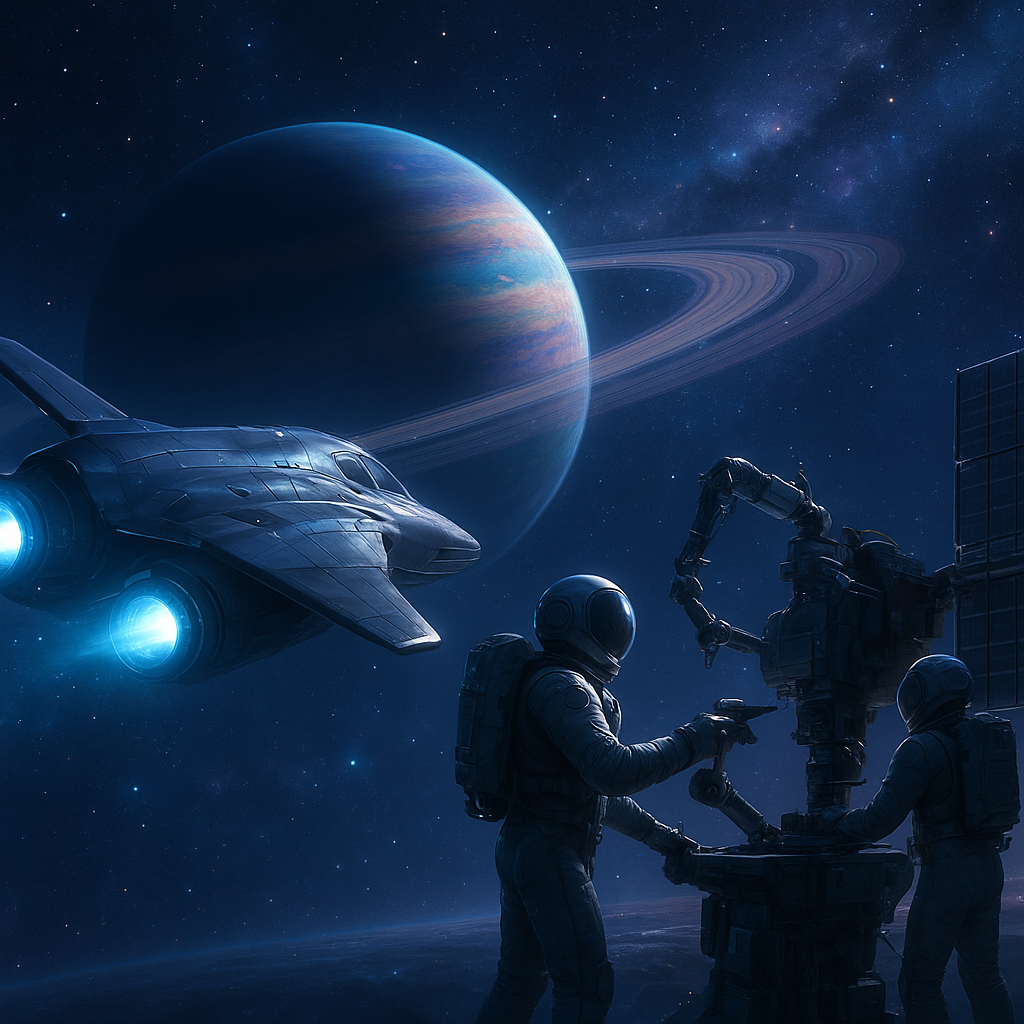
Charting the Unknown: A Glimpse into the New Era of Space Exploration
On a clear night above the Atacama Desert, a new generation of telescopes peers deep into the cosmos, seeking signs of life and understanding the universe’s infancy. This scene is emblematic of how far humanity has come since the earliest days of rocketry. Today, space exploration is no longer a distant dream but an active, multifaceted endeavor involving international agencies, private corporations, and interdisciplinary teams. The stakes are higher than ever, with ambitions ranging from lunar bases to crewed Mars missions and asteroid mining. However, the challenges remain daunting: extreme environments, vast distances, and the complexity of human survival in space. Understanding expert strategies for space exploration in 2026 is crucial for anyone invested in the future of humanity beyond Earth.
“Space exploration is a testament to human curiosity and resilience, demanding not only technological innovation but also adaptability and foresight.” – Dr. Elena Morales, Astrophysicist and Space Policy Analyst
To appreciate the nuances of current approaches, we must first contextualize how space exploration has evolved over the decades.
From Sputnik to the Artemis Era: How We Reached Today’s Frontier
The journey of space exploration began in earnest with the launch of Sputnik 1 in 1957, marking the dawn of the Space Age. This was followed by the Apollo missions, which famously landed humans on the Moon. These pioneering efforts set the foundation, but they were largely government-led, expensive, and limited in scope. The following decades witnessed a transition toward more sustainable and collaborative approaches.
By the late 20th century, the International Space Station (ISS) became a hallmark of multinational cooperation, hosting crews from NASA, Roscosmos, ESA, JAXA, and others. The ISS demonstrated the feasibility of long-duration human habitation in space, albeit in low Earth orbit. Meanwhile, robotic explorers such as the Mars rovers and interplanetary probes expanded our scientific knowledge without the risks of human missions.
In the current decade, 2020s, the landscape shifted dramatically due to technological breakthroughs and a surge in private sector involvement. Companies like SpaceX, Blue Origin, and international counterparts introduced cost-effective launch systems and ambitious plans for space colonization. NASA’s Artemis program, launched in the early 2020s, aims to establish a sustainable human presence on the Moon by the late 2020s, serving as a launchpad for Mars expeditions and beyond.
“The Artemis program is not just about returning to the Moon; it’s about building the blueprint for humanity’s future in space.” – NASA Administrator Dr. Michael Chen
This historical trajectory informs the expert tips and strategies that underpin successful space exploration efforts today.
Core Strategies Driving 2026 Space Missions: Technology, Collaboration, and Sustainability
The experts shaping space missions in 2026 emphasize a multi-pronged approach that balances cutting-edge technology with sustainable practices and international collaboration. Here are the critical pillars:
- Advanced Propulsion Technologies: Chemical rockets remain dominant, but ion drives, nuclear thermal propulsion, and solar sails are gaining traction. For instance, NASA’s recent demonstration of a nuclear thermal propulsion prototype promises to halve travel time to Mars, reducing crew exposure to cosmic radiation.
- Modular and Adaptive Habitat Design: Space habitats now employ modular systems that can be expanded or reconfigured in situ. The Lunar Gateway, a collaboration between NASA and ESA, exemplifies this with its flexible modules supporting various mission profiles.
- Artificial Intelligence and Autonomy: AI systems now handle navigation, system diagnostics, and even scientific data analysis, reducing crew workload and enhancing mission safety. Autonomous drones and rovers also perform preliminary exploration tasks, scouting hazardous terrain before human arrival.
- In-Situ Resource Utilization (ISRU): Extracting water, minerals, and building materials locally on celestial bodies is fundamental to long-term missions. The success of the MOXIE experiment on Mars, which produced oxygen from the Martian atmosphere, has paved the way for scalable ISRU technologies.
- Robust Life Support and Health Monitoring: Closed-loop life support systems recycle air, water, and waste with remarkable efficiency. Furthermore, real-time health monitoring using biosensors and telemedicine ensures crew wellbeing over extended missions.
This synthesis of technology and strategy is reflected in current missions, making space exploration more feasible and safer than ever before.
2026 Breakthroughs and Trends: What’s Shaping This Year’s Missions
The year 2026 stands out as a pivotal moment, with several missions and trends that underscore the new reality of space exploration.
First, the Artemis III mission, scheduled for late 2026, aims to land the first woman and the next man on the lunar south pole. This mission will test new habitat modules and ISRU techniques, serving as a proving ground for Mars expeditions. The Lunar Gateway, now fully operational, supports Artemis missions with life support, research labs, and docking capabilities.
Second, private companies have expanded their footprint. SpaceX’s Starship has completed multiple crewed and cargo flights to Mars orbit, establishing the first commercial outpost in Martian orbit for scientific and mining operations. Blue Origin’s New Glenn rocket supports lunar supply missions, reflecting a maturing commercial ecosystem.
Third, international cooperation is more robust than ever. The Artemis Accords have expanded to include over 30 countries, fostering peaceful and equitable use of space resources. Concurrently, China and Russia have launched the International Lunar Research Station (ILRS), highlighting parallel efforts with unique scientific focus areas.
- Increased automation: Robots now conduct over 75% of surface exploration tasks on Mars and the Moon.
- Energy innovations: Solar power combined with nuclear microreactors provides reliable, continuous energy for habitats.
- Space tourism: While limited, commercial space tourism has grown, funding infrastructure development.
These developments confirm that 2026 is a year of operational expansion and technological maturation in space exploration.
Lessons from the Leaders: Insights from Industry Experts and Mission Veterans
Interviews and reports from experts across NASA, ESA, private industry, and academia reveal several recurring themes that define expert tips for space exploration today.
Dr. Amina Patel, Chief Engineer at the Lunar Gateway program, emphasizes the importance of redundancy and adaptability. “Space is unforgiving. Systems must be designed to fail gracefully and allow for quick reconfiguration. Flexibility in design saves lives and mission goals.”
Meanwhile, Commander Luis Ramirez, veteran of the Mars Orbital Habitat mission, reflects on crew dynamics and psychological resilience. “Technical preparation is vital, but so is interpersonal harmony. Long-duration missions require emotional intelligence and robust support networks.”
“The human factor is often underestimated. Training must include mental health strategies as much as physical survival skills.” – Commander Luis Ramirez
Corporate leaders highlight innovation cycles. SpaceX CTO Sarah Lin notes, “Rapid prototyping and iterative testing accelerate progress. Waiting for perfect technology is no longer viable.”
These insights converge on a holistic approach that integrates technology, human factors, and organizational agility.
Looking Ahead: Navigating the Future of Space Exploration
As humanity sets its sights on Mars colonies and asteroid mining, the challenges will multiply. Experts forecast that by the 2030s, crewed missions to Mars will become routine, supported by autonomous cargo deliveries and orbital infrastructure.
Key areas to watch include:
- Quantum communication: Improving data transmission speeds and security over interplanetary distances.
- Bioregenerative life support: Using living systems to sustain human habitats.
- Space law and ethics: Developing frameworks to govern resource extraction and colonization.
For aspiring explorers and policymakers, embracing the lessons from current efforts is essential. Resources like TheOmniBuzz’s Mastering the Final Frontier: Expert Tips for Successful Space Exploration and 2026 Trends in Space Exploration: Charting Humanity’s Next Giant Leap offer deep dives into practical strategies and emerging trends.
Ultimately, mastering space exploration requires a blend of visionary planning, technological prowess, and a commitment to international collaboration that transcends earthly divides.