
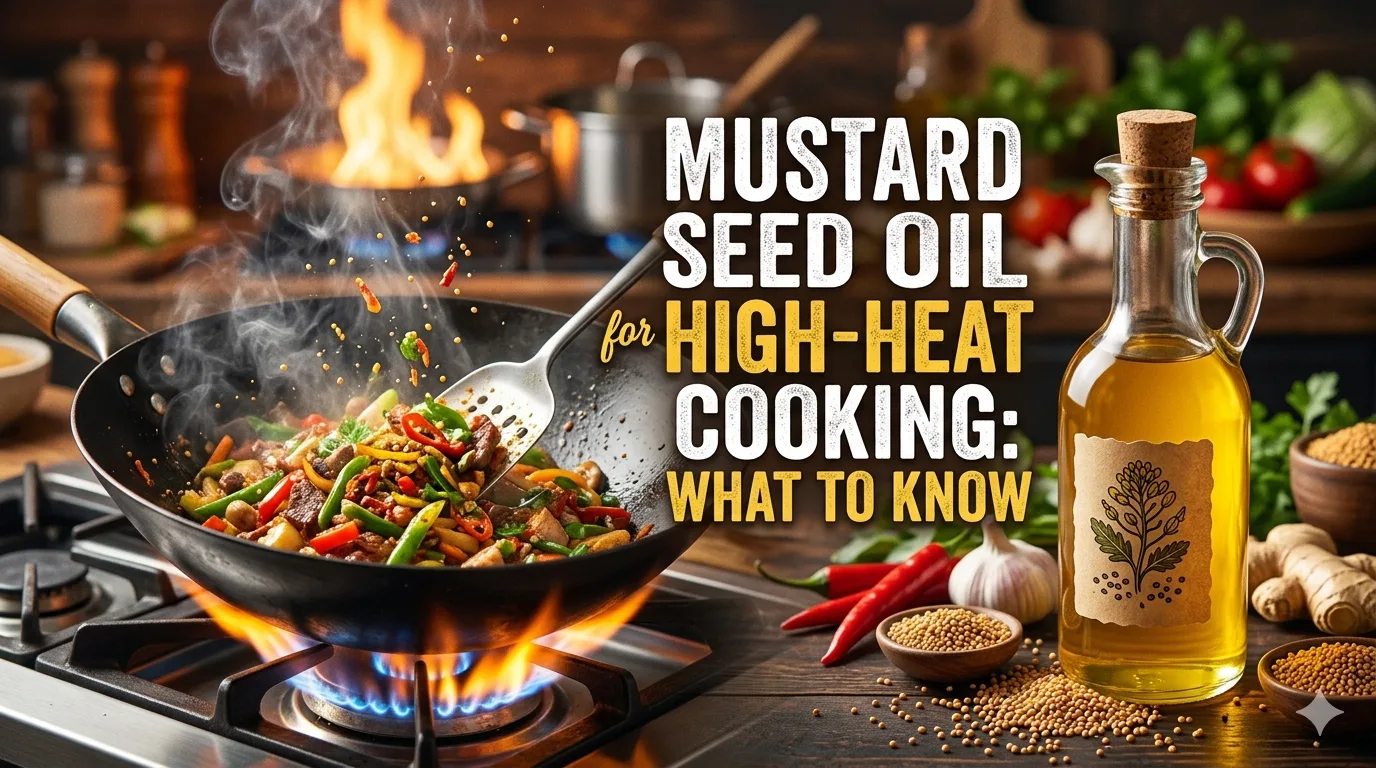
I still remember the first time I cooked with mustard oil. The smell hit me before anything else—sharp, almost nose-tingling, like it was warning me… this isn’t your regular oil.
Somewhere in the middle of figuring it out, I kept coming back to one question—is mustard seed oil for cooking actually good for high heat, or am I just burning it wrong?
Turns out, it’s not that simple. But also not that complicated once you get used to it.
What Makes Mustard Seed Oil Different
That strong smell? It’s not a flaw
If you’ve opened a fresh bottle, you know what I mean. It’s pungent. Almost spicy in aroma.
At first, I thought something was off. Like maybe I got a bad batch. But no, that’s just how raw mustard oil behaves. Especially cold-pressed mustard oil.
Once heated properly, the smell mellows out. Not completely… but enough to become appetizing instead of aggressive.
It feels lighter than it looks
It has this deep golden color, sometimes darker. You’d expect it to feel heavy, but weirdly, it spreads quite easily in the pan.
And it heats up fast. Faster than I expected, honestly.
Can You Use Mustard Oil for High-Heat Cooking?
Short answer—yes, but don’t rush it
Mustard oil has a relatively high smoke point, usually around 240°C (give or take depending on the type).
That means you can fry, sauté, even deep fry with it. Which is why it’s so common in Indian kitchens, especially for dishes that need that intense heat.
But here’s where I messed up in the beginning—I didn’t heat it enough first.
The “smoking stage” matters
You’re supposed to heat mustard oil until it just starts smoking lightly. Not full-on burning, just that thin stream of smoke.
It’s almost like a small ritual. Wait… watch… then reduce the heat.
This step reduces that sharp raw taste. Skip it, and your food might taste a bit bitter or overly pungent. Learned that the hard way.
Why People Prefer Mustard Oil for Frying
It handles heat without breaking down easily
Some oils start smelling weird when overheated. Or they foam up. Mustard oil holds steady, at least in my experience.
I’ve used it for frying fish, potatoes, even pakoras. It stays stable, doesn’t feel greasy afterward.
Flavor actually adds something
This one’s subjective. Not everyone likes that bold flavor.
But in certain dishes—like aloo fry or fish curry—it just works. You don’t even need too many spices. The oil itself brings character.
Kind of like how ghee changes a dish completely.
Cold-Pressed vs Refined Mustard Oil
Cold-pressed feels more “real”
Stronger smell. Deeper taste. Slightly thicker.
This is the one people usually talk about when discussing traditional cooking. It’s less processed, which sounds good… though it also means you need to handle it properly.
Refined is milder
Less smell, lighter taste. Easier for beginners, I guess.
If you’re someone who finds the raw aroma too intense, refined mustard oil might feel more comfortable.
Still, for high-heat cooking, both types can work. It just depends on what kind of flavor you’re okay with.
Common Mistakes (I’ve Made a Few)
Not heating it enough
This is probably the biggest one. If the oil isn’t heated to that smoking point first, the final dish can taste… off. Hard to describe, but not pleasant.
Overheating it
Then there’s the opposite. Leaving it too long on high heat until it burns. That ruins everything. The oil turns darker, and the smell gets harsh.
There’s a sweet spot. Takes a few tries to get it right.
Using too much
Mustard oil is strong. A little goes a long way.
The first time I cooked with it, I used the same amount I would for sunflower oil. Big mistake. The dish ended up tasting like straight mustard.
Is Mustard Oil Healthy for High-Heat Cooking?
It has its own set of benefits
Mustard oil contains monounsaturated fats and omega-3 fatty acids. People often talk about it being heart-friendly, though… yeah, moderation still matters.
It also has antibacterial properties, which is interesting, though not something you notice while cooking.
There’s some debate too
You might have heard about erucic acid. Some discussions around it can sound a bit alarming.
In many places, food-grade mustard oil is regulated, so it’s considered safe in normal amounts. Still, it’s one of those things where you don’t want to go overboard.
Like most oils, really.
When Mustard Oil Works (and When It Doesn’t)
Works really well for:
- Deep frying (pakoras, fish, fritters)
- Stir-frying vegetables
- Traditional Indian recipes
- Pickles (achar, obviously)
Maybe not ideal for:
- Baking
- Light Western dishes
- Anything where you want a neutral taste
I once tried using it in pasta. Yeah… not my brightest idea.
A Few Practical Tips That Actually Help
Start small
If you’re new, mix mustard oil with another neutral oil at first. Helps you get used to the flavor without it taking over completely.
Ventilation matters
That initial heating stage? It releases a strong aroma. Opening a window helps. Or you’ll have your whole kitchen smelling like mustard for hours.
Store it properly
Keep it in a cool, dark place. The flavor stays more stable that way.
So… is it worth using regularly?
Honestly, it depends on your taste.
Some people fall in love with that bold, slightly sharp flavor. Others try it once and go back to milder oils.
For high-heat cooking, mustard seed oil for cooking does the job well. No doubt about that. It handles heat, adds character, and feels… rooted, somehow.
But yeah, it takes a bit of getting used to. A few trial-and-error meals. Maybe one or two slightly ruined dishes along the way.
After that, it starts to feel less intimidating. Almost comforting, even.
And then one day, you realize—you’re reaching for that mustard oil bottle without thinking twice.