
In today’s rapidly evolving digital landscape, businesses are under constant pressure to innovate faster, reduce costs, and deliver seamless user experiences. This urgency has led to the rise of low code no code app development, a transformative approach that empowers organizations to build applications with minimal traditional coding. Whether you're a startup founder, enterprise leader, or tech enthusiast, understanding the differences between no-code and low-code platforms—and their respective advantages and limitations—is essential for making informed decisions in modern application development.
Understanding No-Code and Low-Code Development
Before diving into comparisons, it’s important to clarify what these terms mean.
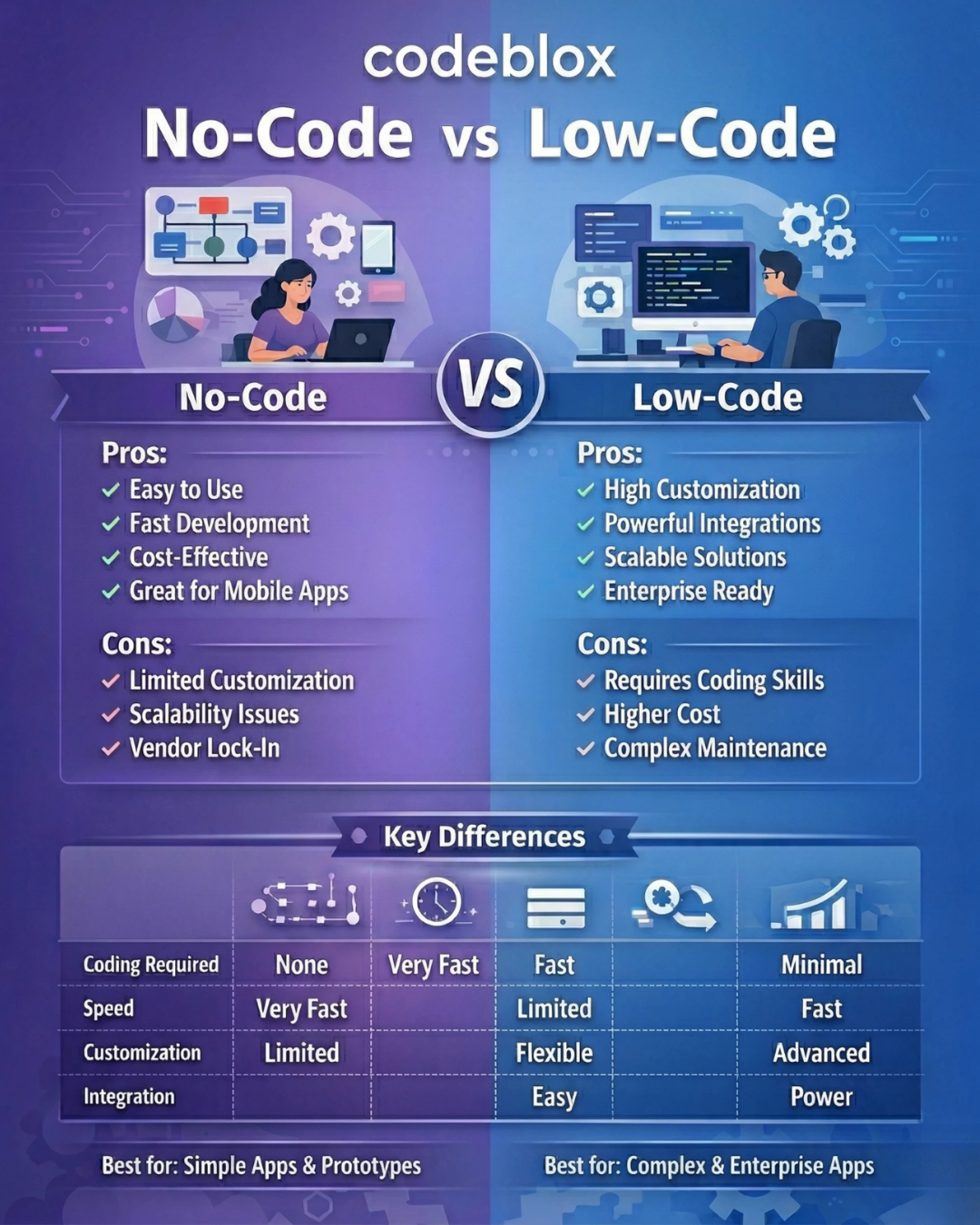
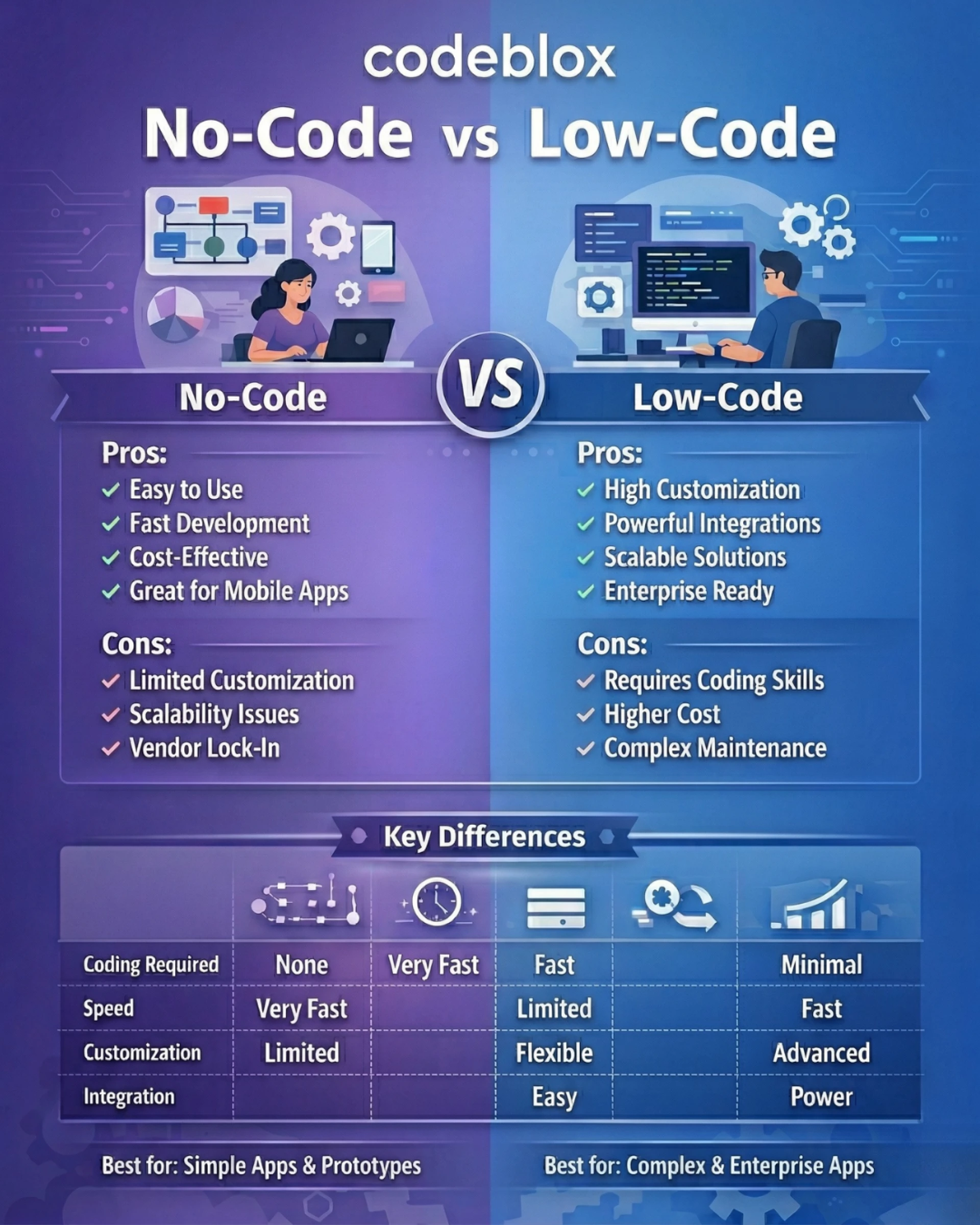
No-code development allows users to build applications using visual interfaces, drag-and-drop tools, and pre-built templates—without writing a single line of code. It democratizes software creation, making it accessible to non-technical users such as business analysts and marketers.
Low-code development, on the other hand, provides a similar visual environment but allows (and sometimes requires) minimal coding to customize or extend functionality. It bridges the gap between developers and non-developers, offering flexibility alongside speed.
The Rise of No-Code Automation and Its Impact
One of the most significant drivers behind the popularity of these platforms is No code automation. Organizations are increasingly leveraging automation tools to streamline workflows, reduce manual effort, and enhance operational efficiency.
From automating customer onboarding processes to integrating CRM systems, no-code platforms enable users to create intelligent workflows without relying heavily on IT teams. This paradigm shift is particularly beneficial for businesses aiming to eliminate bottlenecks and accelerate digital transformation.
Pros of No-Code Development
1. Accessibility for Non-Technical Users
No-code platforms empower individuals with little to no programming knowledge to build functional applications. This inclusivity fosters innovation across departments and reduces dependency on developers.
2. Rapid Development and Deployment
With pre-built modules and intuitive interfaces, applications can be developed and launched in a fraction of the time compared to traditional methods. This rapid prototyping capability is ideal for testing ideas and validating concepts.
3. Cost Efficiency
By minimizing the need for specialized developers, businesses can significantly reduce development costs. This makes no code app development particularly appealing for startups and small businesses with limited budgets.
4. Seamless No-Code Mobile App Development
Modern platforms also support no code mobile app development, enabling users to create responsive and feature-rich mobile applications without coding. This opens up new opportunities for businesses to reach users on multiple devices.
Cons of No-Code Development
1. Limited Customization
While no-code platforms offer convenience, they often lack the flexibility required for complex applications. Custom features may be difficult or impossible to implement.
2. Scalability Challenges
Applications built using no-code tools may struggle to handle large-scale operations or high user loads, making them less suitable for enterprise-grade solutions.
3. Vendor Lock-In
Many no-code platforms operate within proprietary ecosystems, which can make it difficult to migrate applications or data to other systems.
4. Security Concerns
Since users rely on third-party platforms, there may be concerns about data security, compliance, and control over sensitive information.
Pros of Low-Code Development
1. Greater Flexibility and Customization
Low-code platforms allow developers to write custom code when needed, enabling more sophisticated and tailored applications.
2. Faster Development Compared to Traditional Coding
While not as quick as no-code, low-code still significantly reduces development time through reusable components and visual interfaces.
3. Enhanced Integration Capabilities
Low-code platforms often function as a no code integration platform, allowing seamless connectivity with APIs, databases, and third-party services. This makes them ideal for building interconnected systems.
4. Scalability for Enterprise Applications
Low-code solutions are better suited for scaling applications, making them a viable choice for larger organizations with complex requirements.
Cons of Low-Code Development
1. Requires Technical Expertise
Unlike no-code platforms, low-code tools still require some programming knowledge. This limits accessibility for completely non-technical users.
2. Higher Initial Costs
Low-code platforms may involve licensing fees and require skilled developers, leading to higher upfront costs compared to no-code solutions.
3. Complexity in Maintenance
As custom code increases, maintaining and updating applications can become more complex over time.
When to Choose No-Code
No-code platforms are ideal when:
- You need a quick prototype or MVP
- Your application requirements are simple
- You want to empower non-technical teams
- Budget constraints are a concern
They are especially useful for internal tools, landing pages, and basic applications.
When to Choose Low-Code
Low-code platforms are a better fit when:
- You require advanced customization
- Your application needs to scale
- Integration with multiple systems is essential
- You have access to technical resources
They are commonly used for enterprise applications, customer portals, and complex workflows.
The Future of Application Development
The convergence of no-code and low-code technologies is reshaping the software development ecosystem. As artificial intelligence, machine learning, and hyperautomation continue to evolve, these platforms are becoming more powerful and versatile.
Emerging trends include:
- Composable architecture: Building applications using modular components
- Citizen development: Empowering non-developers to contribute to app creation
- Intelligent automation: Combining AI with no-code tools for smarter workflows
These innovations are not just trends—they represent a paradigm shift in how applications are conceptualized, built, and deployed.
Final Thoughts
Both no-code and low-code platforms offer compelling advantages, but the right choice depends on your specific needs, resources, and long-term goals. While no-code excels in simplicity and speed, low-code provides the flexibility and scalability required for more complex applications.
By carefully evaluating the pros and cons of each approach, businesses can harness the full potential of modern development tools and stay competitive in an increasingly digital world.