TL;DR
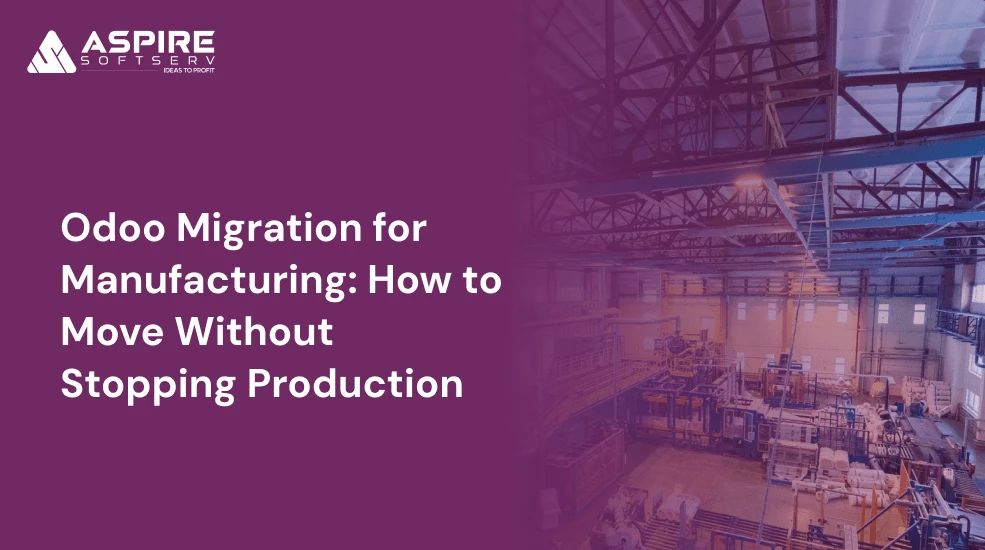
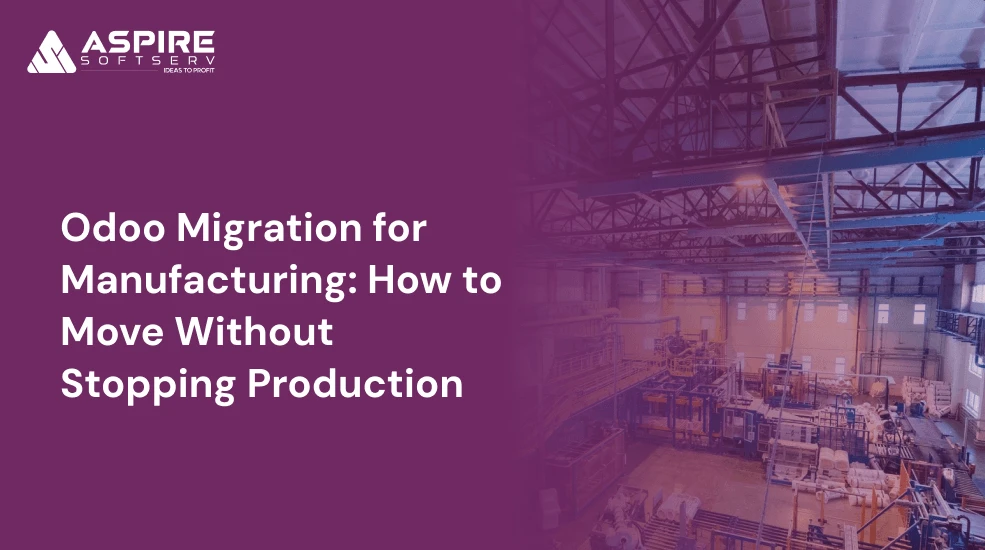
ERP migration in manufacturing is not just a system upgrade it is a change that directly affects production, inventory, procurement, and delivery timelines. Because manufacturing processes are tightly connected, even a short system interruption can stop the shop floor, delay shipments, and create financial loss. This is why many manufacturers continue using legacy ERP systems even when those systems slow down operations.
In reality, most ERP migration problems do not happen because migration is risky. They happen because the migration is done without proper planning, without cleaning data, or without understanding manufacturing workflows. When migration is handled as a structured engineering process with audit, testing, staging, and parallel run manufacturers can move to Odoo without stopping production.
Legacy ERP systems often create data silos, limit real-time visibility, and make it difficult to manage multi-warehouse or multi-plant operations. A phased migration approach that includes system audit, data cleansing, pilot migration, parallel run, and controlled go-live allows manufacturers to transition safely. Running the legacy ERP in read-only mode while Odoo processes live transactions helps validate the new system before final cutover. Choosing an Odoo implementation partner with real manufacturing experience also plays a major role in migration success.
Modern Odoo ERP migration services help manufacturers move to a unified platform that connects MRP, inventory, procurement, quality control, and shop-floor automation in one system. For companies modernizing their ERP as part of a larger digital transformation, migration should be treated as a product engineering decision, not only a technical task.
Internal resource:
https://www.aspiresoftserv.com/blog/idea-to-enterprise-product-engineering-thinking
Why Manufacturers Are Moving Away from Legacy ERP Systems
Many manufacturing companies still rely on ERP systems that were implemented years ago and were designed for much simpler operations. As production environments become more connected and data-driven, these older systems struggle to provide the speed, visibility, and automation required to stay competitive.
One of the most common limitations of legacy ERP systems is the lack of real-time data. Inventory updates may happen in batches instead of instantly, which means production planners often work with outdated stock information. This leads to unexpected material shortages, delayed purchase orders, and missed production schedules.
Another challenge is limited shop-floor visibility. In many older systems, production status must be entered manually, which makes it difficult for managers to know what is happening in real time. Without accurate work-order tracking, identifying bottlenecks becomes slow and reactive instead of proactive.
Legacy systems also make it difficult to integrate with modern tools such as barcode scanners, IoT devices, CNC machines, or MES platforms. Because of this, shop-floor data entry often becomes manual, increasing the risk of errors and reducing productivity.
As manufacturing companies grow, multi-warehouse and multi-company operations become harder to manage with older ERP platforms. Teams may spend hours reconciling stock between locations, and reporting becomes unreliable. Demand forecasting is often limited, which makes it difficult to align procurement with actual production needs.
Modern ERP platforms such as Odoo solve these problems by providing real-time dashboards, integrated MRP planning, and modular architecture. By connecting inventory, procurement, production, and quality control in one system, Odoo gives manufacturers the visibility and control needed to scale operations without increasing complexity.
Understanding the Real Risks of ERP Migration in Manufacturing
ERP migration in manufacturing is more complex than in most other industries because every operational process depends on accurate data. Bills of Materials, routing, inventory, procurement, and production orders must all remain consistent during migration. Even a small mistake in data mapping can affect the entire production flow.
The biggest concern during ERP migration is production downtime. If the new system is activated without proper testing, work orders may not process correctly, inventory may not update, and procurement may fail to generate required purchase orders. This can stop the production line and cause delivery delays.
Incorrect migration of multi-level Bills of Materials is another major risk. Since BOM structures control material requirements and scheduling, even a small error can create problems across procurement and production. Open manufacturing orders may also be lost if they are not frozen and validated before migration, which creates confusion on the shop floor.
Inventory mismatch is a common issue after migration, especially when legacy data is not cleaned before import. When the stock levels in the new system do not match actual inventory, procurement decisions become inaccurate and emergency purchasing may be required.
Custom modules and third-party integrations also require careful testing. Modules that worked in an older ERP version may not work in the new system, and integrations with machines, barcode scanners, or MES software must be validated in a staging environment before go-live.
Because of these risks, ERP migration should always follow a controlled process with proper testing, validation, and rollback planning.
Why Odoo ERP is a Strong Choice for Manufacturing Companies
Odoo has become a popular ERP platform for manufacturers because it offers flexibility, scalability, and strong support for production workflows. Unlike traditional ERP systems that require heavy customization, Odoo provides built-in modules for manufacturing, inventory, quality, maintenance, and procurement.
With Odoo, production managers can see real-time updates of work orders, machine utilization, and stock levels. Integrated MRP connects demand forecasting directly with procurement and production planning, ensuring that materials are available when needed.
Built-in quality control features help maintain production standards, while preventive maintenance tools reduce unexpected machine downtime. Native support for barcode scanners and IoT devices makes shop-floor automation easier compared to legacy systems.
Odoo’s modular architecture allows manufacturers to start with essential modules and expand as operations grow. Compared to proprietary ERP platforms, Odoo also offers a lower total cost of ownership while still supporting complex manufacturing workflows, which makes it a practical choice for growing companies.
Step-by-Step Odoo Migration Strategy Without Production Downtime
A successful Odoo migration requires careful planning and phased execution. Instead of switching systems all at once, manufacturers should follow a structured process that allows testing and validation at every stage.
The first step is a detailed audit of the current ERP system. This includes reviewing modules, customizations, integrations, and manual workflows. Input from production, procurement, and inventory teams is important because their daily tasks define the real system requirements.
After the audit, separate environments should be created for development, staging, and production. Configuration should be done in development, testing should happen in staging, and only validated changes should go to production. This approach protects daily operations during migration.
Data cleansing is one of the most important steps. Bills of Materials, product records, units of measure, vendor data, and inventory quantities must be verified before migration. Importing incorrect data into the new system will recreate the same problems.
Before go-live, a pilot migration should be performed using real production data. Data should be imported in the correct order, starting with basic records and ending with open orders. Each step must be validated before moving forward.
To reduce risk, both systems should run in parallel for a short period. The legacy ERP stays active in read-only mode while Odoo processes live transactions. After completing multiple production cycles successfully, the final cutover can be scheduled during a low-production period.
Manufacturing Data That Needs Extra Attention
Not all data has the same level of risk during migration. Some manufacturing data must be validated very carefully because errors in these areas can stop production immediately.
Multi-level Bills of Materials must be mapped correctly because they control material planning. Routing and work-center configurations must match actual machine capacity to avoid scheduling conflicts. Lot and serial number tracking is important for traceability and compliance.
Quality checkpoints embedded in work orders must be configured properly to maintain inspection workflows. Subcontracting processes must be tested carefully because they involve multiple data relationships. Open manufacturing and purchase orders should always be frozen before migration to prevent confusion after go-live.
Why the Right Migration Partner Matters
ERP migration requires both technical knowledge and understanding of manufacturing workflows. A partner who only knows software may not understand how production depends on accurate data and reliable integration.
Manufacturers should choose a partner with experience in manufacturing ERP migrations, MRP logic, and shop-floor processes. A strong partner provides audit, planning, data migration, testing, parallel run support, and post-go-live optimization.
Domain experience combined with Odoo expertise greatly reduces migration risk.
Conclusion
Migrating to Odoo does not have to stop production. Most downtime happens because of poor planning, not because migration itself is unsafe. With a structured approach, clean data, proper testing, and phased execution, manufacturers can upgrade their ERP system while keeping operations running.
Companies that complete migration successfully often gain better inventory accuracy, faster production planning, improved visibility, and stronger delivery performance. ERP migration should be seen as a strategic investment that prepares manufacturing companies for future growth.
Planning an Odoo Migration for Your Manufacturing Business?
Aspire SoftServ helps manufacturers migrate to Odoo without production downtime.
👉 https://www.aspiresoftserv.com/contact-us
Frequently Asked Questions
What is the biggest risk?
Production downtime during cutover.
How long does migration take?
Usually 2–6 months.
Can production continue?
Yes, with parallel run.
What data is most critical?
BOM, routing, serial numbers, open orders.
Do we need a partner?
Recommended for manufacturing migration.