
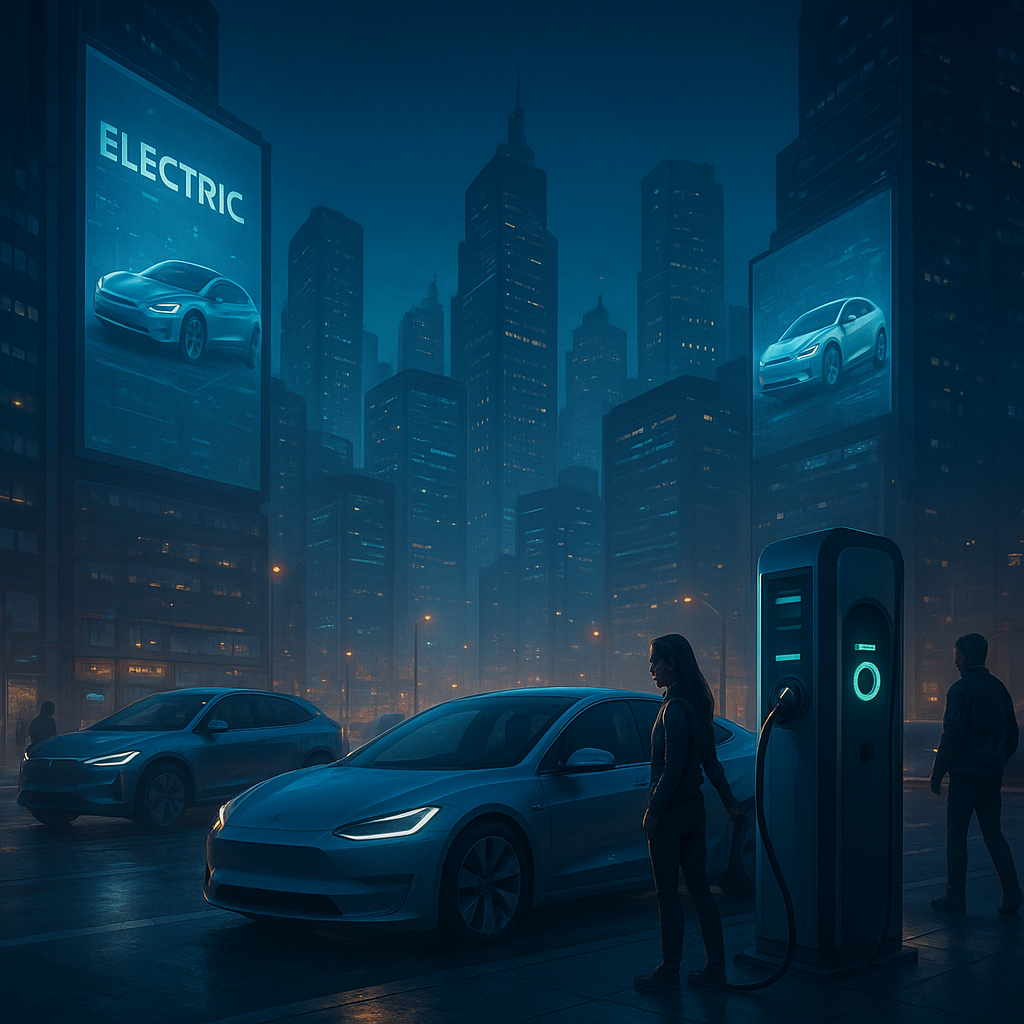
When Oil Prices Soared: A Catalyst for Change
In the early months of 2026, global oil prices surged dramatically, reaching levels unseen since the late 2000s. This spike was precipitated by a combination of geopolitical tensions in the Middle East, unexpected production cuts by major OPEC members, and renewed demand from recovering global economies post-pandemic. The immediate consequence was a steep rise in gasoline and diesel prices at filling stations worldwide, triggering ripple effects across industries and consumer behavior.
For the automotive industry, this oil shock was more than a fleeting economic disturbance—it served as a decisive catalyst that accelerated the ongoing shift toward electric vehicles (EVs). Buyers, once hesitant or delaying their transition from internal combustion engines (ICEs), found themselves compelled to reconsider. The rising operational costs of traditional vehicles were juxtaposed starkly against the increasingly competitive pricing and performance of electric alternatives.
This article explores how the 2026 oil shock reshaped automotive trajectories, speeding the comeback and expansion of electric vehicles, and what this means for the future of mobility and energy consumption.
“The 2026 oil price surge wasn’t just a market event—it transformed consumer calculus overnight, intensifying the shift to electric vehicles in ways forecasted but not fully anticipated.” – Industry analyst, Bloomberg Energy Review
Tracing the Road to 2026: How the EV Market Positioned for Revival
Electric vehicles have endured a roller-coaster journey over the past decade. Early strides in battery technology and charging infrastructure, combined with government incentives, had driven steady growth through the mid-2020s. However, challenges such as supply chain bottlenecks for critical minerals, fluctuating raw material costs, and consumer concerns over range and charging speeds slowed adoption in certain markets.
Meanwhile, oil prices remained relatively moderate, and improvements in fuel efficiency kept ICE vehicles competitive in total cost of ownership. Nevertheless, automakers steadily expanded their EV portfolios, investing billions in research and development. By late 2025, global EV sales had hit significant milestones, but the market penetration in many regions was still below what analysts deemed necessary for rapid decarbonization.
Underlying this was a complex interplay of policy shifts, technological advancements, and consumer sentiment. The International Energy Agency’s 2025 report highlighted that while EV sales were growing, a tipping point was needed to trigger exponential growth. The unexpected oil shock in 2026 provided that critical impetus.
“The groundwork laid by gradual improvements in battery technology and supportive policies meant the oil shock found an EV market ready to accelerate.” – International Energy Agency, 2025 Global Transport Outlook
Data-Driven Surge: Quantifying the EV Momentum Post-Oil Shock
Following the initial oil price surge, data from industry trackers revealed a remarkable uptick in electric vehicle sales across multiple markets. In Q1 2026 alone, global EV sales increased by approximately 38% compared to the same quarter in 2025, far surpassing previous growth rates. TheOmniBuzz’s own analysis aligns with figures from major automotive associations indicating that EV market share in new car sales in Europe and North America climbed beyond 30%, while China reported a record-breaking 45% share.
Several factors contributed to this surge:
- Cost Competitiveness: The total cost of ownership for EVs dropped below that of ICE vehicles in more markets due to soaring fuel prices and lower electricity costs.
- Expanded Model Availability: Automakers launched over 50 new EV models in 2026, including affordable compact cars and high-performance options, broadening consumer appeal.
- Infrastructure Growth: Significant investments in fast-charging stations reduced range anxiety, with over 20,000 new public chargers added globally in the first quarter.
- Corporate Fleets Electrifying: Large logistics and delivery companies accelerated EV adoption, helping scale production and normalize electric mobility.
Moreover, battery cost reductions continued, with lithium-ion pack prices dropping below $90/kWh in 2026, according to industry sources. This trend further improved EV affordability and accelerated consumer uptake.
Comparatively, this growth phase dwarfs the previous decade’s expansions, marking a distinct inflection in the automotive sector’s transition.
2026 Developments: Automakers, Governments, and Market Dynamics
The oil shock’s impact extended beyond consumers to reshape strategic decisions among automakers and policymakers. Major players like Tesla, BYD, Volkswagen, and Hyundai reported surging orders and accelerated production schedules, with some factories running 24/7 to meet demand.
Governments worldwide responded by enhancing incentives, streamlining EV registration processes, and investing heavily in grid upgrades. Notably, the European Union approved an additional €15 billion fund to support EV infrastructure and battery manufacturing, while the U.S. expanded tax credits for EV purchases and domestic battery production.
Key developments include:
- Supply Chain Localization: To mitigate risks exposed by the oil shock and geopolitical tensions, automakers invested in localizing battery raw material sourcing and component manufacturing.
- Technological Innovations: Advances in solid-state batteries and ultra-fast charging technologies reached commercial readiness, promising even greater performance and convenience.
- Grid Integration Efforts: Collaboration between utilities and automakers intensified to manage increased electricity demand and implement vehicle-to-grid (V2G) systems.
- Policy Harmonization: Cross-border agreements facilitated EV adoption by standardizing charging protocols and incentivizing cross-country travel with EVs.
These initiatives underscore how the oil shock catalyzed a comprehensive ecosystem shift supporting electric mobility’s resurgence. For deeper insights into grid challenges amid this EV growth, see Electric Cars Are Booming — But the Grid Isn't Ready.
Industry Experts Weigh In: Perspectives on the EV Renaissance
Leading voices in automotive and energy sectors have highlighted the oil shock’s transformative effect on electric vehicle momentum. Dr. Elena Morales, Chief Technology Officer at GreenVolt Motors, noted that “The sudden spike in oil prices disrupted long-held assumptions, validating EV investments and compelling even skeptical consumers to reconsider.”
Similarly, Mark Chen, Senior Analyst at Global Auto Insights, emphasized the role of market psychology: “Price volatility in fossil fuels exposed vulnerabilities in traditional vehicle economics. Buyers now factor in energy security and environmental impact more heavily.”
Industry executives also stress that this revival is not merely reactionary but part of a structural shift aligned with sustainability goals and technological maturation.
“The oil shock accelerated an inevitable transition, but it also created new momentum that will redefine mobility for decades.” – Dr. Elena Morales, GreenVolt Motors
“This moment highlights a convergence of economics, policy, and consumer preference, making electric vehicles the definitive choice moving forward.” – Mark Chen, Global Auto Insights
Looking Ahead: What the Future Holds for Electric Vehicles
As the automotive sector adjusts to the new realities shaped by the 2026 oil shock, several trends and uncertainties emerge that will influence EV trajectories.
What to Watch:
- Battery Innovation: Continued breakthroughs in energy density and cost reductions will be critical to sustaining growth.
- Grid and Energy Systems: Integration of renewable energy and smart grid technologies will determine EV scaling capacity.
- Policy Evolution: Governments’ ability to maintain supportive frameworks amid changing political landscapes will impact adoption rates.
- Consumer Behavior: Shifts in mobility preferences, including shared and autonomous electric vehicles, could reshape market dynamics.
- Raw Material Sustainability: Ethical sourcing and recycling will become more prominent as demand for battery materials soars.
The key takeaway is that the oil shock’s influence extends beyond a temporary price signal. It has accelerated a paradigm shift in transportation, pushing electric vehicles from niche alternatives to mainstream contenders and potentially dominant players.
For a focused analysis of how the 2026 oil shock ignited the EV revival, TheOmniBuzz’s feature How The 2026 Oil Shock Ignited Electric Vehicles’ Rapid Revival offers comprehensive insights.
Real-World Illustrations: Case Studies of the EV Surge
Several regions and companies provide illustrative examples of the oil shock’s impact on accelerating EV adoption.
California, USA: The state experienced a 50% increase in EV registrations in the first quarter of 2026. The California Air Resources Board reported that consumers cited high gasoline prices as a primary motivation. Concurrently, local governments fast-tracked charging infrastructure projects, increasing public chargers by 40% year-on-year.
China’s Guangdong Province: Guangdong saw rapid electrification of public transit fleets, with over 10,000 electric buses deployed within six months. This transition was driven by both cost-saving measures amid oil price hikes and aggressive local policies promoting clean energy.
Volkswagen Group: The automaker announced that EVs constituted 60% of its global deliveries in Q1 2026, surpassing internal targets. Volkswagen credited its flexible manufacturing lines and supply chain adjustments made in late 2025 as key enablers.
These cases reflect the multi-layered nature of the EV comeback, where economic, policy, and technological factors converge to produce tangible results.
Such tangible shifts underscore the broader implications of the oil shock: it has not only disrupted markets but also accelerated the global transition toward sustainable transportation.
For a detailed report on the expanding EV market dynamics and infrastructure growth, see Why Electric Cars Are Becoming the Only Smart Choice on the Road.