What are Online Payment Services?
Online payment services are digital tools or infrastructure that allow businesses to accept payments over the internet. These services act as intermediaries between the customer’s payment method – credit card, debit card, bank account, digital wallet—and the merchant’s bank account.
Unlike traditional payment methods like cash or paper checks, online payments are instant, secure, and accessible around the clock. With eCommerce and mobile commerce booming, they have become the standard, not the exception.
Why Do Modern Businesses Need Online Payment Services?
The demand for online payment services stems from a few critical business needs:
- Convenience: Customers want to pay using their preferred methods, from cards to Buy Now, Pay Later (BNPL).
- Speed: Transactions happen in real time, reducing waiting periods for both businesses and customers.
- Scalability: Whether you’re selling locally or internationally, the right online payment system grows with you.
- Security: Encryption, tokenization, and fraud detection tools reduce risks for merchants and consumers alike.
Beyond processing payments, many platforms offer value-added services like invoicing, recurring billing, dispute management, and analytics – giving merchants more control and insight into their cash flow.
How Do Online Payment Platforms Differ from Services?
Not all online payment platforms are created equal. Broadly, the digital payment ecosystem can be broken down into several categories:
- Payment Gateways: These serve as the bridge between a merchant’s website and their payment processor. Popular gateways include Authorize.Net, Razorpay, and PayPal.
- Payment Processors: Companies like First Data or TSYS handle the actual movement of funds between banks.
- Payment Aggregators: These bundle merchant accounts under one umbrella, making it easier for small businesses to start accepting payments. Stripe, Square, and PayU fall into this category.
- Digital Wallets: Mobile-first platforms like Apple Pay, Google Pay, and so on allow consumers to pay quickly using stored credentials.
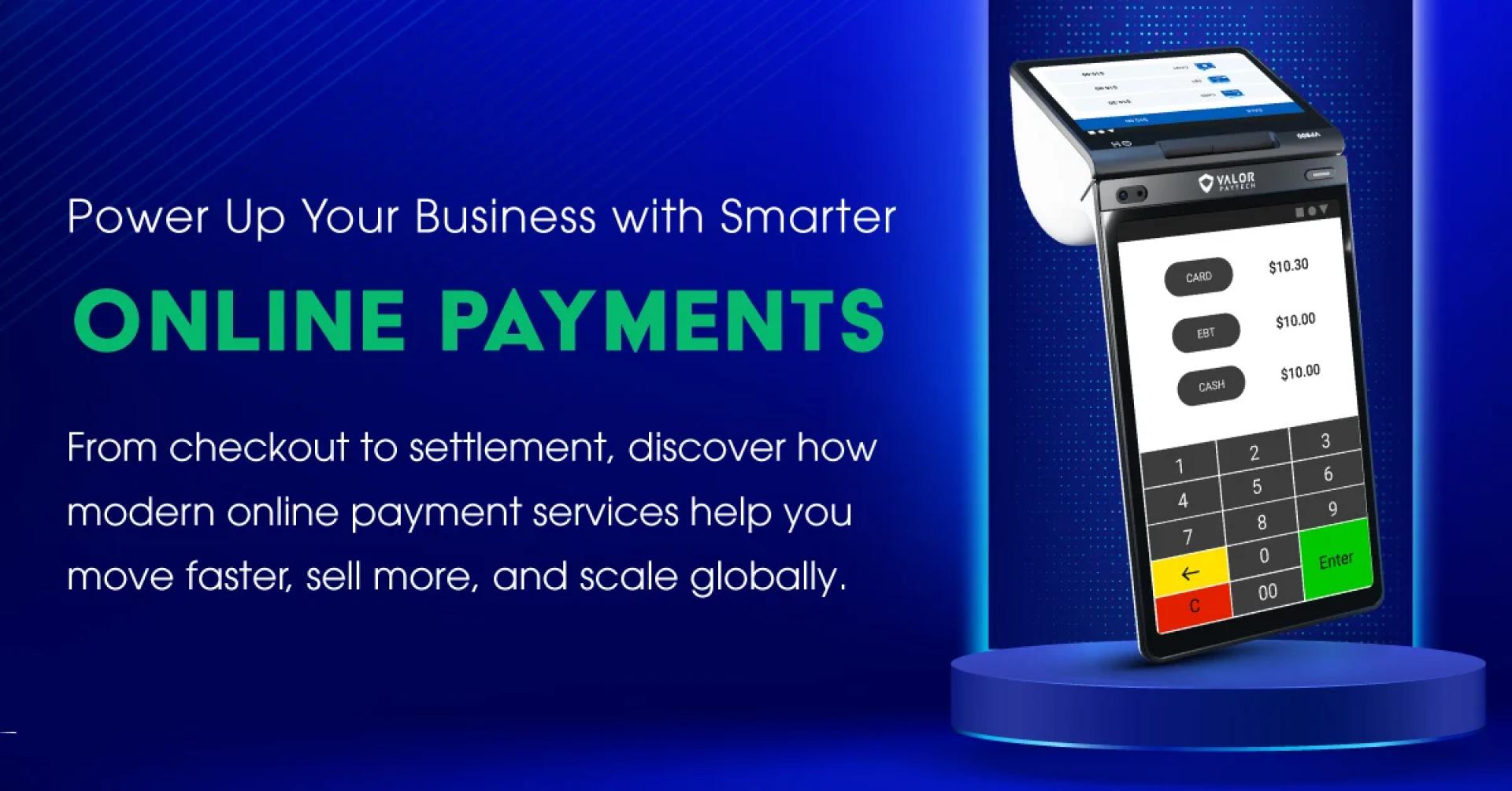
- Integrated POS devices: Solutions like Valor PayTech or Clover combine hardware and software to accept both in-person and online payments from one device.
Modern online payment platforms often combine several of these functions into a single, unified experience – streamlining operations and reducing setup complexity.