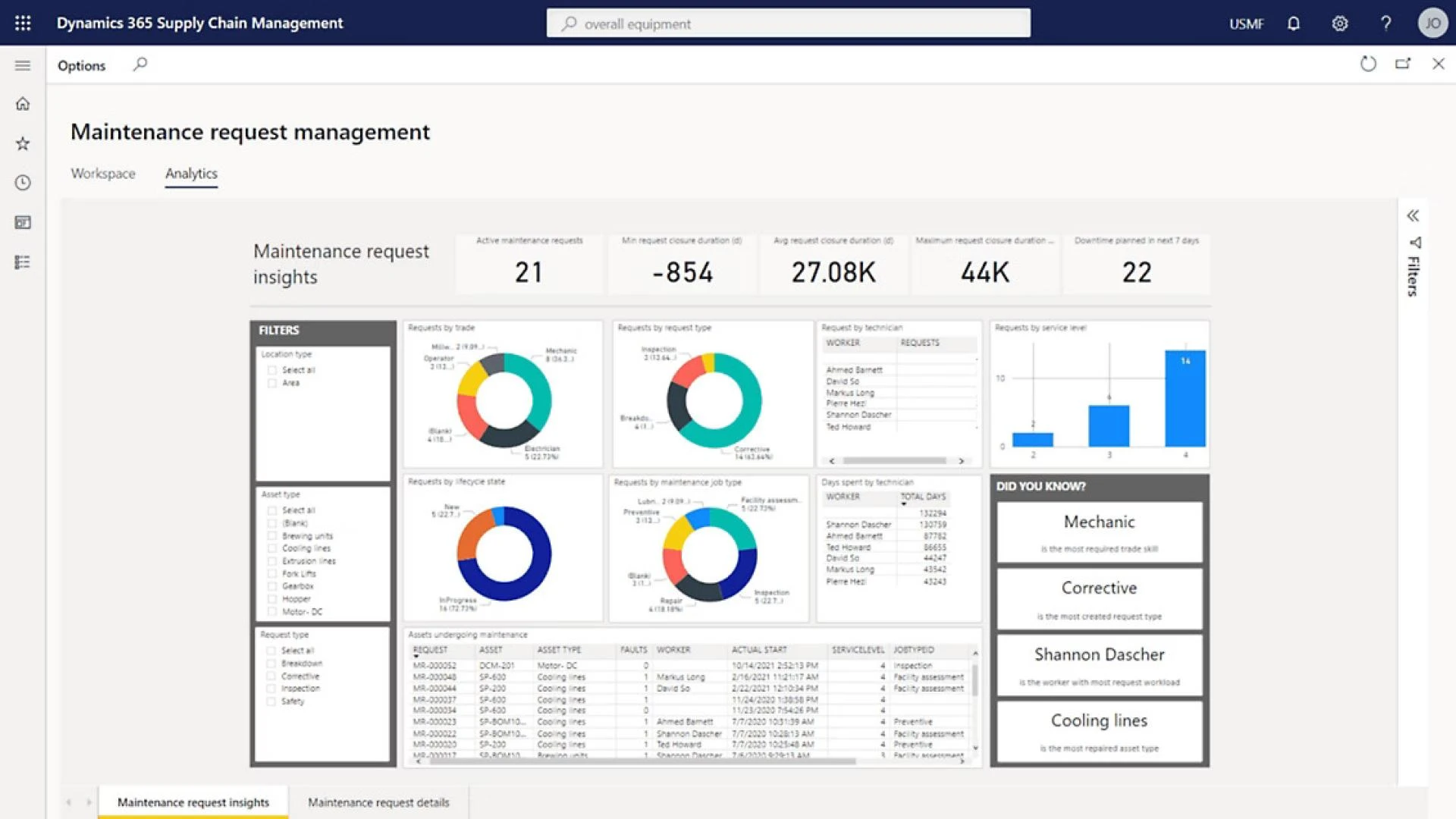
The industrial sector has its most difficult and resource-intensive field in engineering product manufacturing. The specialized manufacturing sector operates with its different product design requirements and comprehensive Bill of materials (BOM) multiple production phase requirements and essential compliance standards and ongoing engineering modifications. Companies producing industrial machinery, heavy equipment, aerospace components, medical devices, or advanced electrical systems must synchronize engineering, procurement, production, quality, and finance in real time.
The organizations need advanced technological solutions which exceed the capabilities of standard enterprise resource planning systems to maintain their market position. The organization requires a platform which enables intelligent operation and system connectivity and growth capability to manage complex product structures and shifting supply chain operations. The functionality of Microsoft Dynamics 365 Supply Chain Management creates essential changes in this area.
The article demonstrates how Dynamics 365 Supply Chain Management improves manufacturing operations by providing better visibility, agility and operational efficiency.
What Types of Products Are Made In Engineering Product Manufacturing Industry?
Engineering manufacturers produce high-value complex products that include these items:
- Industrial machinery
- Heavy equipment
- Automotive systems
- Aerospace components
- Electrical equipment
- Robotics and automation systems
- Medical devices
- Energy systems and infrastructure equipment
The products need production processes which use multi-level Bills of Materials (BOMs) and complex assemblies, along with specialized components.
Understanding the Complexity of Engineering Manufacturing
Engineering manufacturers typically operate under Engineer-to-Order (ETO) and Configure-to-Order (CTO) and hybrid production models. These models introduce challenges such as:
The need for continuous design updates and the processing of engineering change orders (ECOs).
- The use of complicated multi-level BOMs.
- The availability of components which take extended periods to deliver.
- The use of production methods which require specific modifications.
- The implementation of quality standards and compliance regulations which must be followed.
- The manufacturing process requires production equipment to operate at peak efficiency to meet its requirements.
- Disconnected systems together with manual processes create operational difficulties which result in production delays and error occurrences and increased project expenses. Organizations need to build their product data system which integrates planning with procurement and production and quality control processes into one digital framework to resolve these problems.
- The unifying base of Dynamics 365 Supply Chain Management creates a complete operational system.
How Dynamics 365 Supply chain management helps Engineering Product Manufacturing industry?
Engineers who manufacture products must navigate a challenging manufacturing environment which includes complex product designs, multiple levels of material requirements through BOMs, extended manufacturing times, engineering design modifications, and mandatory compliance.
Microsoft Dynamics 365 Supply Chain Management provides Engineering Product Manufacturing companies with an intelligent platform which unifies their operations and enables them to manage complex manufacturing environments. The following section describes how the system enhances industry operations through its various functions.
1. Streamlining Engineering Change Management
Engineers who manufacture products face ongoing challenges when they need to implement design changes and product improvements. The delivery schedule and material requirements and routing paths and cost estimates all depend on the implementation of even minor adjustments.
The software enables users to manage BOMs through version control while maintaining routings:
The software provides:
- Version-controlled BOMs and routings
- Engineering Change Order (ECO) workflows
- Product lifecycle state management
- Effectivity dates for design revisions
- Full traceability of historical changes
The system ensures production teams work from the most recent approved design documents which decreases mistakes and rework needs and compliance issues.
2. Managing Complex Bills of Materials (BOMs)
Engineering products require multiple components which can number into thousands to be arranged in multi-level BOM structures for their construction.
The system supports:
- Multi-level BOM management
- Configurable products
- Variant control
- Automatic BOM explosion for planning
The platform centralizes product data to create a shared base which helps both engineering and manufacturing teams achieve accurate results at a faster pace.
3. Advanced Planning and Scheduling
Engineering manufacturers commonly operate under Engineer-to-Order (ETO), Configure-to-Order (CTO), or hybrid production models. These environments require planning systems which supply both dynamic capabilities and flexible operational capacity.
Dynamics 365 Supply Chain Management provides:
- Material Requirements Planning (MRP)
- Master planning
- Finite capacity scheduling
- Demand forecasting
- Real-time production tracking
Planners can now see material availability and resource capacity which helps them avoid bottlenecks while enhancing delivery efficiency.
4. Improving Procurement and Supplier Collaboration
Engineering manufacturing depends on specialized suppliers to provide essential services. The supply chain can face operation disruptions because of delays or defects in product delivery.
The system enhances procurement by offering:
- Automated purchase requisitions
- Vendor performance analytics
- Lead-time monitoring
- Supplier collaboration portals
- Dual sourcing support
The approach helps businesses protect their supply chain operations while ensuring they meet operational requirements and manage their expenses.
5. Optimizing Inventory and Warehouse Operations
Engineering manufacturing needs effective inventory control because both stock deficiencies and excess inventory create expensive problems.
Dynamics 365 Supply Chain Management supports:
- Real-time inventory visibility
- Lot and serial number tracking
- Warehouse management system (WMS) capabilities
- Barcode and RFID integration
- Automated replenishment
The system improves visibility which decreases storage expenses while supporting continuous production operations.
6. Strengthening Quality and Compliance
Engineering manufacturers need to follow specific rules which require them to track products and keep necessary documentation for their operations.
The system includes:
- Quality order management
- Inspection planning
- Non-conformance tracking
- Root cause analysis workflows
- Audit trails
The implementation of quality processes directly into operational systems enables businesses to decrease waste while they produce dependable products which meet compliance standards.
7. Enhancing Cost Control and Profitability
Material cost variations and engineering modifications and custom production requirements lead to changes in production expenses which affect profit margins.
Dynamics 365 Supply Chain Management provides:
- Standard and actual costing models
- Project-based costing
- Variance analysis
- Real-time financial reporting
- Margin visibility dashboards
The system enables organizations to establish prices which guarantee profitability in complicated manufacturing environments.
8. Supporting Digital Transformation
The platform operates within Microsoft Dynamics 365 as a complete system which links financial operations with sales and service delivery and analytical tools. The system creates a virtual network which enables data to move between organizational departments.
The system provides these advantages:
- Unified data across business functions
- Real-time dashboards and analytics
- Cloud scalability
- Remote access for global operations
The digital system creates a foundation to support teamwork which leads to faster organizational decision processes.
9. Driving Agility and Resilience
In today’s volatile global market, manufacturers must respond quickly to supply disruptions, demand changes, and regulatory updates.
Dynamics 365 Supply Chain Management supports:
- Scenario-based planning
- Real-time supply chain visibility
- Rapid adaptation to demand shifts
- Scalable cloud infrastructure
The system helps engineering manufacturers build systems which sustain their advantage while allowing them to compete in the marketplace.
Measurable Business Outcomes
The implementation of Dynamics 365 Supply Chain Management system delivers three main advantages to engineering product manufacturers.
The main advantages are:
- The first advantage leads to shorter production timelines.
- The second advantage results in decreased expenses for maintaining inventory.
- The third advantage improves delivery performance through better on-time delivery.
- The fourth advantage enables organizations to see their entire operational processes.
- The fifth advantage enables different departments to work together more effectively.
- The sixth advantage strengthens organizations' ability to comply with regulations while they prepare for audits.
- The seventh advantage leads to organizations' financial results becoming more profitable.
- The platform functions as both an ERP system and a strategic tool that drives digital transformation.
Conclusion
The manufacturing process requires precise control of multi-level BOMs and engineering change orders together with global supplier coordination for compliance requirements because even minor operational errors lead to major financial and delivery consequences. The industry needs companies to achieve operational efficiency together with real-time system access and collaborative work and smart decision-making capabilities.
The manufacturing industry uses Dynamics 365 Supply Chain Management to achieve cost savings and delivery improvements and compliance enhancements and increased rate of product development, which results in faster market entry. Your engineering manufacturing operations need a complete transformation right now. The time has come for you to modernize your supply chain system and build operational resilience and drive data-based expansion. Dynamics 365 Supply Chain Management system enables your organization to develop intelligent processes which create more efficient supply networks and upcoming financial success.