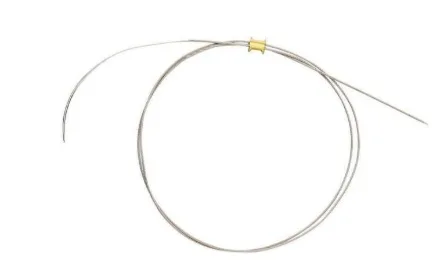
What happens when a surgical team reaches for a tool mid-procedure and it simply is not there? Orthopedic trauma cases do not wait, and fracture fixation procedures demand every tool on that tray be accounted for and ready. Surgical teams working through narrow operative windows carry enough pressure without equipment gaps adding to it. Facilities that cannot guarantee the availability and verification of the correct Synthes Cable System are already putting their surgical teams at a disadvantage before the first incision is made.
The solution is not complicated, but it does require procurement teams to take sourcing seriously. A single gap in available devices can delay a procedure, throw off the surgical schedule, and put strain on a team that deserves better support. Certified pre-owned component sourced from trusted suppliers holds up through sterilization cycles and back-to-back procedures without cutting corners on quality. Departments that get sourcing right build operational reliability that shows up directly in how smoothly each case runs and how confidently every surgical team walks into that room.
Does Your Surgical Facility Have the Right Cable System When a Trauma Case Walks In?
Fracture Stabilization and Fixation Reliability
Periprosthetic fractures and complex trauma presentations do not follow a predictable pattern, and surgical teams need a fixation component that adapts without slowing the procedure down.
- Cables wrap firmly around fractured segments and hold position while healing begins, routing cleanly around existing prostheses without complicating the operative plan.
- Facilities that stock the right system spend less time working around limitations and more time focusing on what actually matters inside that room.
- Each cable is tensioned independently, giving surgeons full control over how load spreads across the repair site.
- The system integrates naturally with existing plating hardware, keeping the overall implant count manageable.
- Compact equipment suits confined anatomical spaces without making the operative field harder to navigate.
Ergonomic Tool Design and Surgical Handling
Surgical teams working through back-to-back trauma cases feel the difference when component is designed with their hands in mind.
- Cable passers that move around bone cleanly and tensioning devices that stay balanced throughout a procedure reduce fatigue and keep the entire team focused.
- Good component design does not announce itself loudly, but its absence absolutely does.
- Passers move through tight anatomical corridors without requiring repeated hand repositioning mid-procedure.
- Tensioning devices produce repeatable compression levels, keeping outcomes consistent regardless of who is operating.
- The crimping mechanism locks firmly into place, so the surgical team knows exactly where they stand on construct stability before the field closes.
- A clean equipment profile means the tray stays organized and the team moves between steps without losing momentum.
Surgical Applications Across Orthopedic Trauma Cases
Tension-Band Fixation at the Patella and Olecranon
Avulsion-type fractures at the patella and olecranon respond well to tension-band fixation because the method converts distractive forces directly into compression at the fracture site. The Synthes Cable System handles that conversion reliably through cable-based constructs, and the stability they produce holds through the early rehabilitation stages when joint movement begins.
- The cable conforms to bone contour naturally, removing the need to contour supporting plates beforehand.
- Compression at the fracture site actually increases as the joint loads, reinforcing the construct through movement.
- The technique is established and predictable, giving the surgical team a clear framework to follow.
- Stability post-operatively is solid enough to support early mobilization where the patient's condition allows.
Trochanteric Reattachment Following Hip Reconstruction
Reattaching the greater trochanter after hip surgery is one of those procedures where cable fixation earns its place without much debate. The Synthes cable system handles the anatomical variation across these cases well, offering cable lengths and tensioning options that suit a range of patient presentations.
- Cables pass around the trochanter and attach to the femoral shaft without requiring extra components.
- Fine-tuning tension remains possible right up until the crimp is locked, giving surgeons a useful window for adjustment.
- Both primary reattachment and revision cases fit within the same system setup without needing a different approach.
- Varying bone quality across patients is something the system accommodates without major changes to the operative plan.
Buying Orthopedic Equipment for Surgical Departments
Certified Used Equipment as a Smart Buying Option
Budget pressure in surgical departments is real, and buying certified used equipment has become a practical way to manage it without lowering the standard of care.
- Devices that go through thorough inspection, cleaning, and functional testing before dispatch perform at the same level as new stock in the theatre.
- Inspection processes catch calibration drift or wear before the device reaches the operative field.
- Buying from a supplier with genuine orthopedic knowledge lowers the chance of incomplete or mismatched sets arriving.
- Savings on component purchases free up budget for other clinical priorities without compromising what goes into theatre.
- Clear condition documentation on each item gives procurement teams enough confidence to buy without second-guessing.
Buying Quality Orthopedic Cable System Sets
Trauma units looking to expand or replace inventory have a direct path to certified tool sets through a specialist platform covering orthopedic categories across the board.
- The listing detail is specific, and support is available for facilities with questions before they commit to a purchase.
- Condition is stated clearly against each listing, so there are no surprises when the component arrives.
- Orthopedic categories beyond cable system sets are covered, which suits facilities buying across multiple needs.
- Direct contact is available for queries around stock levels, condition details, or shipping requirements.
- Buying across categories from a single supplier simplifies the process for departments managing tight timelines.
Conclusion
The Synthes Cable System holds a firm position in orthopedic trauma surgery, covering tension-band repairs, trochanteric reattachment, and periprosthetic fracture management within a single reliable setup. Surgical facilities looking to source or replenish this tool can access certified orthopedic equipment at accessible pricing with clear condition reporting on every item.
Explore More: https://www.usedsynthes.com/