In today's demanding healthcare landscape, healthcare call center services form the backbone of patient communication. These services handle everything from appointment scheduling to urgent medical inquiries, yet they face mounting pressure. Patients expect fast, empathetic, and accurate responses. However, many centers struggle with outdated systems and overwhelming demands.
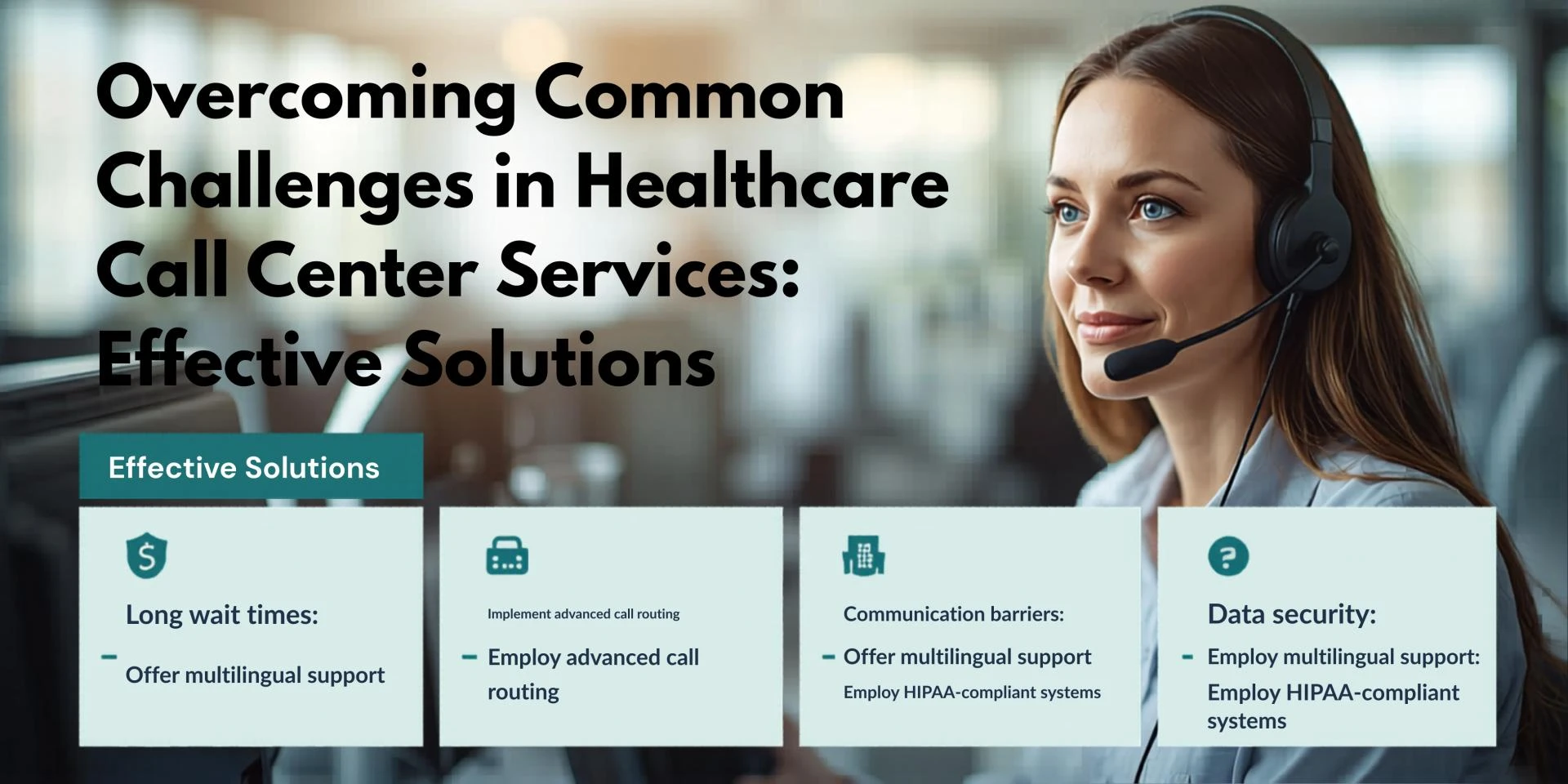
As a result, long wait times frustrate callers, and staff burnout rises. Yet forward-thinking organizations turn these obstacles into opportunities. By adopting smart strategies, healthcare call center services can deliver seamless support while improving outcomes. This article examines the top challenges and shares proven solutions. You will gain practical insights backed by industry data and real-world examples. Whether you manage a hospital network or a private clinic, these tips will help elevate your operations and strengthen healthcare patient engagement.
Top Challenges in Healthcare Call Center Services Today
Medical call centers face several ongoing challenges that disrupt daily operations and weaken patient trust. Industry reports clearly show how these persistent hurdles create frustration among callers. For instance, 60% of patients feel irritated by extended hold times, while nearly 16% hang up before speaking to an agent. In such demanding environments, healthcare call center services often struggle with high staff turnover rates that typically range from 30% to 45%, with some specialized teams reaching as high as 45–55%.
These statistics underscore the need for change. Below are the most common challenges and why they matter.
1. Managing High Call Volumes and Reducing Wait Times in Healthcare Call Centers
Call volumes surge during peak hours, flu seasons, or after major announcements. Agents juggle scheduling, refills, and triage simultaneously. Consequently, average handle times hover around 3 minutes and 22 seconds, yet patients still wait too long.
Reducing wait times in healthcare call centers becomes critical when 88% of appointments occur over the phone. Without proper tools, these delays erode satisfaction and lead to lost revenue.
2. Addressing Staffing Shortages and High Turnover in Medical Call Center Operations
Burnout affects 63-74% of agents due to high stress and repetitive tasks. High turnover disrupts service continuity and increases training demands. In fact, 39% of call center leaders identify staff burnout and turnover as the top source of inefficiency.
Medical call center operations suffer when experienced agents leave, forcing teams to rebuild knowledge constantly.
3. Ensuring HIPAA Compliance and Data Security
Handling sensitive patient information requires strict adherence to regulations. Breaches remain a top concern in healthcare, with the sector reporting the highest number of security incidents. Agents must navigate complex rules during every call, yet many lack adequate support.
4. Integrating Technology and Omnichannel Support
Legacy systems fail to sync with electronic health records or modern channels like chat and text. Patients expect seamless healthcare patient engagement across phone, app, and email. Without integration, information silos create inconsistent experiences.
5. Boosting Patient Satisfaction and Emotional Intelligence
Callers seek empathy alongside accuracy. However, agents often feel overwhelmed, leading to cold or rushed interactions. Research shows 49% of patients report dissatisfaction with call center experiences.
Proven Solutions for Healthcare Call Center Services
Smart organizations tackle these issues head-on. Here are actionable strategies that deliver results.
Implement Intelligent Routing and Automation for Reducing Wait Times
Deploy AI-powered systems to route calls based on urgency or expertise. For example, chatbots handle routine queries like prescription refills. One health system used AI triage and cut call volume by 30%, allowing agents to focus on complex needs.
Additionally, reducing wait times in healthcare call centers improves when you offer self-service options via apps or websites. Patients book appointments instantly, freeing lines for urgent matters.
Strengthen Call Center Staff Training and Support Programs
Invest in ongoing call center staff training that emphasizes empathy, compliance, and technology use. Regular workshops reduce burnout and build confidence. Pair this with mental health resources and flexible schedules.
Real-world success appears in cases like EmergeOrtho, which streamlined operations with AI assistance. The organization doubled its providers without adding support staff, thanks to better-trained teams and smart tools.
Numbered Trends Shaping Medical Call Center Operations in 2025–2026:
- AI and Automation Rise – Agents focus on high-value interactions while bots manage 70% of routine tasks.
- Omnichannel Expansion – Patients switch seamlessly between phone, text, and video.
- Virtual Assistants for Staffing – Remote experts extend coverage without full-time hires.
- Proactive Patient Engagement – Outbound calls for follow-ups boost adherence and satisfaction.
- Cloud-Based Scalability – Systems adapt instantly to volume spikes.
Prioritize HIPAA Compliance Through Robust Policies
Train every agent on minimum necessary standards and secure call recording protocols. Use encrypted systems and conduct regular audits. For detailed guidance, visit the official U.S. Department of Health and Human Services resources on HIPAA at https://www.hhs.gov/hipaa/for-professionals/index.html.
This approach builds HIPAA compliant call centers that protect patients and avoid penalties.
Embrace Technology Integration for Seamless Experiences
Adopt cloud platforms that connect with electronic records and CRM tools. Technology integration in healthcare call center services enables real-time data access, so agents provide accurate answers instantly.
Moreover, omnichannel platforms unify patient histories across channels, enhancing healthcare patient engagement.
Focus on Patient-Centric Strategies and Feedback Loops
Survey callers after interactions and act on insights. Reward agents for high empathy scores. These steps transform healthcare call center services into patient loyalty drivers.
FAQ: Common Questions About Healthcare Call Center Services
What are the biggest challenges in healthcare call center services?
High volumes, staff turnover, compliance demands, and technology gaps top the list. These issues often lead to long waits and lower satisfaction.
How can reducing wait times in healthcare call centers improve patient outcomes?
Shorter waits build trust and ensure timely care. Automated tools and smart routing make this possible without sacrificing quality.
Why is call center staff training essential for medical call center operations?
Proper training reduces errors, burnout, and turnover while boosting empathy and efficiency in every interaction.
How does technology integration enhance healthcare call center services?
It creates seamless, omnichannel experiences that deliver accurate information faster and support better healthcare patient engagement.
Conclusion
Healthcare call center services stand at a crossroads. Challenges like surging volumes, staffing shortages, and compliance pressures test even the best teams. Yet solutions exist. By embracing AI, investing in call center staff training, and prioritizing technology integration, organizations achieve remarkable gains. Real examples prove it: AI implementations have slashed volumes by 30% while improving satisfaction.