
Discover the benefits of plant-based protein for kids. Learn how it supports growth and development, and find the best plant-based protein sources for your child.
As parents, we constantly look for the best nutrition options to support our children's growth and development. One of the most important components of their diet is protein, which helps build and repair tissues, strengthens muscles, and supports overall growth. Recently, plant-based protein for kids has gained popularity due to its many health benefits and sustainability.
Plant-based protein is a healthy, dairy-free, and meat-free alternative that is both nutritious and environmentally friendly. It contains all the essential amino acids, just like animal-based protein, but comes without the cholesterol and saturated fats often associated with animal products. Whether you are transitioning to a vegetarian or vegan lifestyle or just want to introduce more plant-based options into your child’s diet, plant-based protein is an excellent choice.
Why Choose Plant-Based Protein for Kids?
When considering plant-based protein for kids, it's important to understand why it's a great option:
- Health Benefits:
- Plant-based protein sources are typically rich in fiber, vitamins, and minerals that promote good digestion, heart health, and overall immunity. They help prevent chronic diseases like heart disease, obesity, and type 2 diabetes in the long run.
- Sustainability:
- Choosing plant-based protein is not only a healthy option but also an environmentally responsible choice. Growing plants for food requires fewer resources, such as water and land, and produces less pollution compared to raising animals.
- Allergen-Friendly:
- Plant-based proteins are naturally free from common allergens like dairy and eggs, making them a safe alternative for kids with food allergies or sensitivities.
Top Plant-Based Protein Sources for Kids
Here are some of the best sources of plant-based protein for kids that you can easily incorporate into their diet:
- Legumes (Beans, Lentils, Chickpeas):
- Rich in protein, fiber, and essential nutrients, legumes like black beans, lentils, and chickpeas are great for growing children. You can add them to soups, stews, salads, or even make them into homemade hummus.
- Tofu and Tempeh:
- Both tofu and tempeh are packed with plant-based protein. Tofu can be scrambled like eggs or added to smoothies, while tempeh is excellent in stir-fries and sandwiches.
- Nuts and Seeds:
- Almonds, chia seeds, sunflower seeds, and hemp seeds are great for snacking and can be sprinkled over cereals, yogurt, or baked into snacks like granola bars.
- Whole Grains:
- Whole grains like quinoa, brown rice, and oats are excellent sources of plant-based protein. Quinoa, in particular, contains all nine essential amino acids, making it a complete protein.
- Plant-Based Protein Powders:
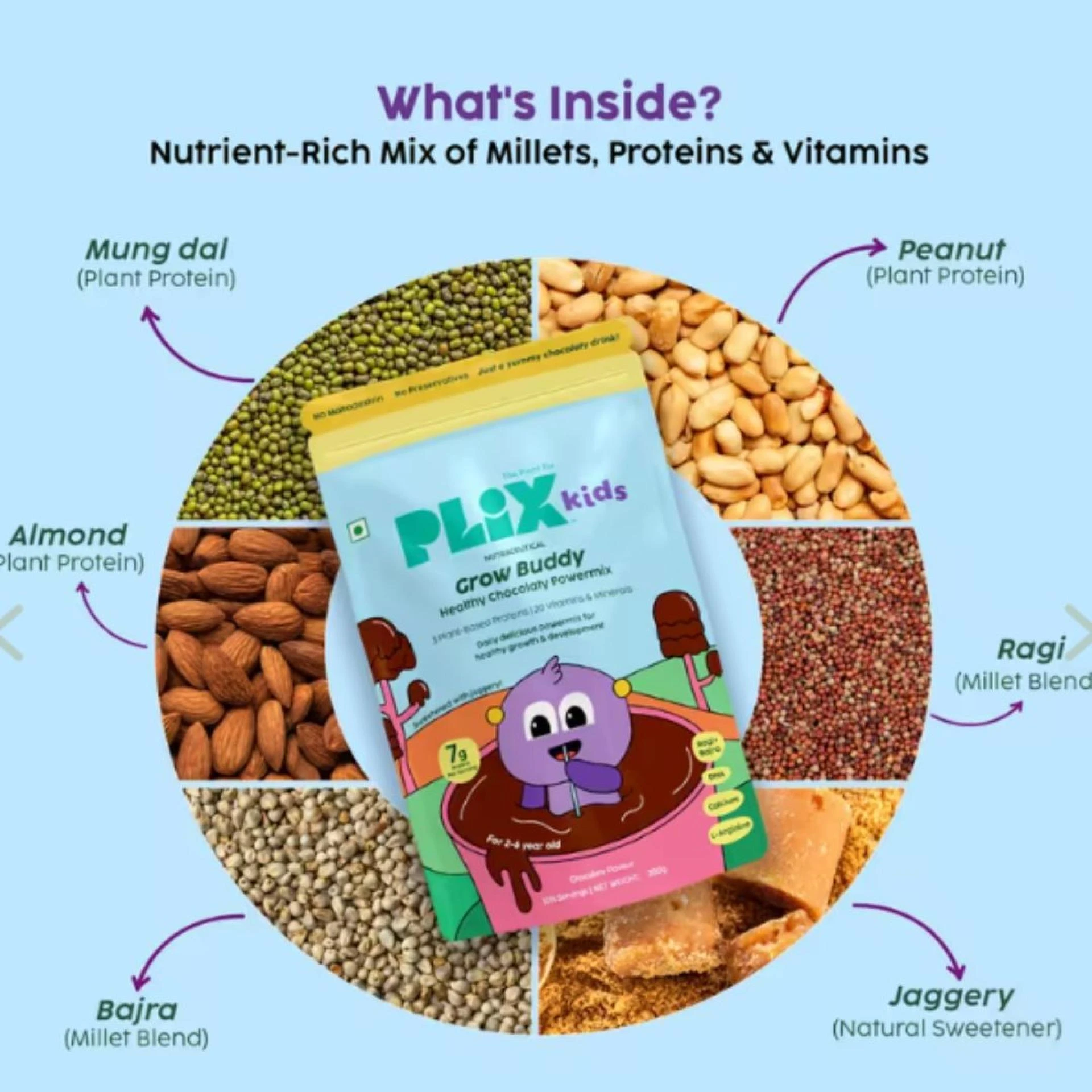
- For an extra protein boost, you can consider adding a high-quality plant-based protein powder to smoothies or shakes. A great option for kids is Plix Kids' Grow Strong Powermix – a perfect mix of natural, plant-based ingredients designed for young children’s nutritional needs.
How Much Protein Do Kids Need?
The recommended daily intake of protein varies depending on your child’s age, weight, and level of physical activity. On average:
- Toddlers (1-3 years): 13 grams of protein per day
- Children (4-8 years): 19 grams of protein per day
- Pre-teens (9-13 years): 34 grams of protein per day
It’s important to ensure that your child is getting a balanced amount of protein throughout the day from a variety of sources.
Incorporating Plant-Based Protein into Your Child’s Diet
Making the transition to plant-based protein for kids can be both simple and enjoyable. Here are a few ideas:
- Smoothies:
- Add plant-based protein powders like the Plix Kids Grow Strong Powermix to smoothies with fruits, greens, and a dairy-free milk like almond milk.
- Plant-Based Protein Snacks:
- Prepare energy bites or granola bars using oats, nut butter, seeds, and dried fruits. These are not only rich in plant-based protein but also serve as a healthy snack.
- Breakfast Ideas:
- Make a protein-packed breakfast by serving oatmeal with nuts and seeds or scrambled tofu with vegetables.
- Incorporate into Family Meals:
- Replace meat with plant-based protein in family meals. Use lentils for taco filling, chickpeas for a curry, or tofu for stir-fries.
The Benefits of Plant-Based Protein for Kids
Plant-based protein provides several health benefits for growing children, including:
- Supports Growth and Development:
- Adequate protein intake ensures proper growth, immune function, and muscle development.
- Better Digestion:
- High in fiber, plant-based proteins support healthy digestion and prevent constipation.
- Improved Heart Health:
- Plant-based protein helps maintain healthy cholesterol levels and supports cardiovascular health.
Frequently Asked Questions (FAQ)
1. Is plant-based protein suitable for children?
Yes, plant-based protein is suitable for children and provides the essential nutrients they need for growth, development, and energy. Make sure to choose a variety of plant-based protein sources to ensure a balanced diet.
2. Can kids get enough protein from a plant-based diet?
Yes, kids can get enough protein from a well-balanced plant-based diet. Including a variety of protein-rich foods such as beans, lentils, tofu, nuts, and seeds will meet their nutritional needs.
3. What are the best plant-based protein sources for kids?
The best sources include beans, lentils, tofu, tempeh, quinoa, nuts, and seeds. Plant-based protein powders like Plix Kids' Grow Strong Powermix are also a great supplement.
4. How can I incorporate more plant-based protein into my child’s diet?
You can add plant-based protein to smoothies, snacks, breakfasts, and even main meals like curries, tacos, and stir-fries.
5. Is plant-based protein better than animal protein for kids?
Both types of protein can support growth and development. Plant-based protein offers additional benefits like more fiber and fewer saturated fats, making it a healthier and more sustainable option.
6. How much protein should my child eat each day?
Protein needs vary by age. On average, children aged 4-8 need about 19 grams of protein daily, and children aged 9-13 need about 34 grams of protein per day.
Conclusion:
Plant-based protein for kids is a nutritious, sustainable, and allergen-friendly choice that supports their growth and development. By incorporating a variety of plant-based protein sources into their diet, you can provide your child with the essential nutrients they need while promoting a healthy, balanced lifestyle.