
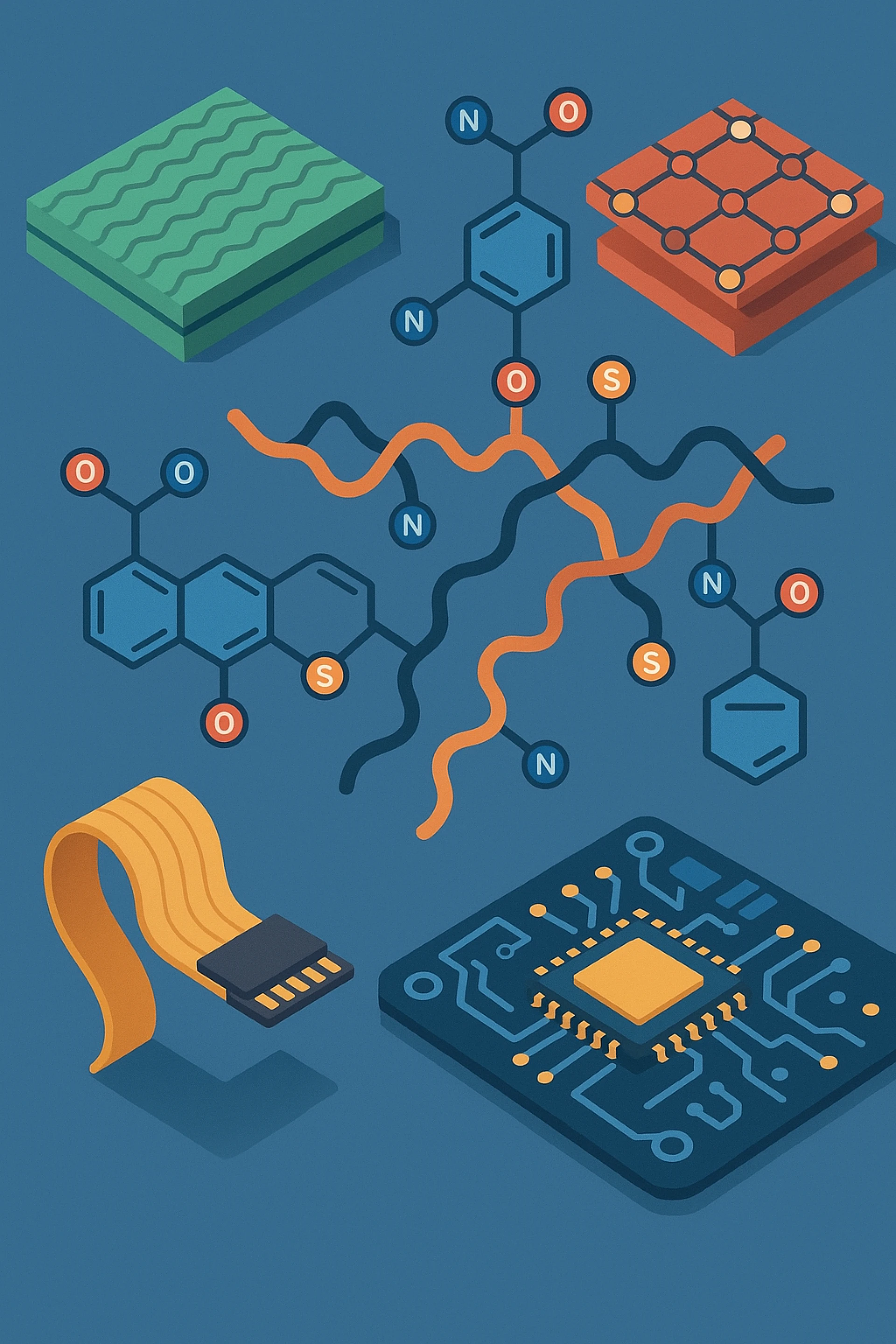
The electronics industry is evolving at an unprecedented pace, driven by consumer demand for lighter, faster, and smarter devices. From smartphones that fold in half to wearable sensors that monitor health in real-time, innovation is fueled by advanced materials. Among these, Polymers in Electronics have emerged as game-changers, offering versatility, cost-effectiveness, and performance advantages that traditional materials like silicon and glass struggle to match.
The Role of Polymers in Electronic Devices
The role of polymers in electronic devices extends far beyond packaging. In modern electronics, polymers are used as insulators, substrates, coatings, and even semiconductors. Their unique characteristics—flexibility, lightweight nature, chemical resistance, and thermal stability—make them ideal for next-generation applications.
Polymers help:
- Reduce device weight while maintaining strength.
- Enable bendable and foldable designs.
- Improve durability by resisting heat and environmental stress.
- Lower production costs through printable and scalable manufacturing techniques.
In short, polymers are not just support materials—they are enablers of innovation.
Key Applications of Polymers in Electronics
1. Flexible and Foldable Displays
One of the most visible applications of polymers in electronics is in the development of flexible OLED and LCD screens. Traditional glass substrates are being replaced by polymer films that allow displays to bend without breaking. The best polymers for OLED and LCD displays, such as polyimide films, provide high transparency, mechanical strength, and resistance to heat—making them ideal for smartphones, laptops, and wearables.
Case in point: Leading brands like Samsung and LG are already using polymer-based films in foldable smartphones, a trend that will only accelerate in coming years.
2. Polymer Semiconductors
Polymer semiconductors represent a major leap in electronics. Unlike rigid silicon wafers, these organic polymers can be solution-processed, enabling cost-effective production of thin-film transistors (TFTs), organic solar cells, and electronic circuits on flexible substrates.
They open up possibilities for printable electronics, allowing manufacturers to “print” circuits directly onto surfaces using inkjet or roll-to-roll techniques. This innovation reduces costs and expands design possibilities for industries ranging from healthcare to consumer electronics.
3. Protective and Functional Coatings
Polymer coatings in electronics serve dual purposes: protection and performance enhancement. For example:
- Conformal polymer coatings protect printed circuit boards (PCBs) from moisture, dust, and chemicals.
- Antistatic polymer coatings prevent electrostatic discharge, protecting delicate components.
- Optical coatings enhance display clarity and reduce reflection.
These coatings not only increase product reliability but also extend device lifespan, reducing e-waste.
4. Heat Management and Durability
As electronics become more compact and powerful, heat dissipation is a growing challenge. Heat-resistant polymers in electronics, such as fluoropolymers and polyimides, are designed to withstand extreme conditions while maintaining electrical insulation. They are widely used in aerospace electronics, automotive control units, and high-performance computing systems.
These materials ensure that devices run efficiently without overheating, even under demanding conditions.
5. Wearable and Smart Electronics
Polymers are also vital in creating lightweight, stretchable, and skin-friendly electronics. From fitness trackers to medical sensors, polymer substrates allow devices to conform to the human body, making them comfortable and reliable for continuous use. Biocompatible polymers further enhance safety in healthcare applications like drug-delivery patches and implantable devices.
Future of Polymer-Based Electronic Components
The future of polymer-based electronic components is promising, with breakthroughs expected in:
- Stretchable electronics: For clothing-embedded sensors and flexible robotics.
- Biodegradable electronics: Eco-friendly polymers that reduce e-waste.
- Energy storage devices: Polymer electrolytes for safer, more efficient batteries.
- Smart displays: Ultra-thin, rollable displays powered by polymer substrates.
As consumer expectations for portability and sustainability rise, polymers will remain at the heart of innovation.
Why Industries Choose Polymers
Polymers stand out because they combine performance with cost efficiency. Compared to traditional materials, they offer:
- Lightweight design without compromising strength.
- Flexibility for advanced form factors.
- High electrical and thermal stability.
- Compatibility with mass production processes.
This makes polymers indispensable across industries—consumer electronics, automotive, aerospace, healthcare, and renewable energy.
Sourcing Polymers for Electronics
For manufacturers and innovators, choosing the right material supplier is critical. Platforms like PolyMart provide access to a wide range of high-quality polymers, ensuring industries can meet evolving demands. Whether you’re exploring electronic polymer applications, sourcing the best polymers for OLED and LCD displays, or planning for the future of polymer-based electronic components, PolyMart makes it easy to buy polymers online and bring your projects to life.
Conclusion
The application of polymer in electronics has moved far beyond insulation and packaging. Today, polymers are the foundation of flexible displays, printable circuits, wearable devices, and next-generation semiconductors. Their versatility and performance ensure they will continue to play a leading role in shaping the future of electronics.
With advancements in polymer semiconductors, coatings, and heat-resistant materials, the possibilities are endless. By leveraging these innovations, companies can design smarter, more sustainable, and more efficient devices—paving the way for a future where Polymers in Electronics define the standard of technology.