In today's construction industry, project timelines are just as important as budgets. Whether developing a manufacturing plant, warehouse, logistics hub, or commercial facility, completing a project quickly allows businesses to begin operations sooner and reduce overall construction costs. Two of the most common structural systems used in industrial construction are precast concrete and steel structures. Both are designed to accelerate building projects, but they achieve this in different ways.
The question is not simply which system is faster—it is which one offers the greatest time-saving advantages for a particular type of project. By understanding how each construction method works, builders can choose the solution that best meets their schedule, structural requirements, and long-term objectives.
Understanding the Two Construction Methods
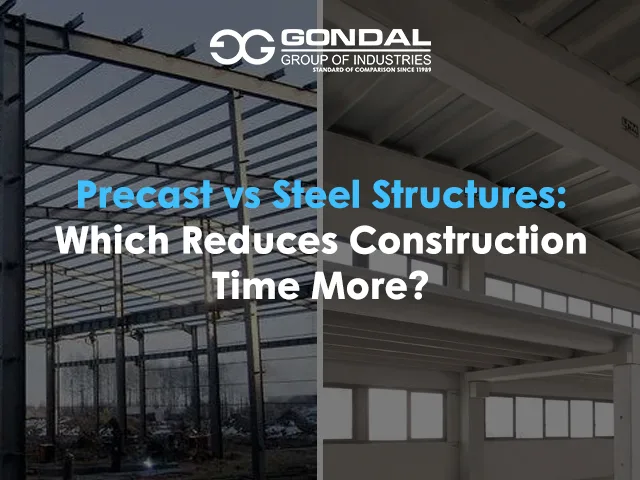
Precast concrete involves manufacturing structural elements such as columns, beams, wall panels, and slabs in a controlled factory environment before transporting them to the construction site for installation. Since production occurs off-site, site preparation and component manufacturing can take place simultaneously.
Steel structures, particularly pre-engineered buildings (PEBs), are fabricated using steel columns, rafters, purlins, and trusses that are manufactured in factories and assembled on-site. Steel systems are known for their lightweight design and rapid erection, making them a popular choice for industrial buildings.
Both methods significantly reduce construction time compared to traditional cast-in-place concrete construction.
Off-Site Manufacturing Speeds Up Both Systems
One of the biggest advantages shared by precast concrete and steel construction is off-site fabrication.
Instead of performing most construction activities on-site, major structural components are produced under factory-controlled conditions while excavation, foundations, and utility work continue at the project location.
This parallel workflow eliminates many of the delays associated with conventional construction and allows projects to move forward more efficiently.
Because both systems use this approach, they offer substantial time savings over traditional building methods.
Which System Installs Faster?
When it comes to structural assembly, steel structures generally have a slight advantage.
Steel components are lightweight compared to precast concrete and can often be lifted and connected more quickly. Bolted connections also simplify installation, allowing experienced crews to erect structural frames rapidly.
However, installation speed depends on project complexity. Large industrial developments with standardized layouts can also benefit from fast precast installation, especially when components are manufactured with precise tolerances and delivered according to a coordinated construction schedule.
In many industrial projects, the difference in installation time between the two systems is smaller than many developers expect.
Foundation Requirements Can Affect Overall Timelines
Construction speed is influenced not only by the structural system but also by foundation requirements.
Steel structures are lighter than concrete, which can sometimes allow for smaller or less complex foundations depending on soil conditions and building loads. This may reduce foundation construction time for certain projects.
Precast concrete structures are heavier and may require more substantial foundations. However, because precast manufacturing occurs simultaneously with foundation work, much of this additional time can be offset through efficient project scheduling.
The overall project timeline depends on how well these activities are coordinated.
Design Flexibility and Standardization
Both systems benefit from standardized designs.
Steel structures are particularly efficient for buildings with large clear spans, repetitive layouts, and open interiors such as warehouses and production facilities.
Precast concrete performs exceptionally well in projects that require repetitive structural elements, boundary walls, retaining structures, and multi-storey industrial buildings. Standardized precast components allow manufacturers to optimize production and reduce installation time.
Projects involving extensive customization may require additional engineering and fabrication regardless of the chosen structural system.
Weather-Related Delays
Weather can significantly affect construction schedules.
Because both precast concrete and steel components are manufactured indoors, production is less affected by rain or extreme temperatures than traditional on-site concrete work.
However, installation activities remain weather-dependent. Heavy rainfall or high winds may temporarily delay lifting operations for both systems.
Overall, factory-based manufacturing helps maintain more predictable project timelines compared to conventional construction methods.
Long-Term Construction Efficiency
Construction speed should be evaluated alongside long-term project performance.
Precast concrete offers excellent durability, fire resistance, acoustic performance, and low maintenance requirements. Steel structures provide exceptional flexibility, lightweight construction, and ease of future expansion.
For many industrial developments, the fastest solution is not necessarily the one with the quickest installation—it is the system that minimizes total project duration while meeting operational requirements and reducing future maintenance.
Which Is the Better Choice?
The right choice depends on the nature of the project.
Precast concrete is often the preferred option for:
- Manufacturing plants
- Boundary wall systems
- Infrastructure projects
- Multi-storey industrial buildings
- Facilities requiring high durability and low maintenance
Steel structures are particularly suitable for:
- Warehouses
- Distribution centres
- Large-span industrial buildings
- Projects requiring rapid structural erection
- Buildings designed for future expansion
In many modern developments, builders combine both systems to maximize efficiency. For example, precast concrete may be used for foundations, walls, and floor systems, while steel is used for roof framing or large-span structural sections.
Conclusion
Both precast concrete and steel structures offer significant advantages when reducing construction time. Steel structures generally provide faster structural erection due to their lightweight components, while precast concrete delivers rapid installation alongside superior durability, consistent quality, and long-term performance.
Rather than asking which system is universally faster, builders should evaluate the project's structural requirements, construction schedule, lifecycle costs, and operational goals. By selecting the most suitable solution—or combining both systems where appropriate—developers can achieve faster project delivery without compromising quality.
With expertise in precast concrete, roofing systems, and industrial construction solutions, Gondal Group of Industries helps developers across Pakistan build efficient, durable, and high-performance industrial facilities that meet modern construction demands.