
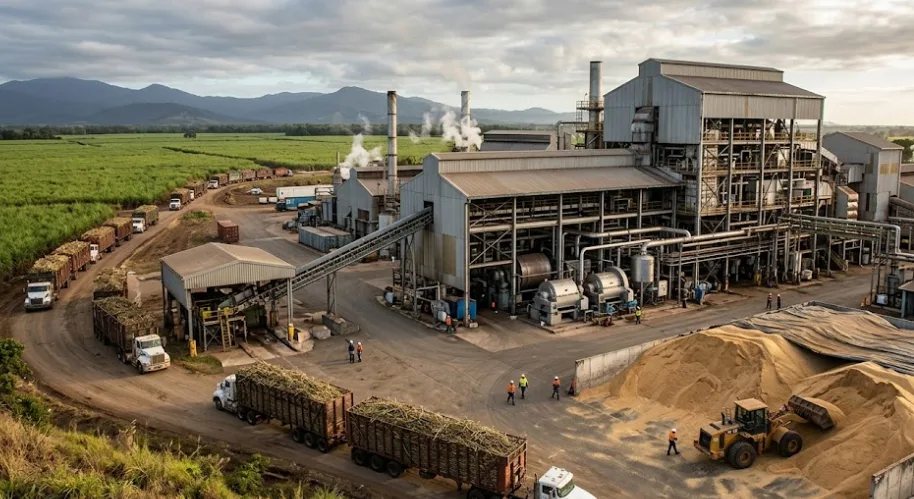
Understanding the economics behind Raw Sugar production has become increasingly important for manufacturers, procurement teams, investors, and industrial planners. In today’s global commodity landscape, fluctuating feedstock prices, supply chain disruptions, and rising energy costs are significantly influencing industrial production cost structures across the food and agro-processing industries.
Raw Sugar remains a critical commodity for multiple downstream sectors, including food processing, beverages, pharmaceuticals, biofuels, and specialty chemicals. As global consumption continues to rise, manufacturers are under growing pressure to optimize operational efficiency while maintaining competitive pricing.
In this environment, detailed Raw Sugar production cost analysis helps companies assess profitability, benchmark manufacturing efficiency, and make informed investment decisions. Accurate cost intelligence is particularly valuable during periods of energy market volatility and changing agricultural output patterns.
Overview of Raw Sugar Manufacturing
Raw Sugar is primarily produced from sugarcane or sugar beet through large-scale industrial extraction and refining processes. The manufacturing process involves multiple stages designed to maximize sugar recovery while minimizing waste generation and energy consumption.
Basic Manufacturing Flow
The industrial production process generally includes:
- Harvesting and transportation of feedstock
- Crushing or diffusion extraction
- Juice clarification
- Evaporation and concentration
- Crystallization
- Centrifugation
- Drying and storage
In sugarcane-based facilities, harvested cane is crushed to extract juice, which is then purified and concentrated into syrup. The syrup undergoes crystallization to separate sugar crystals from molasses. The resulting product is Raw Sugar, which may later be refined for food-grade applications.
Key Technologies Used
Modern Raw Sugar manufacturing plants employ:
- High-efficiency evaporators
- Vacuum pan crystallization systems
- Automated centrifuges
- Cogeneration power systems
- Steam recovery technologies
Advanced automation and energy recovery systems play a major role in improving manufacturing economics and reducing operating expenses.
Key Raw Materials and Inputs
The economics of Raw Sugar production are heavily dependent on feedstock availability, agricultural productivity, and utility consumption.
Primary Raw Materials
The major inputs include:
- Sugarcane or sugar beet
- Lime and clarification chemicals
- Water
- Steam
- Fuel and electricity
Among these, sugarcane and sugar beet account for the largest share of Raw Sugar manufacturing cost.
Feedstock Cost Influence
Agricultural feedstock pricing is influenced by:
- Weather conditions
- Crop yield variability
- Fertilizer prices
- Labor availability
- Transportation infrastructure
Poor harvest conditions or reduced crop output can sharply increase the cost of producing Raw Sugar.
Energy and Utility Requirements
Raw Sugar plants are energy-intensive operations. Steam generation, evaporation, and crystallization require significant thermal energy input.
Key utilities include:
- Electricity
- Process steam
- Cooling water
- Fuel for boilers
Energy price fluctuations directly affect industrial production cost and plant profitability, especially in regions dependent on imported fuels.
Major Cost Drivers in Production
Several operational and economic factors determine overall Raw Sugar production cost.
Raw Material Expenses
Feedstock procurement remains the dominant cost component in sugar manufacturing economics. Seasonal crop availability and transportation costs heavily impact procurement strategies.
Energy Consumption
Energy usage represents a substantial share of operating expenditure due to:
- Juice heating
- Multiple evaporation stages
- Drying systems
- Mechanical processing equipment
Facilities with integrated cogeneration systems often achieve better cost efficiency by utilizing bagasse as a renewable energy source.
Labor and Operational Costs
Labor costs vary depending on:
- Automation level
- Regional wage structures
- Plant capacity
- Maintenance complexity
Highly automated facilities generally achieve lower per-unit manufacturing costs.
Plant Maintenance and Capital Costs
Maintenance expenditure includes:
- Equipment servicing
- Boiler maintenance
- Process optimization
- Replacement of wear components
Older plants often face higher maintenance costs and reduced operational efficiency.
Transportation and Logistics
Transportation expenses influence both raw material sourcing and finished product distribution. Distance from agricultural regions, export terminals, and industrial consumers can significantly affect final production economics.
Regional Cost Differences
Raw Sugar manufacturing cost varies considerably across different geographic regions due to energy pricing, feedstock availability, labor conditions, and regulatory frameworks.
North America
North American producers benefit from:
- Advanced processing technologies
- Efficient logistics infrastructure
- High automation levels
However, higher labor and compliance costs can increase overall plant economics.
Asia
Asia remains one of the largest Raw Sugar production regions due to strong agricultural output and growing consumption demand.
Competitive advantages include:
- Lower labor costs
- Large-scale agricultural production
- Expanding industrial infrastructure
However, seasonal monsoon variations and energy price volatility can affect operational stability.
Middle East
Although the Middle East has limited sugarcane cultivation, some facilities benefit from:
- Low-cost energy
- Strategic trade positioning
- Strong logistics connectivity
Import dependency for feedstock remains a key cost challenge.
Europe
European manufacturers operate under strict environmental and sustainability regulations, which can increase production expenditure. However, technological sophistication and energy-efficient processing help improve operational performance.
Impact of Market Trends on Production Economics
The global sugar industry is undergoing significant transformation due to sustainability initiatives, energy transition policies, and evolving consumer demand patterns.
Green Manufacturing Initiatives
Manufacturers are increasingly adopting:
- Biomass-based cogeneration
- Waste heat recovery
- Water recycling systems
- Low-emission processing technologies
These investments improve long-term manufacturing economics while supporting environmental compliance.
Decarbonization Pressure
Governments and investors are placing greater emphasis on reducing industrial carbon emissions. As a result, sugar manufacturers are exploring:
- Renewable energy integration
- Carbon capture systems
- Energy-efficient plant modernization
While these initiatives may increase initial capital expenditure, they can reduce long-term operational risk.
Energy Transition Impact
Energy market volatility continues to affect Raw Sugar plant cost structures globally. Facilities dependent on fossil fuel-based power systems face higher exposure to fluctuating fuel prices.
Plants utilizing bagasse-based power generation often achieve better energy efficiency and cost stability.
Why Detailed Production Cost Intelligence Matters
Detailed cost intelligence plays a critical role in industrial decision-making across the sugar value chain.
Manufacturers rely on production cost analysis to:
- Optimize plant operations
- Improve procurement planning
- Evaluate feedstock sourcing strategies
- Benchmark operational performance
- Assess expansion opportunities
Investors use manufacturing economics data to evaluate project feasibility, profitability potential, and long-term market competitiveness.
Procurement teams also depend on raw material cost analysis and regional pricing intelligence to manage supply chain risks effectively.
Raw Sugar Production Cost Report and Manufacturing Intelligence
A comprehensive Raw Sugar Production Cost Report provides detailed insights into manufacturing economics, including raw material consumption, process technology, capital investment requirements, operating costs, utility consumption, and profitability analysis.
These reports help stakeholders understand:
- Industrial production cost structures
- Feedstock consumption trends
- Plant operating efficiencies
- Regional manufacturing competitiveness
- Capital expenditure requirements
- Long-term pricing outlooks
For manufacturers and investors, access to reliable chemical plant cost analysis and production intelligence supports more informed strategic planning and operational optimization.
Final
Raw Sugar production economics are shaped by a complex combination of agricultural feedstock pricing, energy consumption, plant efficiency, labor costs, and regional market conditions. As global industries continue facing supply chain uncertainty and sustainability pressures, accurate manufacturing cost intelligence has become increasingly important.
Comprehensive Raw Sugar production cost analysis enables manufacturers, investors, and procurement teams to better understand industrial cost structures, improve operational efficiency, and strengthen long-term competitiveness.