
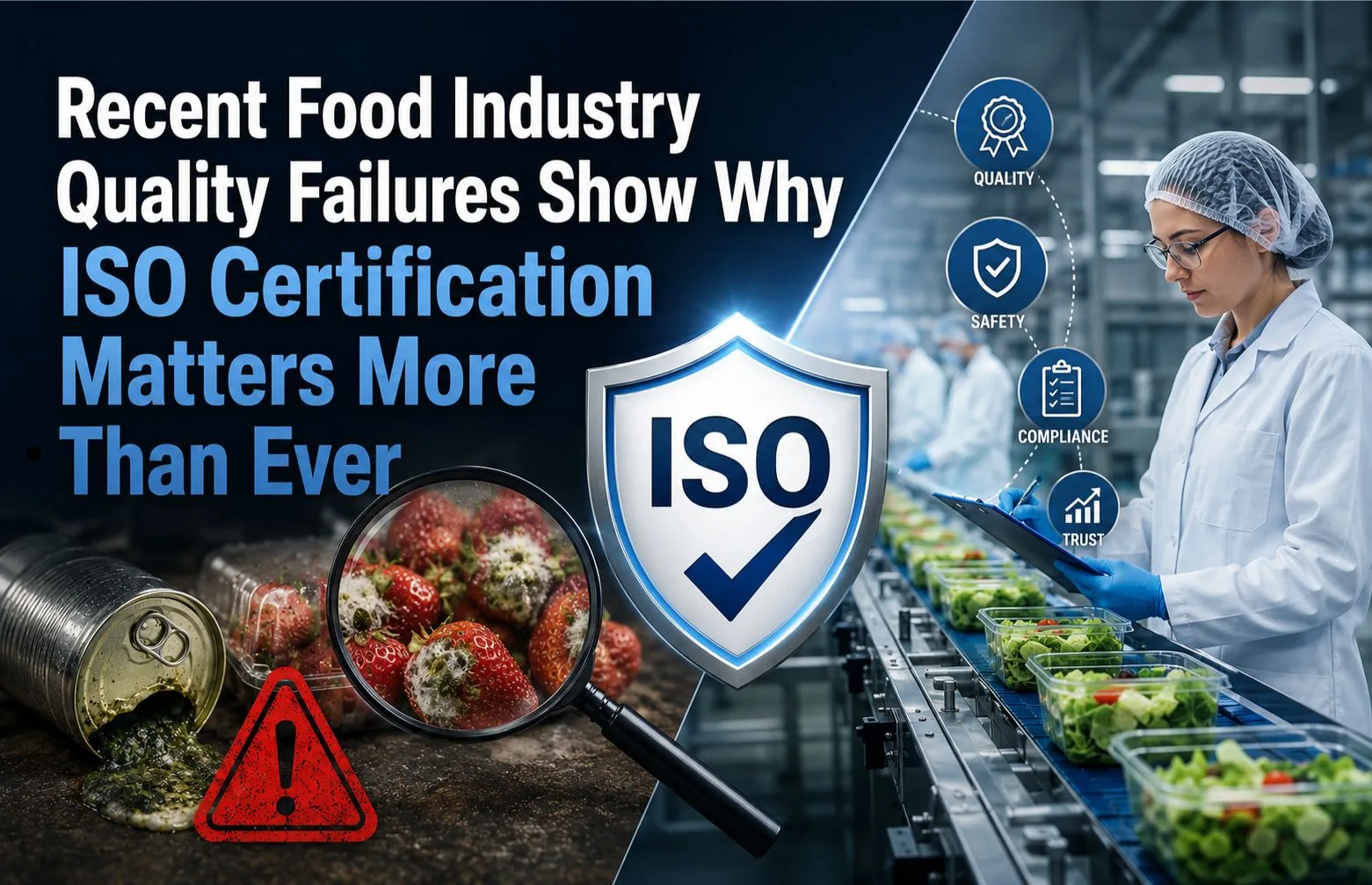
Food safety has now become a very serious topic of discussion. From contaminated products and poor storage practices to unexpected product recalls, the food industry is now facing various incidents that have affected both consumers and businesses. These types of situations have not only damaged the reputation of the brand but also raised an important concern about public health and consumer trust.
As a result, most of the food businesses are not paying close attention to internationally accepted food safety systems like ISO 22000 Certification. Now companies are beginning to understand that the safety of food is no longer just about meeting regulations, but it is about maintaining consistency, building trust, and ensuring that consumers receive safe products each time. Now, consumer is more aware of quality, hygiene, and safety standards than ever before. They are also looking for accountability, transparency, and confidence in the products that they consume daily.
Why food safety failures are becoming more common
The modern food industry is very large and complex now. Food products now pass through various stages before reaching the consumer. It includes manufacturing, packaging, transportation, storage, and distribution.
With too much setup involved, even a very tiny mistake can create a major problem. Some main reasons behind the recent food industry failures include poor hygiene during food handling, improper storage temperatures, cross-contamination, weak quality checks, lack of staff training, inadequate monitoring systems, and poor supplier management.
In most of the cases, businesses do not notice the issues until the consumers begin to report or any authority steps in. But by that time, the significant damage is already done. Due to this, the structured food safety systems are now becoming more important across the industries.
Understanding ISO 22000 certification
ISO 22000 certification is among the internationally recognized food safety management standards designed to help businesses to identify and control food safety risks at every stage of the food chain. It is applicable to all types of food related to organizations like food manufacturers, restaurants, packaging companies, warehouses, food transport providers, ingredient suppliers, and catering businesses.
Its purpose is simple – to make sure that the food remains safe from the production stage to the consumption stage.
Also, instead of handling issues only after they occur, the certification also encourages businesses to create a system which prevent risks before they become very serious. It also focuses on documentation, planning, monitoring, hygiene practices, and regular improvement. This proactive approach also helps the organizations to maintain a better consistency and to reduce the chances of quality failures r contamination.
Consumer trust is hard to rebuild
When the food safety issues become public, the consumer generally loses confidence in the brand immediately. News for this spreads quickly via online reviews, social media, and digital platforms, making it difficult for the companies to recover their image.
Even one incident can affect customer loyalty for years. People today just want reassurance that the products they buy are safe and are also properly handled. Businesses that follow internationally recognized systems like ISO 22000 certification generally create a strong sense of trust because they show their commitment towards maintaining the food safety standards.
Customers may not always understand the technical certification, but they always value consistency, accountability, and cleanliness.
The importance of HACCP Certification
One more food safety system heavily used across the food industry is the HACCP certification. It stands for Hazard Analysis and Critical Control Points. This system is focused on identifying the possible food safety hazards before they create any type of issue. Also, instead of reacting to the contamination later, HACCP also helps businesses to monitor the critical areas where the risks are most likely to occur. The system includes identifying potential hazards, monitoring critical control points, maintaining hygiene standards, reducing contamination risks, and following preventive safety measures. Most of the organizations combine HACCP Certification with ISO based food safety systems, as both focus heavily on prevention and risk control. Together, both systems help businesses to maintain safer and more reliable operations.
Why prevention matters more than correction?
Food recalls and contamination incidents are creating major financial operational losses. Many companies may face legal actions, supply chain disruptions, product wastage, and negative publicity.
In most of the situations, fixing the damage after any failure becomes a more expensive issue than preventing it. So, this is among the major issues that is why businesses are investing more in food safety management systems. A preventive approach always helps organizations to detect risk early, maintain consistency, and improve operational control across the supply chain.
Systems like ISO 22000 certification aslo encourages businesses to continuously review the processes instead of waiting for the problems to appear.
Awareness of employees plays a huge role
Food safety is not only about systems, machines, or documentation. Employees also play a major role in maintaining the hygiene and quality standards every single day. Even the advanced systems may fail if the staff members are not trained properly. Most of the food contamination issues happen because of simple mistakes like improper hand hygiene, incorrect food storage, unsafe handling practices, poor cleaning routines, and a lack of awareness about contamination risks.
Food safety standards also encourage organizations to continuously train their employees and create a culture where the quality and hygiene become part of regular operations. Also, when employees understand the importance of safety procedures, businesses are generally able to maintain better consistency and reduce avoidable mistakes.
Traceability has become essential
The major challenge during the food safety incidents is to identify where the issue has actually started. Without the proper tracking systems, businesses may struggle to locate the contaminated products quickly. This delay can rapidly increase risks for consumers and create a huge recall. With structured systems like ISO 22000 certification, organizations can maintain proper documentation and traceability throughout the food supply chain. It includes supplier records, production tracking, batch information, storage monitoring, and corrective action reports. These clean records allow businesses to respond faster during emergencies and limit any further damage.